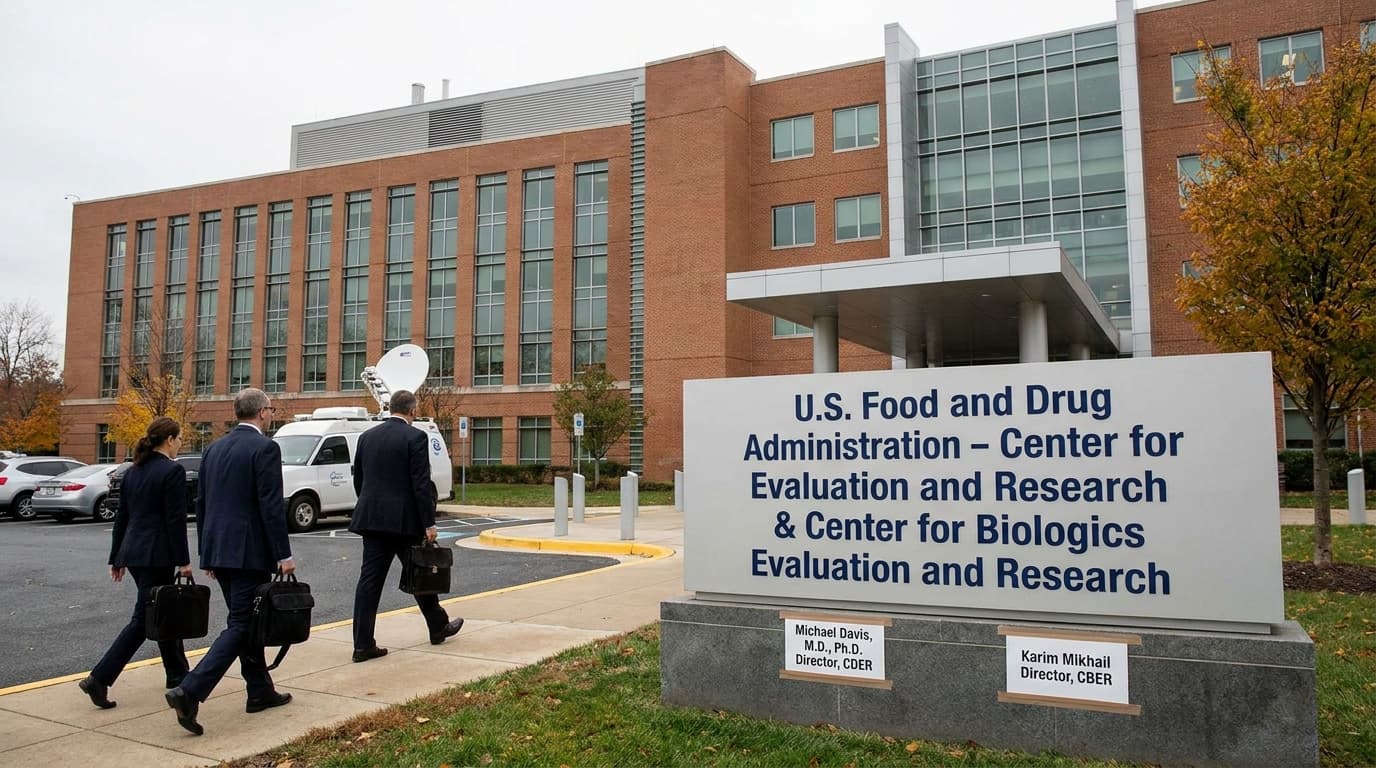
The Department of Health and Human Services has made permanent two of the most important leadership roles at the U.S. Food and Drug Administration, naming Michael Davis, M.D., Ph.D., to lead the Center for Drug Evaluation and Research and Karim Mikhail to lead the Center for Biologics Evaluation and Research after both had been serving in acting capacities.
The decision gives the agency firmer leadership at the centers that oversee small-molecule drugs, biologics and vaccines while the commissioner role remains unresolved. President Trump last month named Heidi Overton, M.D., Ph.D., currently a White House aide, as his pick for FDA commissioner, but she still must go before the Senate for confirmation.
That sequencing matters. After a period marked by leadership turnover and public controversy, the agency is now rebuilding from the center divisions outward rather than waiting for a confirmed commissioner to remake the organization. RBC Capital Markets said the appointments are likely to be seen as a sign of continuity and stability that should ease concerns about major policy shifts, and the firm added that an Overton confirmation, if it happens, would likely lead to delegation of key duties to division directors.
The leadership reset
According to HHS, acting FDA commissioner Kyle Diamantas said the selections do more than fill vacancies and instead signal the direction the agency is heading. In his statement, Diamantas said the leaders will help the FDA attract and retain talent while building workforce and infrastructure capacity to accelerate innovation across the agency’s centers.
Both men had already been functioning as stabilizing figures. BioSpace reported that Davis and Mikhail have led their respective departments since mid-May, after the departures of Makary and division heads Tracy Beth Høeg and Vinay Prasad. In their acting roles, both men emphasized restoring normalcy, engaging remaining staff, stopping further attrition and rebuilding the workforce.
Those objectives address a practical problem as much as a symbolic one. Regulatory agencies can absorb leadership change, but repeated turnover at the commissioner and center-director levels raises the risk of slower decisions, uneven policy execution and staff departures. By converting acting leaders into permanent ones, HHS reduces one source of uncertainty for companies dealing with the FDA on reviews, meetings and development plans.
The road here
The leadership turbulence stretches back to the Trump administration’s return to the White House early last year and intensified with former commissioner Martin Makary, M.D., announcing his departure in May, according to Fierce Biotech. The agency also lost longtime senior figures including Patrizia Cavazzoni, M.D., Richard Pazdur, M.D., and Peter Marks, M.D., Ph.D., before moving through a series of shorter-tenured and more controversial leaders.
Against that backdrop, Davis and Mikhail look more conventional in terms of industry and regulatory experience. Fierce reported that Davis previously held multiple FDA roles, including leadership positions in CDER’s Office of New Drugs, and is trained as a psychiatrist and pharmacologist. His LinkedIn profile also lists a stint as chief medical officer at the nonprofit psychedelic drug developer Usona Institute.
Mikhail brings a more industry-heavy background. Fierce said he previously served as president and CEO of Amarin and spent 22 years in a range of leadership roles at Merck & Co. That profile may reassure industry participants looking for experienced operators at a time when predictability in regulatory execution matters as much as any formal policy statement.
What Else Changed
The broader reorganization did not stop with CDER and CBER. HHS also said Jared Seehafer will serve as the FDA’s first deputy commissioner for technology and artificial intelligence, a newly created post that follows late August reports that the agency was considering new deputy roles around artificial intelligence and drug regulation. Fierce noted that the earlier reports carried a caveat that no final determinations had yet been made.
BioSpace reported that Seehafer had been a senior adviser in the Office of the Commissioner and previously co-founded and served as CEO of Enzyme, a company that helps drugmakers navigate compliance and regulatory processes through technology. HHS said the role reflects the Trump administration’s commitment to accelerating reliable AI innovation, modernizing federal technology and maintaining an effective regulatory framework for emerging technologies.
HHS also named Bret Koplow, Ph.D., to direct the Center for Tobacco Products. BioSpace identified him as Brent Koplow and said he had already been serving as acting director and has been at the FDA since 2011 in senior legal, policy and leadership roles. The naming inconsistency between sources is limited to the first name; both identify Koplow as the person taking the role.
For drug developers, the immediate signal is less about a new policy doctrine than about a return to identifiable decision-makers. A confirmed commissioner would still shape the agency’s direction, but permanent center heads can already influence review culture, staff retention and the pace at which the FDA turns broad priorities into day-to-day regulatory practice.