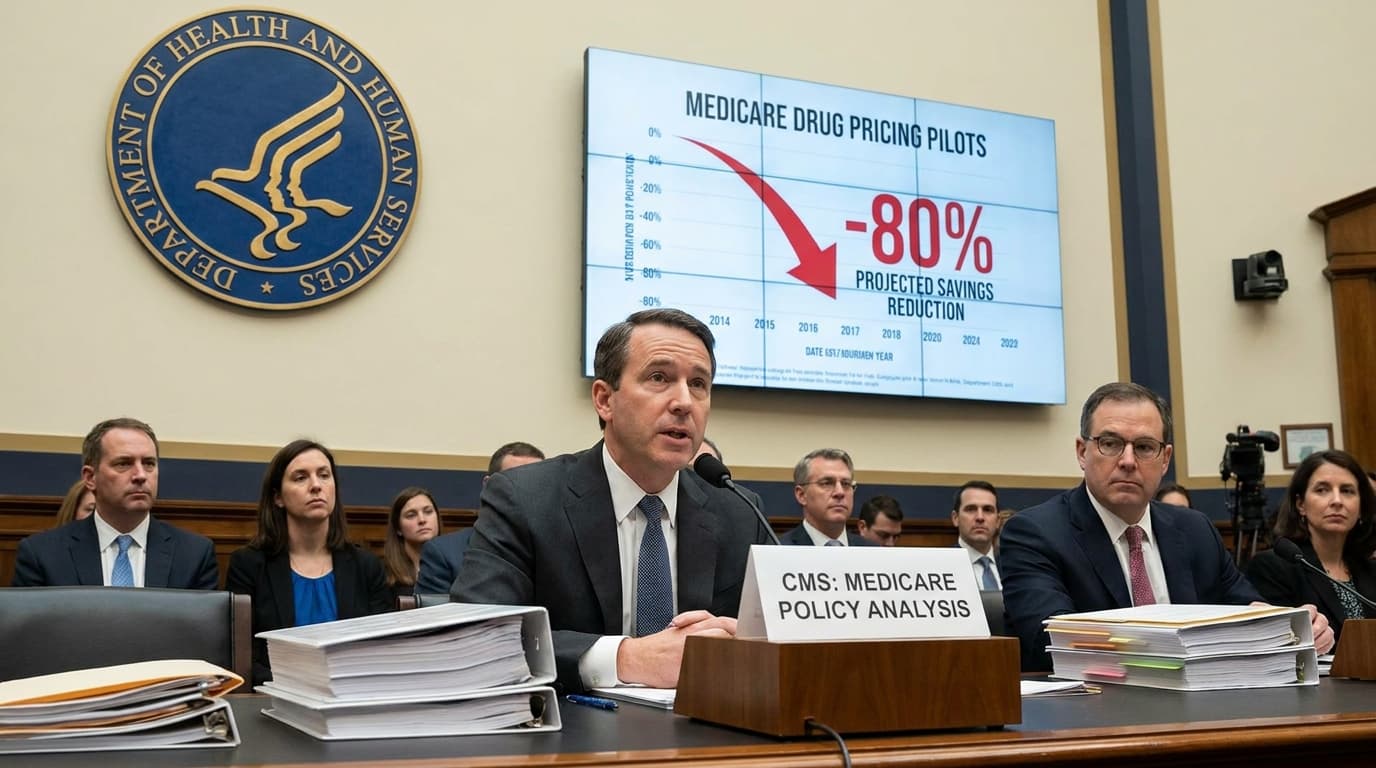

The Trump administration’s effort to lower Medicare drug costs through most-favored nation pricing may deliver far less than advertised, according to a new analysis that says projected savings could fall by as much as 80%.
At issue are undisclosed deals with more than two dozen pharmaceutical companies that, the analysis argues, may weaken the economics of the plan before the administration has released fuller operating details. The White House has maintained the effort would save Medicare $26 billion over several years.
The Policy Structure
The administration is creating two pilot programs: GLOBE for Medicare Part B and GUARD for Medicare Part D. Both would require drug companies to pay additional rebates if their prices exceed the lowest international price found in 19 other wealthy nations.
That design matters because the plan’s savings depend not just on the reference countries, but on how aggressively the rebate mechanism is applied and what carveouts or accommodations are embedded in company agreements. More specific details about the rules are due shortly.
The Signal
The analysis highlights a recurring policy risk in drug-pricing reform: a headline savings figure can diverge sharply from realized savings when implementation depends on confidential negotiations. If the estimate of an up to 80% reduction is directionally right, the issue is not whether most-favored nation pricing has political appeal, but whether its actual structure can force price convergence at scale.
For drugmakers, that would suggest negotiated flexibility remains available even inside a pricing model framed as hard-edged international benchmarking. For Medicare, it would mean the financial outcome may hinge less on the concept itself than on the still-unpublished rules governing GLOBE and GUARD.