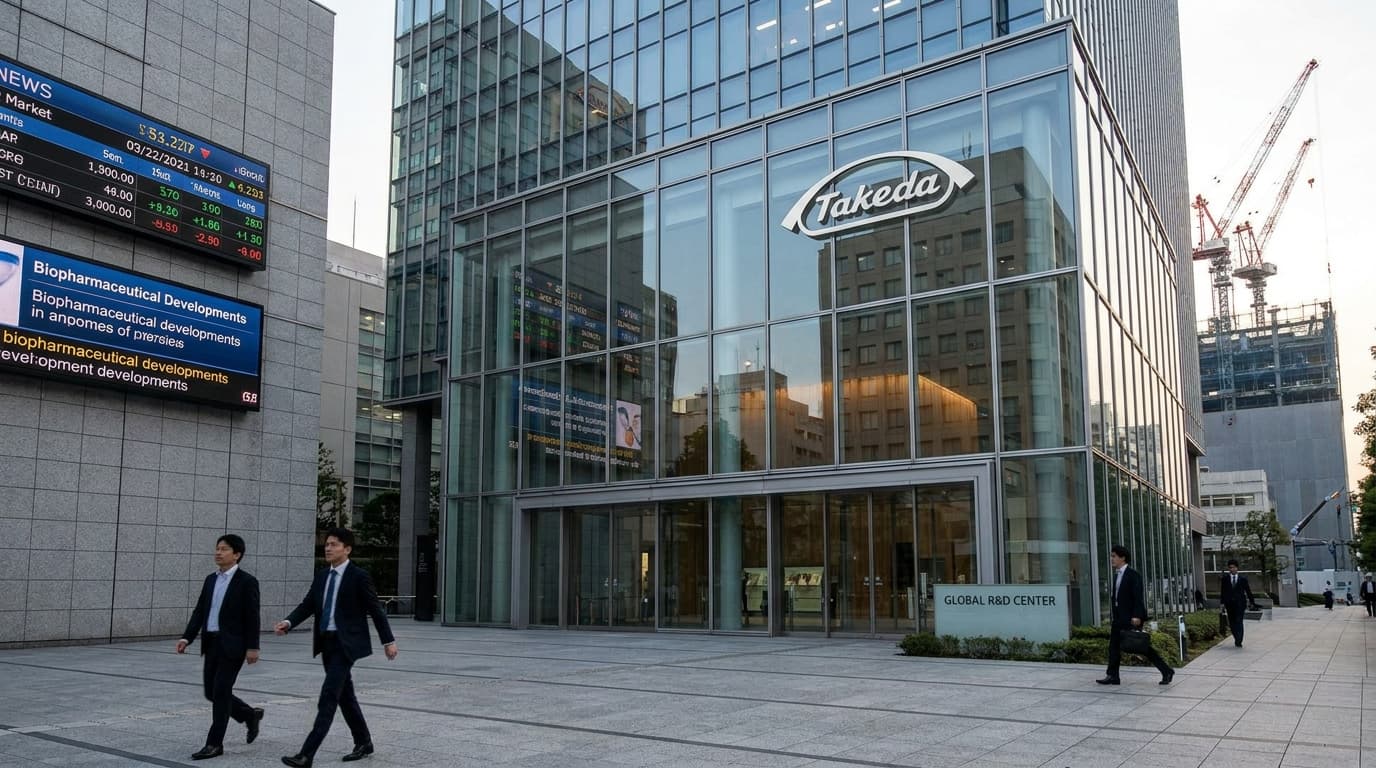
Takeda said Andy Plump, president of research and development, plans to retire in June 2027 after more than 10 years leading the company’s global R&D organization. The company said he will continue to run R&D until a successor is appointed and then help manage the transition, while remaining an active board member until June 2027.
The timing makes this more than a routine executive change. Takeda has spent several years reshaping its research organization, narrowing its pipeline, cutting jobs and trying to build a new set of products that can offset pressure from loss of exclusivity. Plump’s successor will inherit an R&D engine that looks materially different from the one he took over.
The strategy reset he leaves behind
BioSpace said Plump has spent about 12 years at the Japanese drugmaker, while Fierce Biotech said he joined in 2015 from Sanofi to initially serve as chief medical and scientific officer. During his tenure, Takeda reworked its pipeline focus. BioSpace reported that the company narrowed its portfolio from more than 10 modalities to four: small molecules, biologics, antibody-drug conjugates and allogeneic cell therapies. Late last year, Takeda then removed cell therapy from that list.
Fierce Biotech framed that retreat as one of the notable misses on Plump’s watch. The company exited the modality last year and took an impairment loss on its 2021 acquisition of GammaDelta Therapeutics. Fierce also pointed to Alofisel, a Crohn’s disease cell therapy acquired through Takeda’s takeover of TiGenix, which reached the European market but was later withdrawn after a phase 3 failure.
The broader corporate backdrop has also been turbulent. BioSpace said a massive reorganization began in 2024 and included 4,500 job cuts earlier this year. It added that new CEO Julie Kim, who succeeded Christophe Weber this June, has continued efficiency efforts as Takeda anticipates declines in revenue and profit for the fiscal year.
That sequence matters because it shows Takeda is no longer trying to be broad across every technology area. The company has been concentrating resources on assets closer to commercialization and using tighter modality selection to reduce portfolio sprawl.
Recent pipeline output
Takeda and its executives are emphasizing that the reorganization has produced assets nearing or reaching market. BioSpace quoted Kim as saying the company now has a robust late-stage pipeline that has delivered three transformative medicines poised for launch in the coming months.
This year, according to BioSpace, Takeda won FDA approval for narcolepsy medicine Orzeyful and also secured the regulatory greenlight for Protaganist-partnered Mimrylo in polycythemia vera. Fierce Biotech also highlighted those approvals, noting they arrived last month. BioSpace further said regulatory submissions are underway for the TYK2 inhibitor zasocitinib in plaque psoriasis after about 70% of patients achieved clear or almost clear skin at week 16 in late-stage studies.
Fierce added more context on the output under Plump’s tenure, citing approvals since 2021 for Livtencity, Adzynma and Eohilia. At the same time, Fierce noted that Takeda still faces the need to create new growth drivers as competition from Entyvio biosimilars approaches. Fierce separately said an earlier period of sales pressure was tied to the loss of exclusivity on ADHD drug Vyvanse.
What the transition signals
Takeda’s statement described this as a planned transition designed to maintain continuity and sustain momentum across R&D. Plump said on LinkedIn that leading Takeda R&D had been one of the greatest privileges of his career and expressed confidence in the future of the organization.
For investors and industry peers, the main signal is that Takeda appears to believe the hardest part of its R&D restructuring is complete enough to support an orderly handoff. The next question is less about whether the pipeline has been rebuilt and more about whether the next R&D leader can keep converting that narrower portfolio into approvals and launches fast enough to counter upcoming exclusivity pressure.