Biotech’s IPO rebound has reached 31 public debuts so far this year, according to BioSpace’s historical data, and four more companies have recently filed to follow. That pace is well ahead of 2025, when the sector recorded eight total IPOs, and it also exceeds the 19, 13 and 17 debuts seen in 2024, 2023 and 2022, respectively.
The comparison that matters is not to 2021, when nearly 100 biotech companies went public during a period of pandemic-driven investment, but to the much thinner market that followed. On that basis, 2026 looks less like a brief reopening window and more like a sustained recovery in risk appetite for companies that can still frame a credible development and financing story.
Where issuance is happening
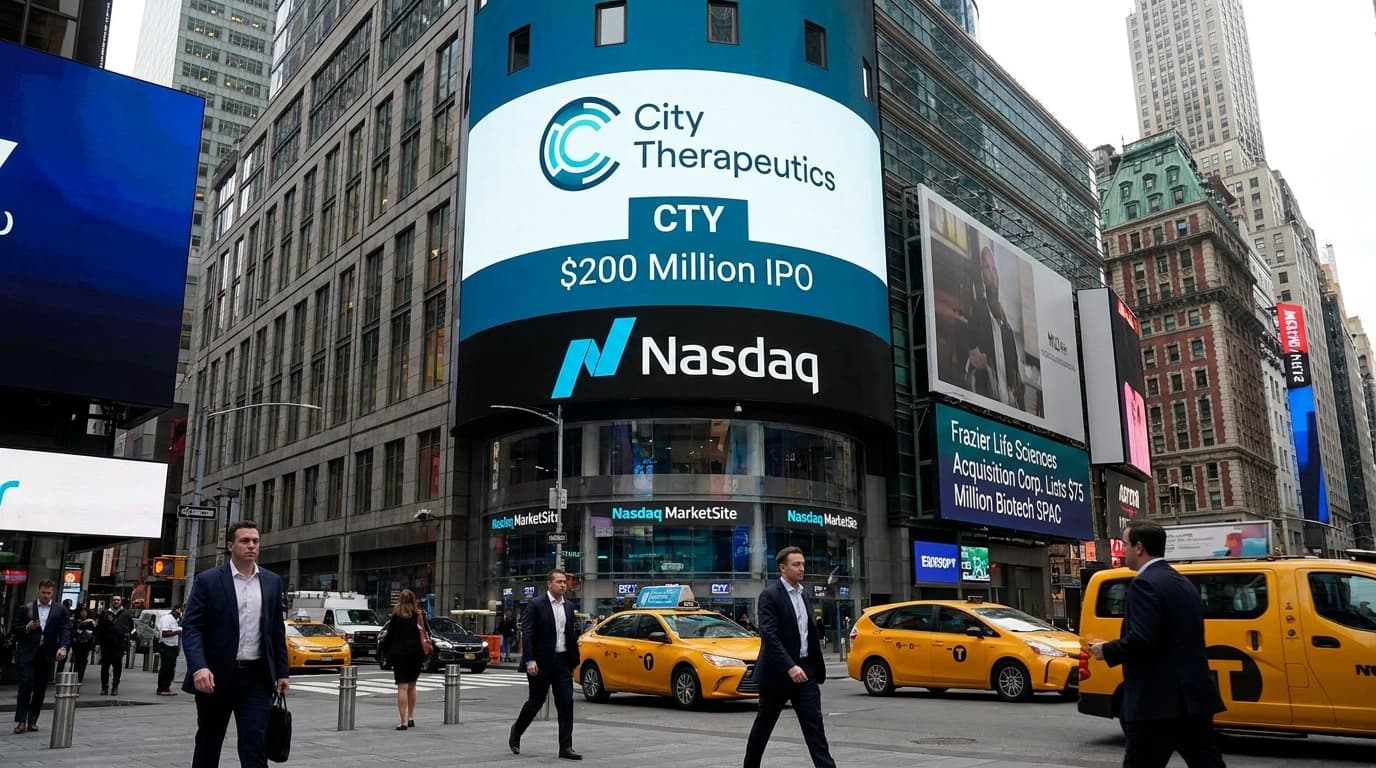
October alone has already produced four biotech IPOs: TRexBio, Retension Pharmaceuticals, City Therapeutics and Iambic Therapeutics have all started trading this month. The mix is notable because it spans immunoregulatory medicine, hypertension, RNAi and AI-fueled drug discovery rather than concentrating in a single hot modality.
Another four companies have outlined plans to tap the market. Lycia Therapeutics is seeking to raise $227.8 million to advance its protein degrader pipeline. Aspen Neuroscience plans to fund development of its stem cell therapy sasineprocel for Parkinson’s disease. Bambusa Therapeutics has also mapped out an IPO to support its immunology and inflammation bispecific antibody programs. Most recently, NodThera, now rebranded as Rezera, said it wants to advance its NLRP3 inhibitor ruvonoflast into a Phase 3 study for peripheral artery disease.
What the financing mix signals
The quarterly breakdown suggests issuance has broadened after an early burst. The first quarter led the year with 11 IPOs, five of them outside the U.S. The second and third quarters delivered seven and nine debuts, and the rest of the year has featured only U.S. offerings.
Deal size has also stretched upward. Parabilis Medicines posted a $670 million debut, which BioSpace said is the largest not only of this year but in biotech IPO history. Kailera Therapeutics had previously set the pace with a $625 million offering, and ADARx Pharmaceuticals raised $446.3 million in September.
That points to a more useful reading of the market than raw deal count alone. Biotech is not back to the volume conditions of 2021, but investors are again willing to fund large raises for selected companies with differentiated pipelines or financing narratives. The presence of four more filings after a busy October supports the idea that issuers still see a workable window, especially for stories tied to clear clinical catalysts or platform categories that public investors can understand quickly.