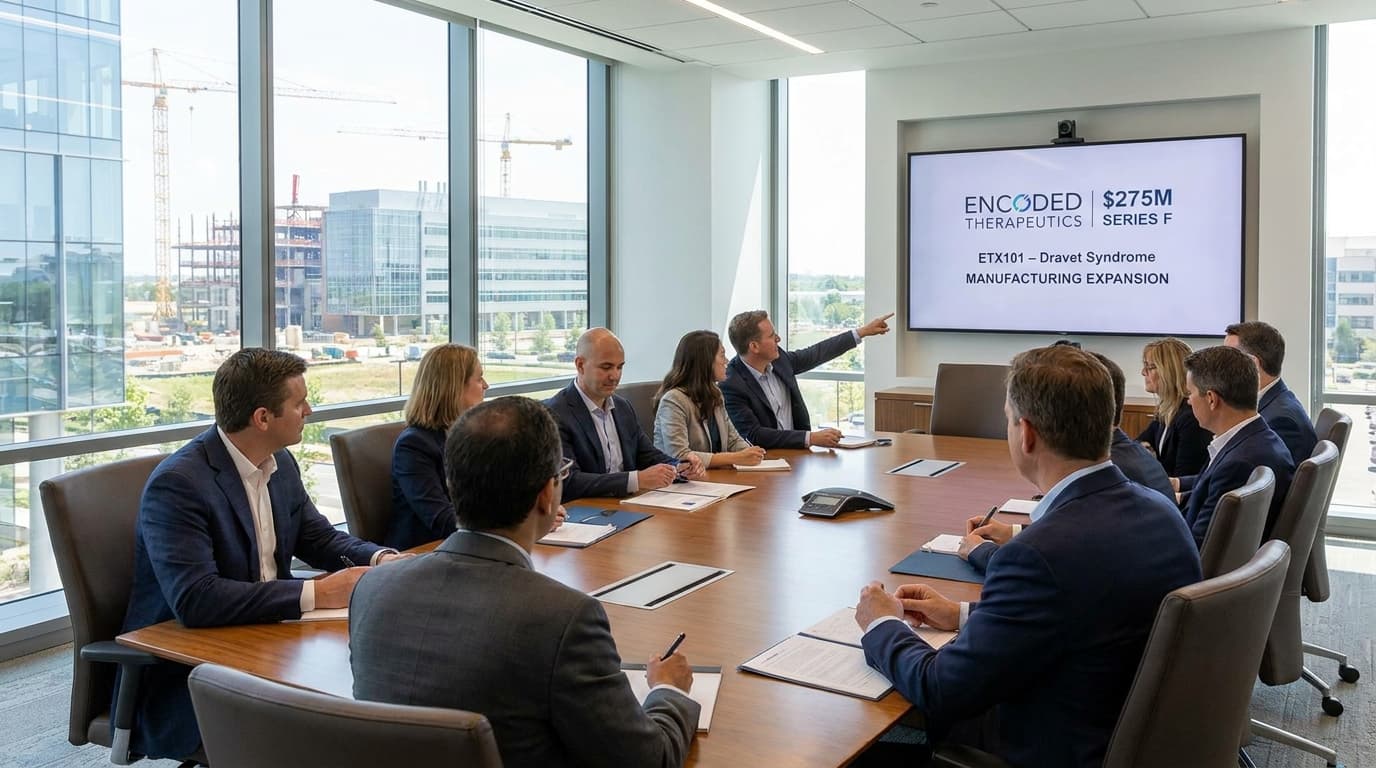
Encoded Therapeutics has raised $275 million in a series F round to support ETX101 in SCN1A-positive Dravet syndrome and scale its internal manufacturing capabilities. The round was co-led by GV and an undisclosed healthcare fund, with participation from ARCH Venture Partners, Janus Henderson Investors, RTW Investments and SoftBank Vision Fund.
The proceeds will support a study of ETX101 in infants and young children with SCN1A-positive Dravet syndrome, a rare genetic epilepsy caused by mutations in the SCN1A gene. Encoded also said the financing will fund a commercial manufacturing build-out and support a 2027 IND submission for ETX301, an AAV9-based vectorized microRNA gene therapy for post-amputation neuroma pain.
The development case
Encoded dosed the first patient in its phase 2 trial of ETX101 in May. The AAV9-based therapy is designed to boost expression of the SCN1A gene in inhibitory neurons, and the company has described it as a one-time therapy aimed at the underlying genetic cause of Dravet syndrome.
The financing follows a difficult period that included a 29% staff cut in February 2025 to fund a phase 1/2 trial of ETX101. Encoded said that study later showed a 78% reduction in seizures at the end of the year. GV general partner Brendan Bulik-Sullivan said the program's emerging clinical profile includes durable seizure control and promising neurodevelopmental signals.
Why the round stands out
This raise is not just a vote on one asset. It also funds internal manufacturing, which is a strategic choice in genetic medicines where supply and process control can become as important as clinical data once programs move toward registration.
Encoded is pursuing that build-out while competing in a field that already includes Stoke Therapeutics' zorevunersen, an antisense oligonucleotide partnered with Biogen through a deal that included a $165 million upfront payment for U.S. rights last year. Stoke and Biogen expect a phase 3 readout in the middle of next year, so Encoded's funding gives it room to keep advancing ETX101 while broadening its platform into a second genetic medicine program.