Endeavor BioMedicines has reported a phase 2b result that strengthens its attempt to differentiate taladegib from the current idiopathic pulmonary fibrosis standard of care. In the 213-patient WHISTLE-PF study, the Hedgehog inhibitor met its primary endpoint by showing a statistically significant improvement in percent predicted forced vital capacity at 24 weeks versus placebo.
That matters because the established IPF drugs from Boehringer Ingelheim and Roche, Ofev and Esbriet, are designed to slow the decline of lung function. Endeavor is instead arguing that taladegib may be able to reverse disease by targeting a type of fibroblast thought to drive IPF, a thesis it had previously outlined with phase 2a data in 2024.
The data
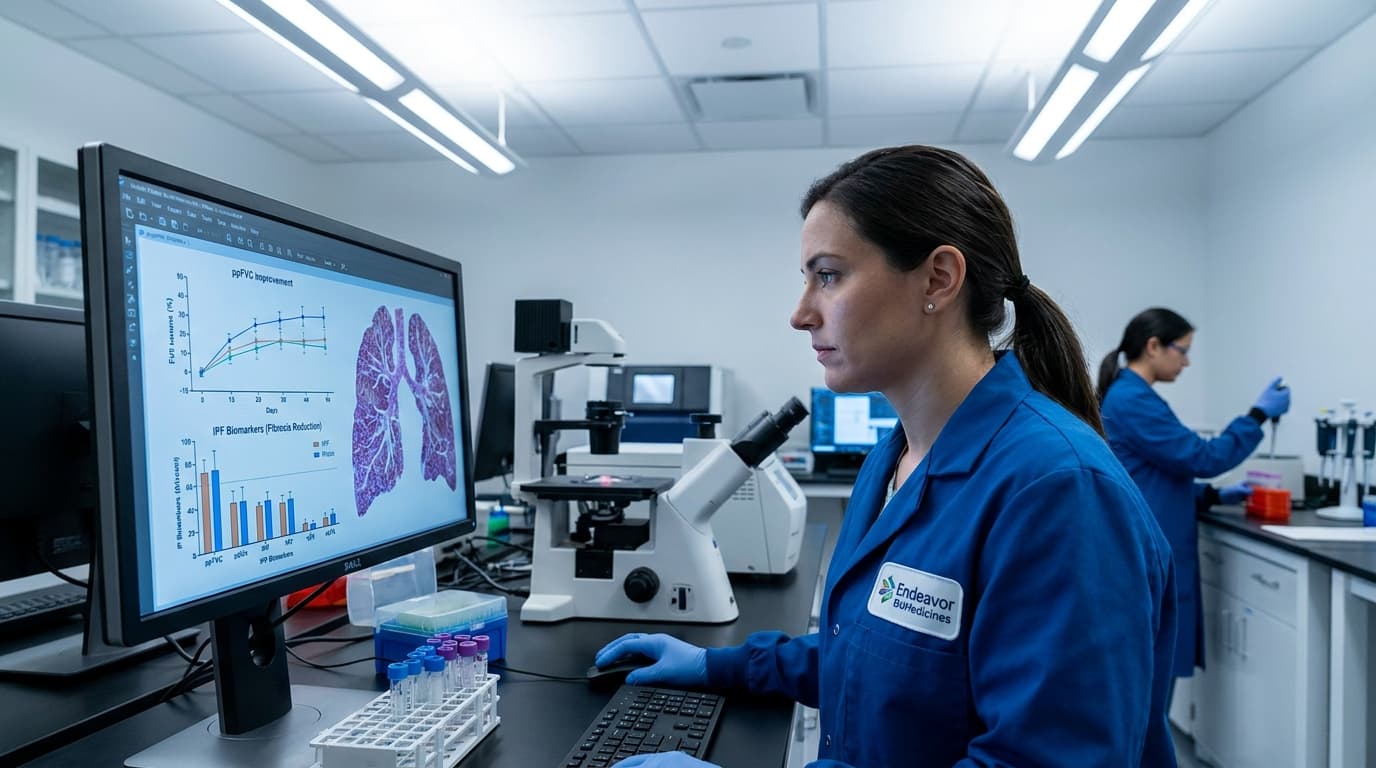
The company said a pre-specified analysis of lung function showed that continued treatment with taladegib resulted in a sustained improvement from baseline in ppFVC over 24 weeks. While detailed results are being held for a future medical meeting, Endeavor also said patients on taladegib experienced significant improvement compared with placebo across several biomarkers of IPF severity.
Those biomarkers included total lung capacity, quantitative total interstitial lung disease and quantitative lung fibrosis. If those readouts hold up when full data are presented, the program could stand apart from a market where approved therapies are primarily framed around slowing deterioration rather than reducing fibrosis itself.
On safety, Endeavor said the rate of serious adverse events was balanced between the placebo and taladegib arms. CEO John Hood said the findings support taladegib’s potential to be the first treatment to reduce fibrosis and improve symptoms for IPF patients.
What Comes Next
Endeavor’s next step is to engage with the FDA on a phase 3 strategy, according to Chief Medical Officer Lisa Lancaster. The strategic question is whether the company can turn a differentiated midstage signal into a registrational program strong enough to challenge entrenched incumbents with established commercial positions.
For investors and competitors, the main signal is not just that taladegib improved a lung-function endpoint, but that Endeavor is trying to redefine what success in IPF looks like. A phase 3 path built around fibrosis reduction and total lung capacity, in addition to ppFVC, would raise the bar for how future IPF assets are judged.