MimiVax reported that its peptide-mimic immunotherapeutic vaccine SurVaxM failed the primary endpoint in a Phase 2 study in newly diagnosed glioblastoma, a result that keeps the company in the familiar territory of partial encouragement rather than clear validation in one of oncology’s hardest settings.
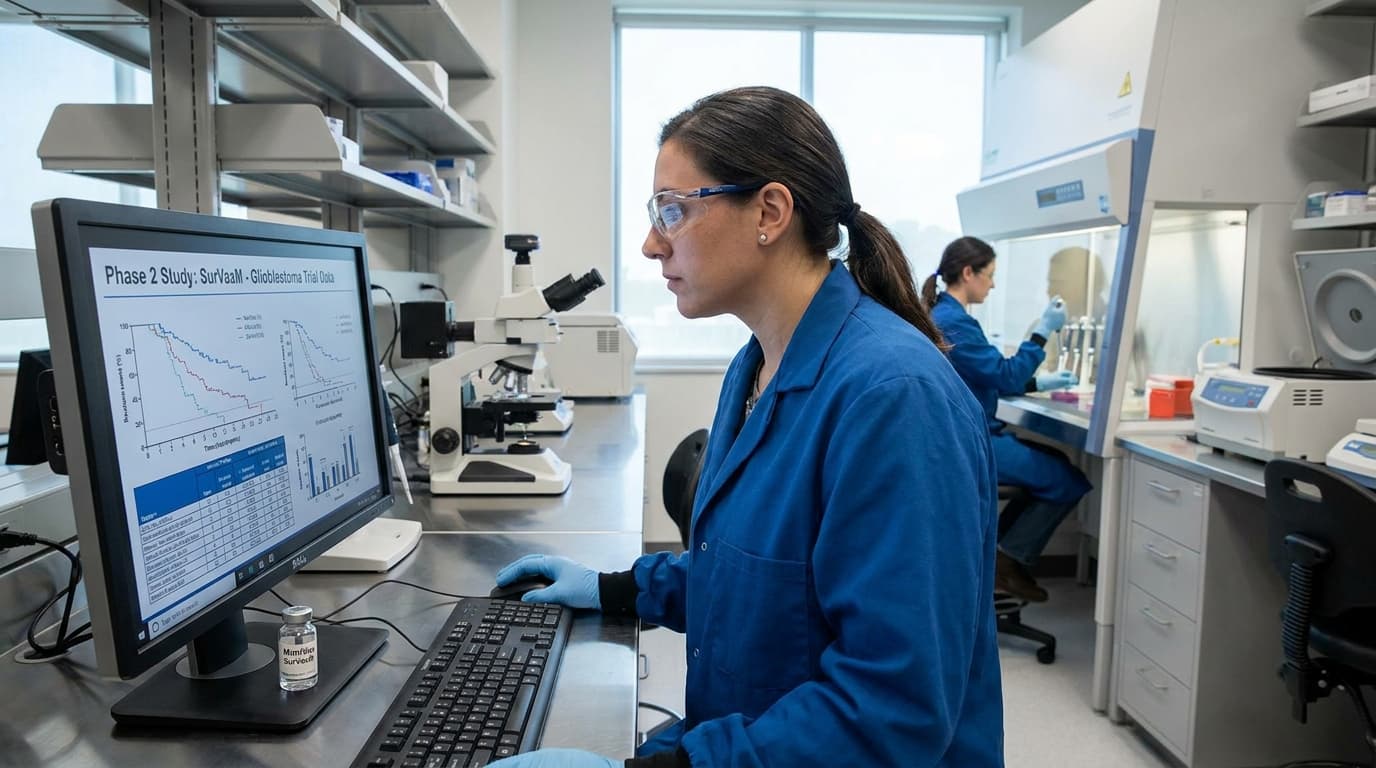
The study compared SurVaxM with placebo in 233 evaluable patients with newly diagnosed brain cancer. SurVaxM was associated with median overall survival of 24.2 months, versus 20.2 months for placebo. MimiVax called that improvement “clinically meaningful,” but the company also said the trial missed its primary endpoint.
That combination matters commercially and scientifically. In glioblastoma, even modest survival gains can attract attention because treatment progress has been so limited, but missing the primary endpoint sharply raises the bar for any regulatory path built around subgroup findings.
The Data
MimiVax is centering its next argument on patients aged 65 years and younger. In that subgroup, the company said the overall survival difference was 24.2 months versus 20.2 months and described the result as a “significant benefit.” The same subgroup also showed an improvement in progression-free survival at 12 months, with 44% of SurVaxM-treated patients reaching that mark compared with 24% on placebo.
The company also highlighted a long-term survival analysis in that younger group. Approximately 42% of SurVaxM-treated patients 65 and under were alive through 30 months or longer, with no further deaths reported up to 54 months.
The trial design followed standard therapy. Patients received maximum tumor resection, chemotherapy and radiotherapy, then four primary injections of SurVaxM given every two weeks for four doses, followed by a booster injection every two months.
On safety, adverse events were mainly Grade 1 and 2 injection site reactions. Grade 3 or higher adverse events occurred in 48% of patients treated with SurVaxM and 46% with placebo.
The Road Here
SurVaxM is designed against survivin, a protein that inhibits programmed cell death and can make tumor cells resistant to standard treatments. MimiVax’s goal is to train the immune system to recognize survivin-expressing cells. CEO Michael Ciesielski said survivin is highly expressed in nearly 95% of glioblastoma tumors as well as many other cancers, making it an attractive target for an immune-based approach.
The Phase 2b study followed an open-label Phase 2a trial that concluded in 2022. In that earlier study, patients treated with SurVaxM alongside adjuvant temozolomide showed median overall survival of 25.9 months.
Ciesielski told Fierce Biotech that the new results still support continued pursuit of the program. He argued that “even very small increases in survival are very significant” for patients because there has not been a new glioblastoma drug in over 20 years and “there’s nothing else to offer them.”
What To Watch
MimiVax said the subgroup data give it confidence to pursue a path toward potential FDA approval for SurVaxM. The central question now is whether that younger-patient signal can carry enough weight after a topline miss.
The challenge is not just statistical. Glioblastoma has repeatedly produced development stories in which biological rationale and limited efficacy signals were not enough to change practice. Fierce Biotech noted that Imvax’s Phase 2b study of its autologous cell immunotherapy and device combination product failed at the end of last year, while Evaxion and BrainChild Bio are still pursuing different vaccine and cell therapy approaches.
MimiVax is not a single-asset company: it is also running multiple mid-stage trials of its cancer vaccines in metastatic neuroendocrine tumors and multiple myeloma, and it plans to open a study soon in preventative lung cancer. But for SurVaxM, the next phase is likely to depend on whether regulators view the younger-patient subgroup as a credible basis for a path forward rather than a post-miss salvage argument.