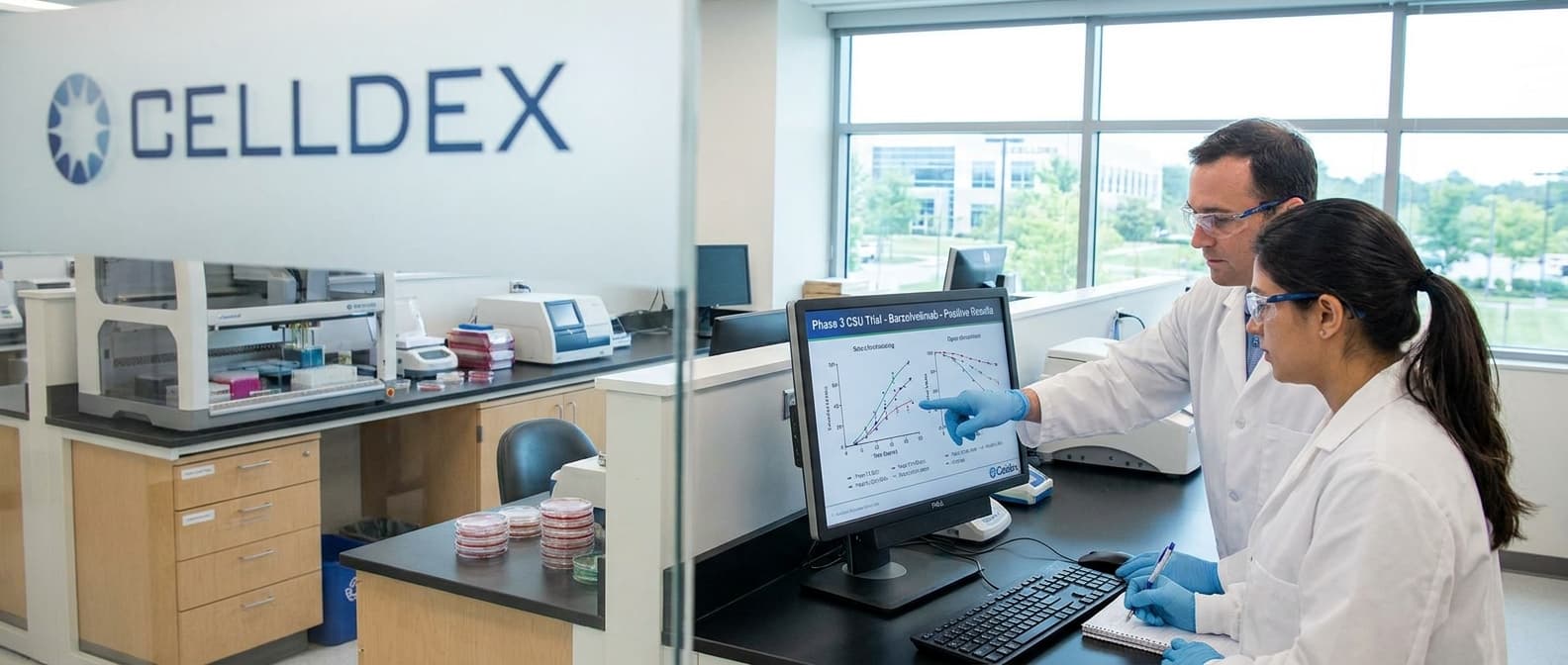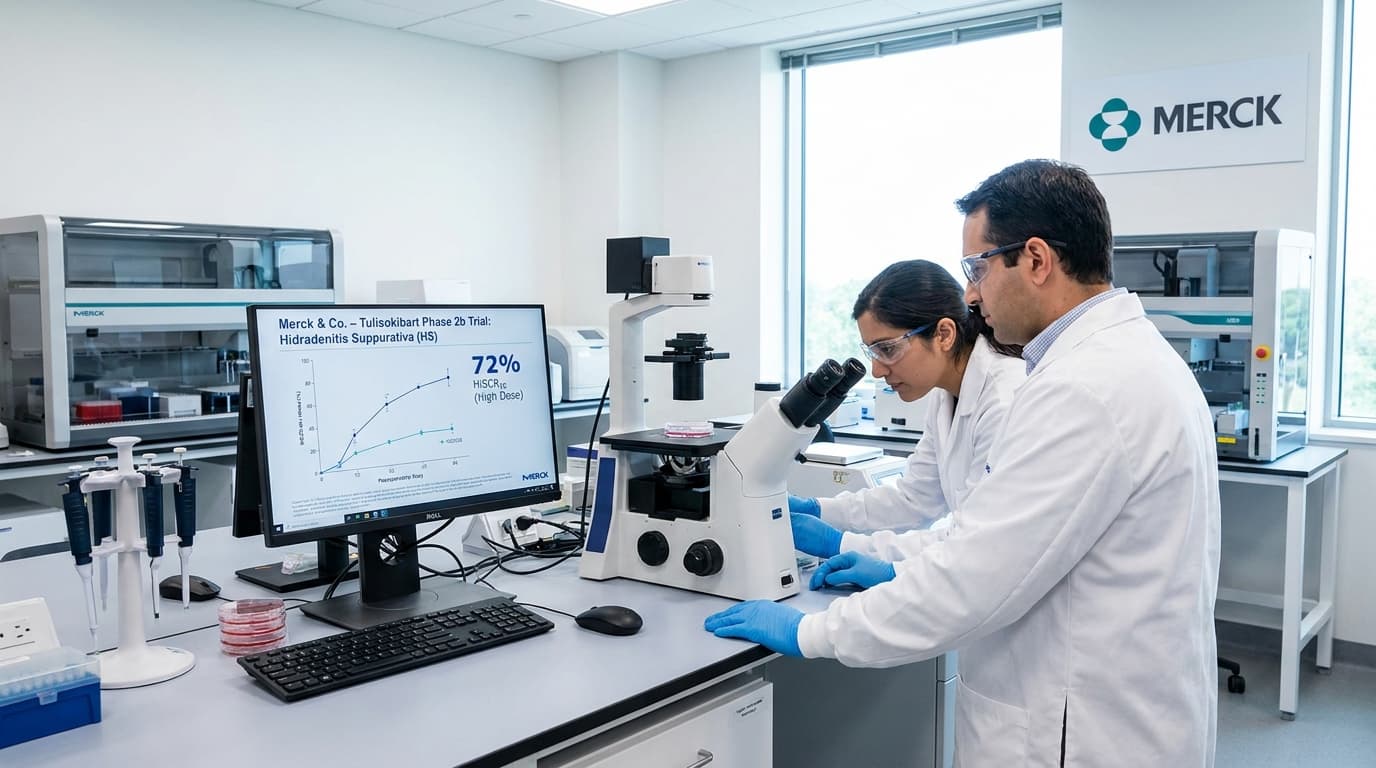
Merck & Co. reported a Phase 2b win for tulisokibart in moderate to severe hidradenitis suppurativa, saying the anti-TL1A antibody met its primary and secondary endpoints at Week 16 and will inform Phase 3 development in the indication. The company had first disclosed the win in August during its second-quarter earnings update.
The readout adds a second area of clinical traction beyond inflammatory bowel disease for tulisokibart, which Merck inherited through its $10.8 billion acquisition of Prometheus Biosciences in 2023. That matters because the asset has produced mixed results since the deal: Merck reported a Phase 3 victory in ulcerative colitis in June, then a Phase 2 failure in systemic sclerosis associated with interstitial lung disease in August.
The data
The Phase 2b trial was randomized, double-blind and placebo-controlled, with 149 patients assigned to high dose, medium dose, low dose or placebo. The dosing schedule was 480 mg every four weeks in the high-dose group, 480 mg every two weeks in the medium-dose group, and 240 mg every four weeks in the low-dose group.
By Week 16, HiSCR50 was achieved by 72% of patients in the high-dose group, 64% in the medium-dose group and 52% in the low-dose group. HiSCR50 was defined as at least a 50% reduction in total abscesses and inflammatory nodules with no increase in abscess count.
On secondary endpoints, HiSCR75 was reached by 41% of the high-dose group, 40% of the medium-dose group and 29% of the low-dose group, versus 15% in the placebo group. Merck also said quality of life as measured by the dermatology life quality index improved by 3.16 points over placebo in the high-dose group and 1.02 points over placebo in the medium-dose group.
Adverse events occurred in 42.9% of the high-dose group, 47.6% of the medium-dose group and 52.4% of the low-dose group, compared with 40.9% in the placebo group. Serious adverse events were reported in 2.4% of both the high- and medium-dose groups, 4.8% of the low-dose group and 2.3% of the placebo group.
The commercial picture
The HS market is already active, with approved products from UCB, Novartis and AbbVie, alongside mid-stage and late-stage challengers. Fierce Biotech noted that Avalo Therapeutics recently posted a Phase 2 win in HS with abdakibart, while Incyte delivered two Phase 3 wins in March 2025 for povorcitinib, an oral JAK1 inhibitor.
For Merck, the result is less about novelty than optionality. Tulisokibart is designed to block TL1A signaling and downregulate Th1, Th2 and Th17 cells in immuno-fibrosis, and this HS dataset gives the company another setting where that mechanism may support a registrational strategy. In a field where differentiation increasingly depends on balancing efficacy, safety and route or dosing convenience, expanding into HS helps Merck justify continued investment in an asset that has already shown it will not work uniformly across immune-mediated diseases.