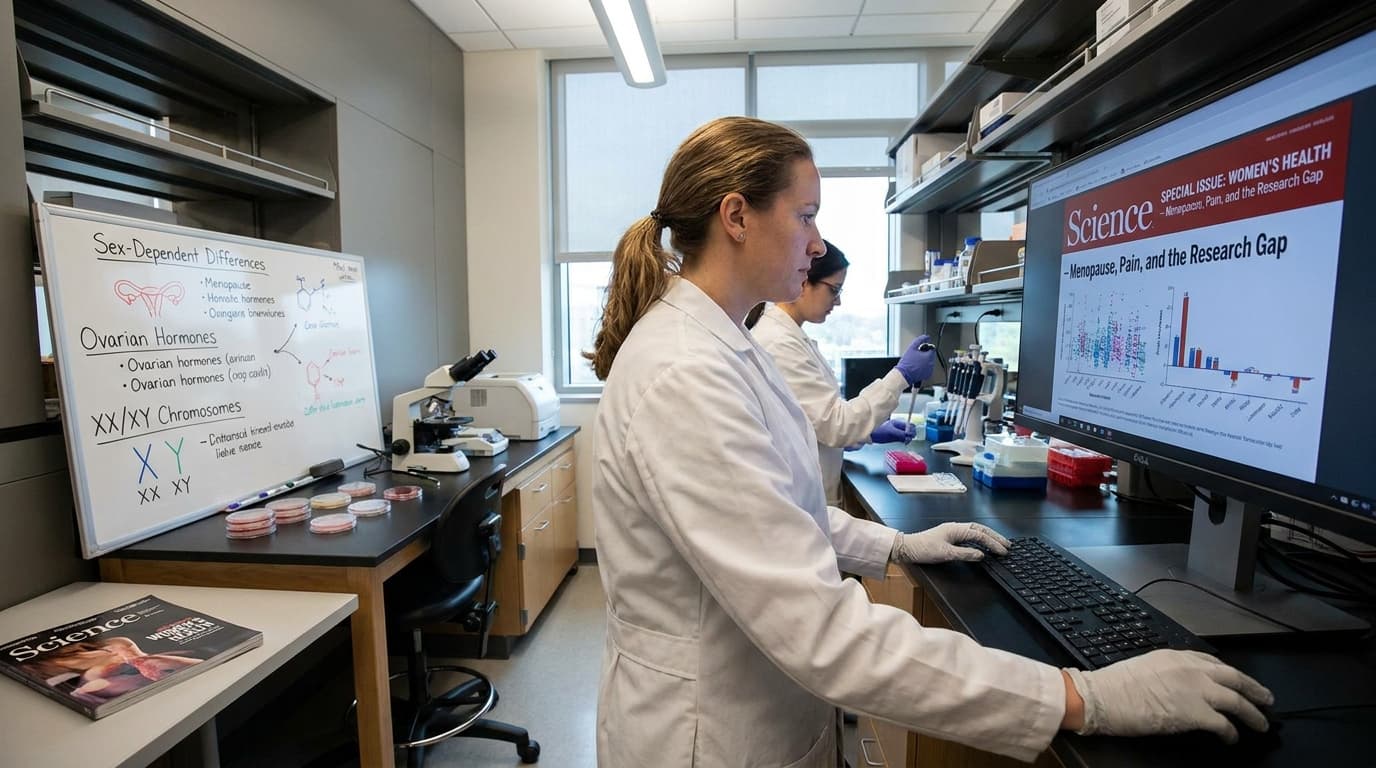
Science has published a special issue dedicated to women’s health, reflecting how topics once treated as taboo, including menopause and endometriosis, have become more visible in public discussion while remaining insufficiently understood in research and care. The issue argues that biomedical science has increasingly shown sex-dependent differences in many diseases that do not involve reproduction and that occur across the lifespan.
That premise matters because the publication is not presenting women’s health as synonymous with fertility or pregnancy, even though much of the field has historically been organized that way. The issue was edited by an all-female team — Yevgeniya Nusinovich, Sacha Vignieri, Joana Osório, and Sarah Ross — who said political attacks on women’s rights and health care, along with funding cuts affecting research in this area, were urgent reasons for assembling it.
What the issue covers
The special issue includes reviews intended to highlight recent findings on sex-dependent biological differences beyond reproduction, alongside deeper examinations of menopause and the pregnant body. One review takes stock of recent research on sex-specific mechanisms of pain. According to the source, women experience functional pain at about twice the rate of men, and persistent pelvic pain can become debilitating in daily life.
That review highlights the impact of sex hormones, immune-neural interactions, the gut microbiome, and the role of ovarian hormones in pain, while also emphasizing how limited the effort to understand female pain still is. The authors wrote that women are waiting for concrete answers that might counter the common “all in your head” treatment of their illnesses.
Another review examines the effect of XX and XY chromosomes on aging and disease and argues that sex chromosomes should always be considered in precision medicine strategies. Other contributions call for rethinking menopause research and treatment with a more individualized approach, investigating the immune system’s role in preparing for and carrying out pregnancy, and considering the ovary’s postmenopausal function.
The research gap the issue exposes
Nusinovich, a senior editor at Science, told STAT that she views post-reproductive health research as distinct from reproductive investigations because the focus is on a woman’s own health rather than improving reproductive success. She also said she considered including other conditions unrelated to reproduction, such as cardiovascular and metabolic disease, where sex differences matter, but concluded there were not enough new biological insights with mechanisms to support coherent review articles.
That absence is one of the clearest signals in the package. The issue points to progress, but it also shows that many areas of women’s health still lack the mechanistic depth that would support stronger clinical development or precision-medicine strategies. Tiarney Ritchwood of Wake Forest University School of Medicine said institutions’ funding choices help drive an emphasis on women in their reproductive years, and that broader discussion of women outside those years is important.
Nicole Woitowich of Northwestern University, who was not involved in the issue, said women’s health was for many years treated as synonymous with reproductive health and that the field has now broadened to consider the influence of sex across human physiology. At the same time, she said pregnancy and menopause remain unique aspects of women’s health whose long-term effects are only beginning to be understood.
The source also notes criticism of the issue’s limits. Omisade Burney-Scott, a menopause justice advocate who was not involved, said the menopause coverage lacks some perspectives, including early menopause due to gender-affirming care or medical intervention, and said environmental factors such as racism, classism, homophobia, transphobia, and carcerality should be considered in menopause outcomes.
The commercial and scientific implication is not a near-term product catalyst but a pipeline problem upstream: if funding and trial design continue to treat sex as secondary or focus women’s health too narrowly, large areas of biology with clinical relevance will remain too immature to translate efficiently into therapies, diagnostics, or precision-care tools.