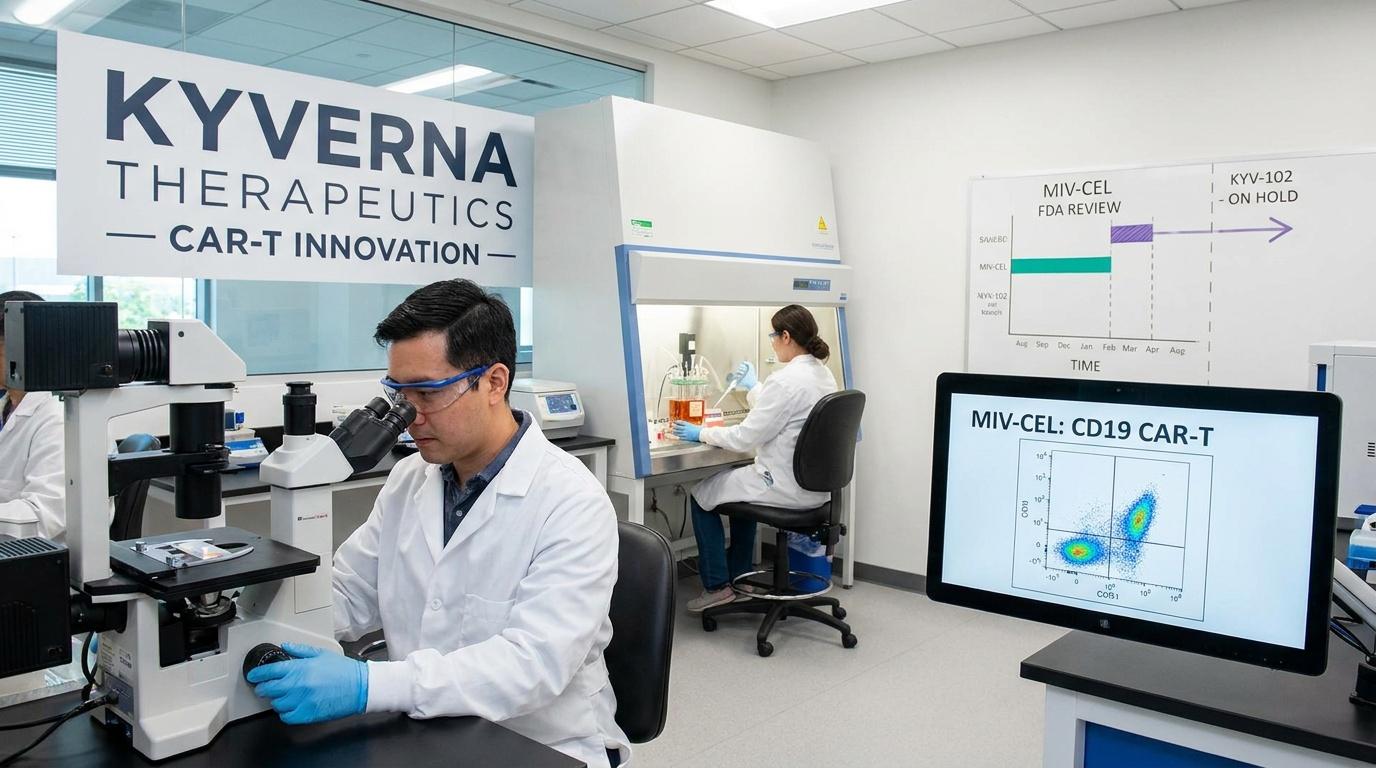
Kyverna has abandoned work on KYV-102, a next-generation autologous CD19 CAR-T for autoimmune diseases, as it concentrates on advancing mivocabtagene autoleucel, or miv-cel. The company disclosed the move in its third-quarter earnings results, saying it had “elected to deprioritize its KYV-102 program as the company continues to focus on accelerating its late-stage neurologic indications with miv-cel.”
The portfolio change narrows Kyverna’s near-term strategy to the asset closest to commercialization. That can reduce operational spread, but it also removes a program the company had previously framed as a route to broader patient access and lower costs in autoimmune CAR-T.
What KYV-102 Was Supposed To Do
KYV-102 used Kyverna’s whole-blood, rapid manufacturing process and the same construct as miv-cel. The company had described the program as a way to remove the need for apheresis, in which a patient’s blood is collected and T cells are separated for engineering before being returned to the patient.
The original plan was to seek permission from the FDA in the fourth quarter of 2025 to bring KYV-102 into the clinic. The FDA cleared the program to enter clinical testing in January 2026, but the asset had gone quiet since then.
A company spokesperson told Fierce that KYV-102 was “an early-stage program intended to broaden patient access and lower costs,” adding that those goals remain part of Kyverna’s long-term strategy and could be pursued through lifecycle management activities tied to miv-cel and the company’s later-stage patient experience database.
Why Miv-Cel Now Matters More
Kyverna recently completed its FDA approval application for miv-cel in stiff person syndrome and requested priority review as it prepares for a potential commercial launch in 2027. If approved, CD19-targeted miv-cel would become the first CAR-T therapy approved for an autoimmune disease.
The company said its launch preparations have included targeted site activation engagements with CAR-T experts, neurologists and payers, along with building an integrated patient support and reimbursement network to streamline treatment.
Kyverna is also studying miv-cel in generalized myasthenia gravis, where long-term phase 2 data were released in September and enrollment in an ongoing phase 3 trial is expected to wrap up in mid-2027. Updated data from a phase 1 study in progressive multiple sclerosis were presented in October.
The signal in the KYV-102 decision is that autoimmune CAR-T developers may need to prove the first commercial path before investing heavily in access-expanding follow-ons. Kyverna is choosing focus over platform breadth while the regulatory case for miv-cel is still being decided.