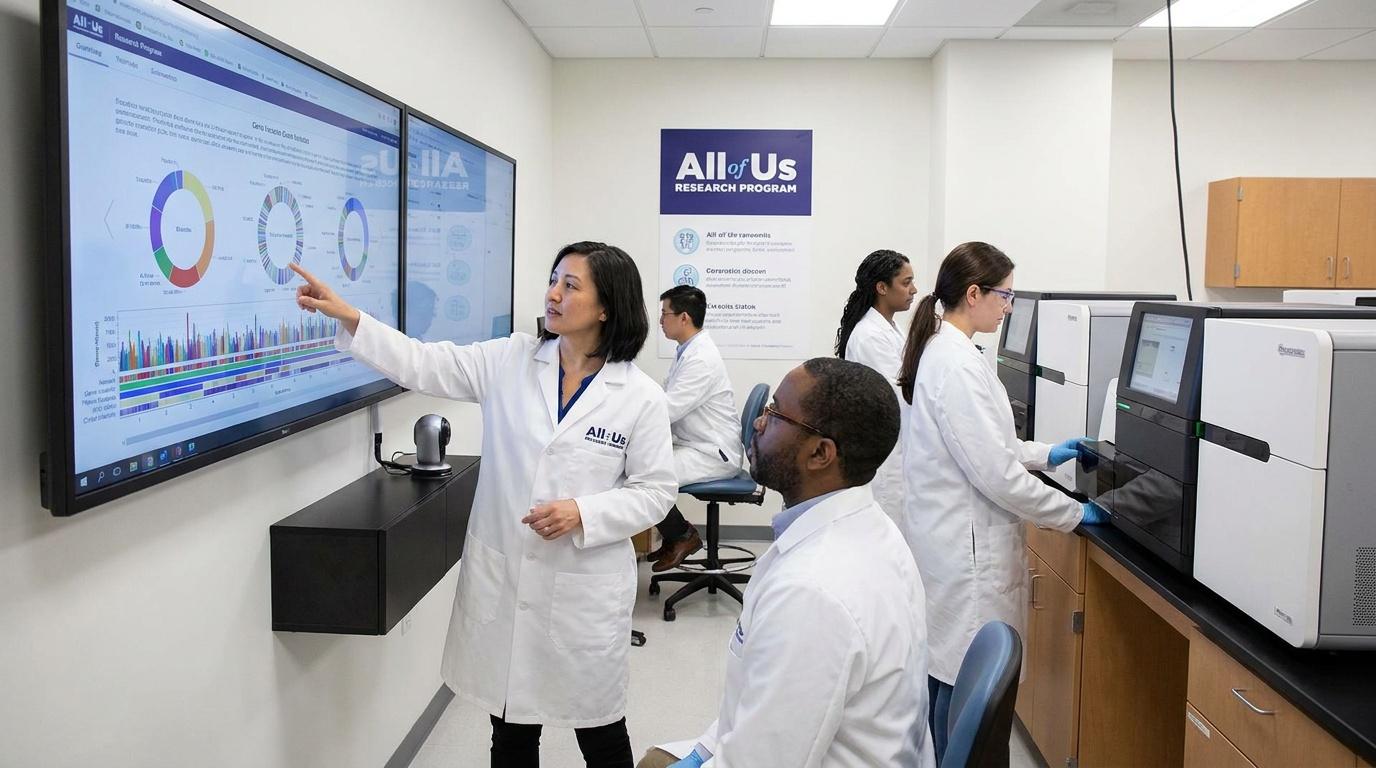
A study of nearly 100,000 Americans has identified thousands of new variants in 16 genes that influence how people respond to prescription drugs, using data from the National Institute of Health's All of Us program. Published in Science Translational Medicine, the work depends on a more diverse participant base than earlier pharmacogenomics studies and points to a broader clinical use case for genetically guided prescribing.
The researchers found that every participant carried at least one variant in the 16 pharmacogenes studied. They also reported that one in four participants had taken a medication that could be affected by those variants. The genes examined can alter drug metabolism in ways that may require higher or lower doses, create different side effects, or make some medicines ineffective.
The data
The variants in the study affect the functioning of medicines including selective serotonin reuptake inhibitors, statins, chemotherapy, and the blood thinner Plavix. Philip Empey, senior author on the paper and director of the Center for Clinical Pharmaceutical Sciences at the University of Pittsburgh, said genetics cannot explain every bad drug experience, but is increasingly recognized as one reason patients may respond differently.
The diversity of All of Us was central to the result. The program aims to collect genetic data from 1 million Americans from diverse backgrounds, and that broader representation helped identify variants not found in prior work using genomic resources such as the U.K. Biobank. Loren Saulsberry, a health policy researcher who was not involved in the study, said the paper adds to evidence that genetically guided clinical care can provide benefit across a diverse population.
That matters strategically for precision medicine because pharmacogenomics built mainly on narrower datasets risks producing uneven clinical utility. A resource that captures more ancestries can make dosing guidance and drug-response predictions more applicable outside the populations that dominated earlier databases.
Barriers to translation
The paper does not remove the operational hurdles between discovery and routine care. Many people do not have their genomes sequenced, physicians may not know how the drugs they prescribe are affected by genetic variants, and multiple variants can influence response to a given medicine.
Those practical barriers are now colliding with financial ones. All of Us is supported by the 21st Century Cures Act and yearly appropriations from Congress, but that former funding avenue will dry up in the 2027 fiscal year. The program expects to receive $122 million once a budget is finalized, which the source described as an 80% drop from its peak in 2023.
Joshua Denny, who was CEO of the program until the end of October, said those cuts have forced a pullback in recruitment infrastructure, including academic medical centers, FQHCs, and mobile units. The program has also stopped offering participants the ability to see the results of their genetic testing because of funding concerns.
Pediatric expansion has slowed as well. Sara Van Driest, director of pediatrics for All of Us, said the program has around 5,000 children enrolled, but those data are not yet available to researchers. The immediate signal is that the study expands the evidence base for pharmacogenomics just as the underlying national dataset faces a more constrained operating model.