Beam Therapeutics has posted phase 1/2 results for risto-cel in sickle cell disease and said it is gearing up for a potential filing with the U.S. regulatory body by the end of the year. If approved, risto-cel would become the third approved genetic-based treatment for the disease, after Vertex and CRISPR Therapeutics’ Casgevy and Genetix Biotherapeutics’ Lyfgenia, both originally approved in 2023.
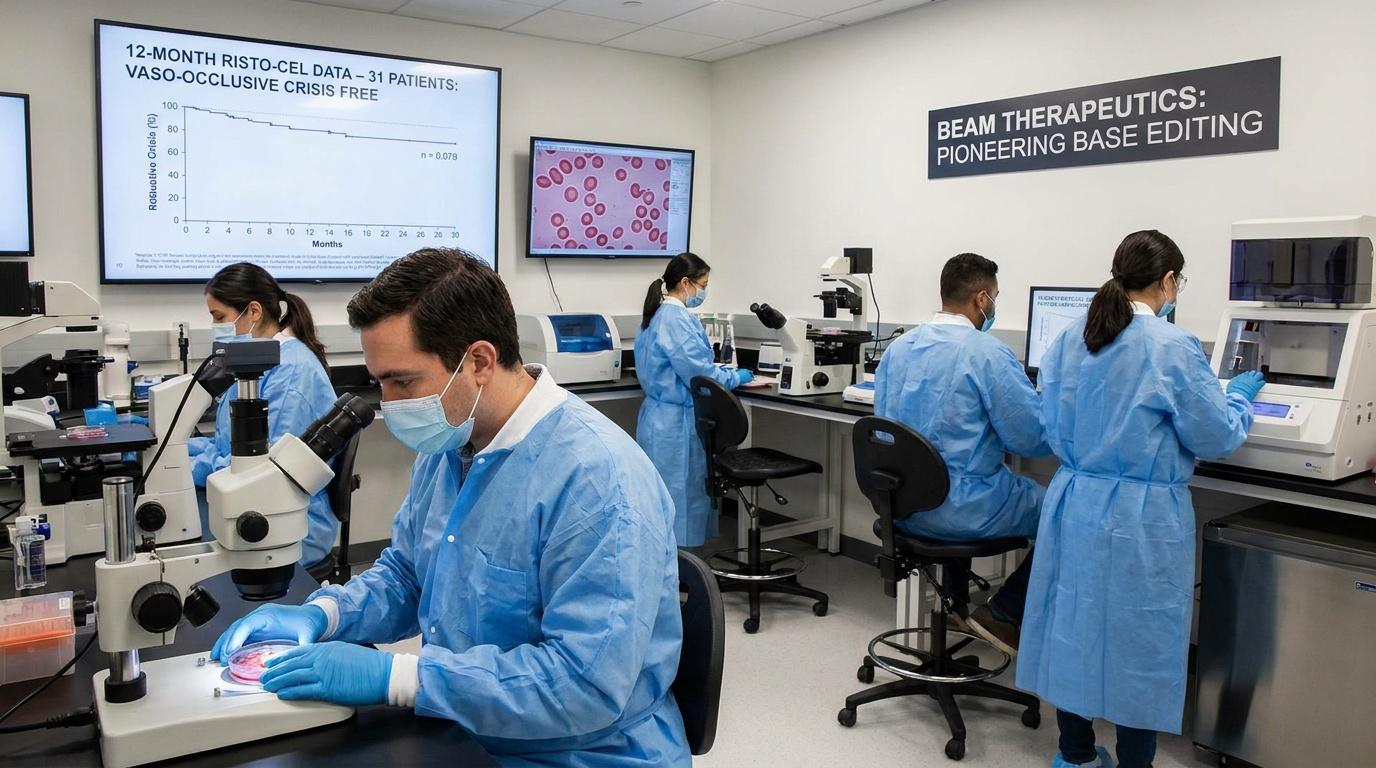
The headline efficacy result was durability against the disease’s most painful complications. Over a 12-month period, the therapy kept 31 adults and adolescents from experiencing painful and severe vaso-occlusive crises as the primary endpoint and prevented hospitalizations as a secondary efficacy goal.
The data
Risto-cel, short for ristoglogene autogetemcel and formerly called BEAM-101, is an autologous cell therapy intended as a one-time treatment aimed at the BCL11A gene to promote naturally shaped blood cells rather than the sickle shape characteristic of the condition.
Beam said safety was consistent with the difficult cell transplantation process. The source does not provide a more detailed breakdown of adverse events, but the company’s framing suggests the key question is not whether the regimen is intensive, because that is already understood in this treatment category, but whether Beam can improve how the process is delivered.
The commercial picture
That is where William Blair drew its differentiation case. In a Nov. 10 note, the firm said reductions in the number of required cell mobilizations, vein-to-vein times from cell collection to edited cell infusion, and hospital stays during edited cell infusion due to shorter times for cell engraftment are all potential avenues for differentiation, and that risto-cel appears to deliver on those measures.
Beam CEO John Evans told Fierce earlier this year that the collection and manufacturing steps required for existing genetic sickle cell therapies could be blamed for slow market uptake. That makes Beam’s commercial opportunity less about proving gene editing can work in sickle cell disease and more about making a complex curative-style approach easier to execute in practice.
William Blair predicted peak sales of $2.9 billion for risto-cel. The analysts also said the therapy could potentially have a higher price tag than Casgevy because of its improved profile while still cutting healthcare costs through a shorter infusion procedure. For reference, Casgevy’s U.S. list price is $2.2 million for a one-and-done treatment, while Lyfgenia is listed at $3.1 million.
Beam said it will present further details at the American Society of Hematology meeting in New Orleans in December. The company is also working on an in vivo version of a sickle cell disease treatment, though development there is still in early stages.