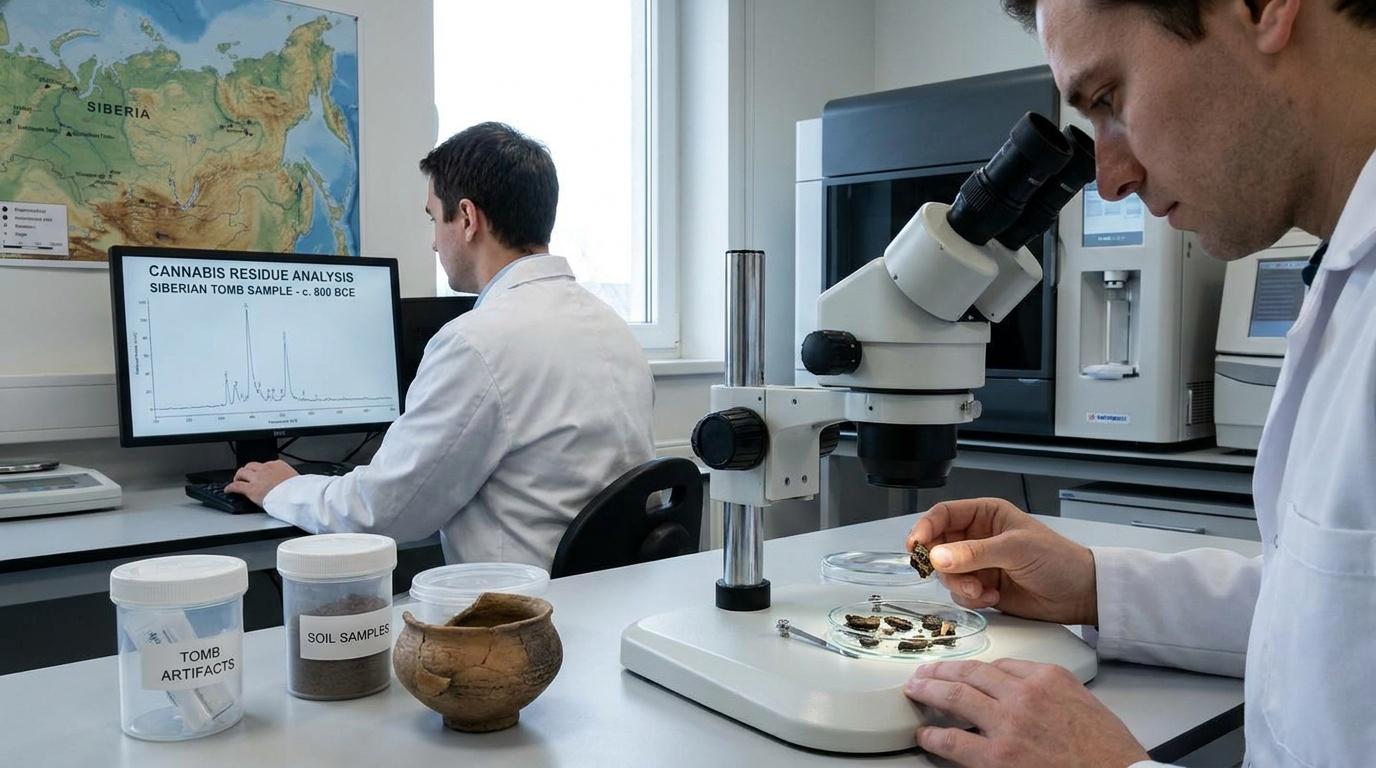
A study highlighted by STAT reports evidence of cannabis use in a 2,800-year-old Siberian tomb, adding a new data point to the long-running question of how far back documented human use of the plant extends.
The item appeared in a broader health news briefing, but the core claim is specific: researchers uncovered evidence of cannabis use from an ancient tomb in Siberia. STAT framed the result against early writing by the ancient Greek historian Herodotus, whose accounts have often served as part of the historical backdrop for discussions of cannabis use in antiquity. The new report matters because physical evidence can shift the discussion from literary description toward direct archaeological support.
The finding
Based on the source material, the study's contribution is the age and setting of the evidence: a tomb in Siberia dated to about 2,800 years ago. That gives the report weight as an archaeological observation rather than a cultural retelling.
STAT did not provide methodological detail in the excerpted text, so the available reporting supports a narrow conclusion. Researchers say the evidence points to cannabis use in that burial context; the source does not describe the analytical technique, sample type, or how broadly the finding can be generalized beyond that site.
Why it matters
For the biotech and life sciences audience, the signal is less about present-day product development than about the evidentiary standards used in science. Ancient cannabis narratives are often repeated because they are familiar. Physical evidence from a dated site is more useful because it gives researchers something testable and situates the claim in a specific place and time.
That distinction also matters as cannabis-related science continues to split into several conversations at once: medical use, public policy, consumer products, and basic research on the plant's history. Historical claims can shape public narratives, but studies like this are most valuable when they tighten what is actually known rather than expanding mythology.
In that sense, the Siberian tomb report is a modest but meaningful development. It does not, based on the source provided, settle broader debates about how cannabis was used across ancient societies. It does offer another piece of direct evidence that people were using it in a definable setting nearly three millennia ago, which is a stronger foundation than relying on early written accounts alone.