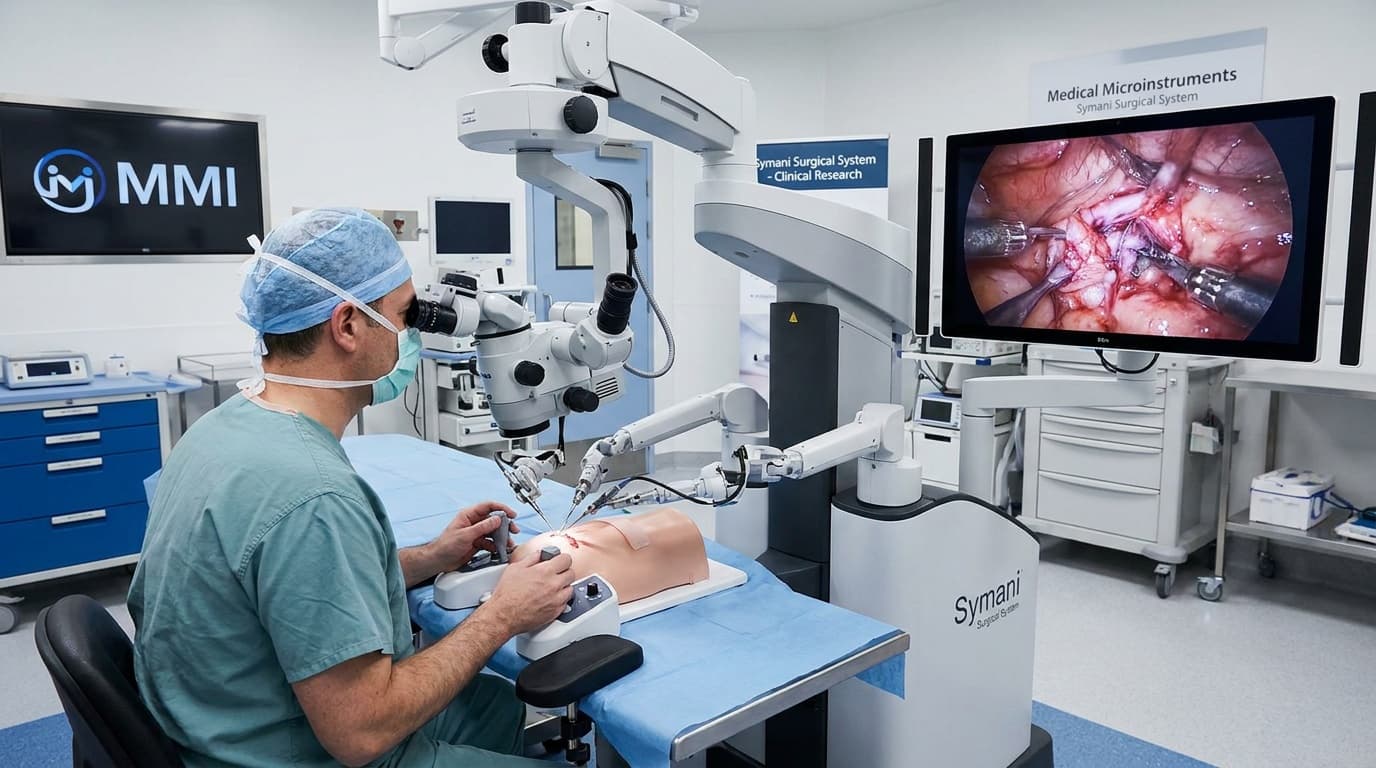
Medical Microinstruments Inc. has raised $125 million in Series D financing as it looks to expand the installed base of its Symani Surgical System and widen the clinical case for robotic microsurgery. The Jacksonville, Florida-based company said the funding will support global commercial expansion, patient access efforts, clinical research, product development and training infrastructure.
The raise comes with some evidence of early commercial traction but also a clear next challenge. MMI said it has installed approximately 50 systems worldwide and that more than 3,500 procedures have been performed using Symani. CEO Mark Toland said in the company's announcement that MMI has shown demand at leading institutions and is now focused on turning that adoption into scale.
Symani is designed specifically for microsurgery rather than the larger-scale procedures targeted by many surgical robots. According to the company, the system is intended to help surgeons repair tiny blood and lymphatic vessels during complex procedures, including cases that may follow cancer treatment or trauma. It can also be used for peripheral nerve repair in Europe and Asia-Pacific, and the device has regulatory clearance in Europe and the U.S.
The Commercial Picture
BioStar Capital was the primary investor in the round, with participation from S3 Ventures, Angelini Ventures, an undisclosed strategic corporate investor and existing investors. MMI said the money will also go toward development work in areas such as energy instruments and digital surgery.
The bigger commercial issue is not whether robotic microsurgery is technically possible, but whether hospitals will see enough clinical and economic value to adopt it more broadly. Toland said in an email that continued adoption requires differentiated technology along with strong evidence, effective training programs, growing reimbursement support and a clear economic benefit for healthcare systems. That framing matters because it suggests MMI sees proof generation, not only placement growth, as the core requirement for the next stage of the market.
New Applications
Part of the financing will support research into additional uses for Symani, including an experimental approach in Alzheimer's disease. In May 2026, MMI announced that the first patient had undergone a microsurgical procedure intended to address abnormalities in the deep cervical lymph node region as part of its REMIND study, with the aim of improving symptoms of the patient's Alzheimer's disease.
In July, MMI received FDA authorization to expand that trial to 15 participants. The company's website describes REMIND as an early feasibility study and says longer-term monitoring and additional testing are needed to verify safety and efficacy. Toland said the long-term opportunity is significant, but that expansion into new applications must be led by evidence.
Beyond Alzheimer's research, Toland said early findings in other Symani applications have been encouraging, citing complex reconstruction work with reported signals that include flap survival, reduced revisions, lower postoperative pain medication requirements and meaningful limb volume reduction in patients undergoing lymphatic repair. MMI said its top priority is expanding the evidence base through broader, multicenter and comparative studies that could support clinical outcomes claims and additional indication approvals.