Rural health care providers that have struggled for years are now facing nearly $1 trillion in Medicaid cuts over the coming decade, and the Trump administration is pointing to artificial intelligence as part of the solution. Mehmet Oz, who leads the Centers for Medicare and Medicaid Services, said at an event on mental health this year that “the best way to help” rural communities is “AI-based avatars,” part of a broader message from administration officials that has also included concierge care for every American and AI nurses as good as any doctor.
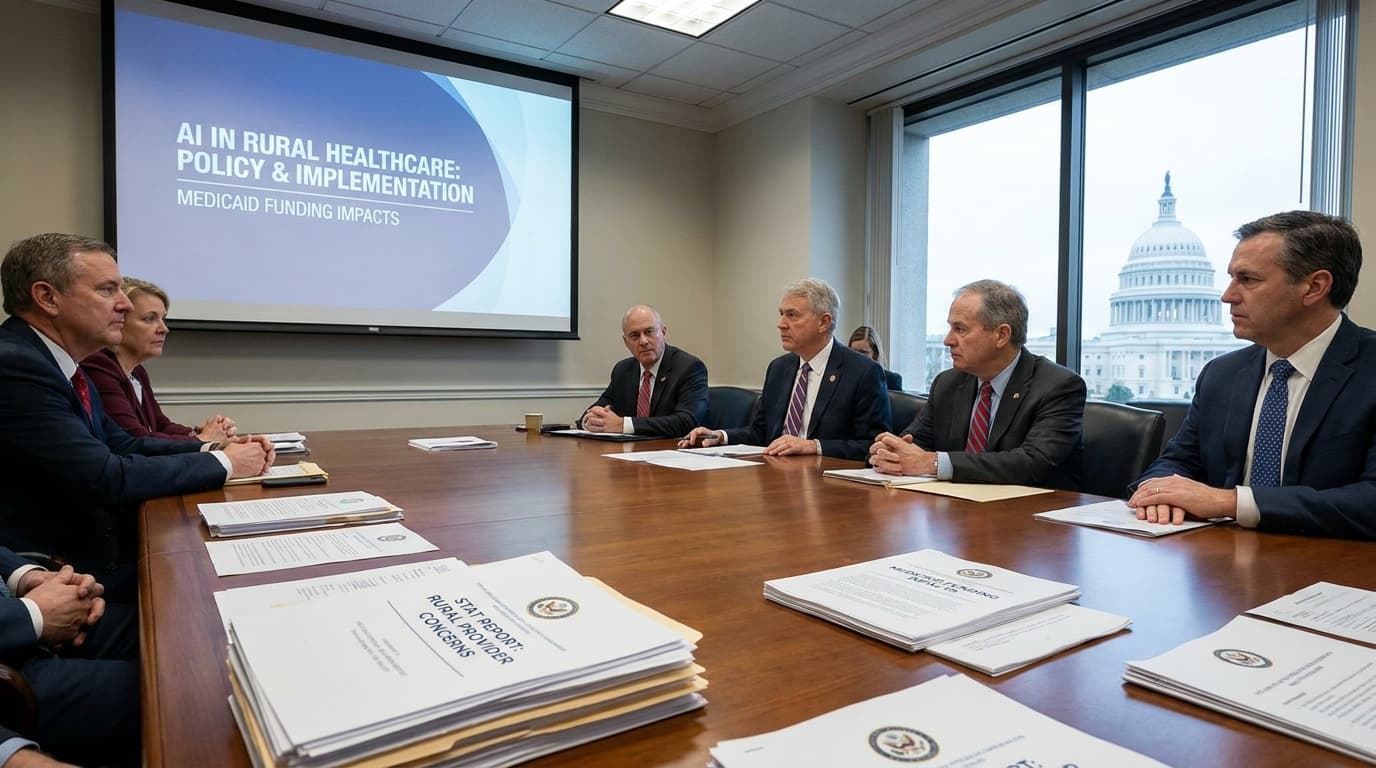
That pitch is colliding with a more constrained view from health system operators. Across dozens of interviews with rural health providers, hospital system leaders, and health AI experts, STAT found repeated concern that investing in AI would be costly for already at-risk systems and that the technology’s savings potential has not yet been proved.
The operating reality
Lori Dwyer, president and CEO of Penobscot Community Health Care in Maine, said her system has already adopted ambient scribes, which listen to clinician-patient conversations and help document them in the electronic health record. She said the tools have reduced documentation time, improved communications, and helped off-load administrative work so providers and care teams can focus more on patients and avoid burnout.
But Dwyer said those gains have not translated into lower costs. Other uses, including patient communications and support for remote patient monitoring, have also been helpful, she said, yet only create marginal economic efficiencies while looming cuts are wiping out years of work to stabilize the system’s finances.
Trampas Hutches, the Mountain Region president at MaineHealth, described a different response to the same pressure: speeding up adoption. He told STAT the system is making AI one of the top priorities in its three-year plan, using it for ambient notetaking, administrative work, and as a “care team member.” His rationale was blunt: “The only way to meet the demand is technology and AI.” Even so, he added that the cost of the technology is a concern and that MaineHealth is trying to avoid any increase in its cost structure.
The policy gap
The administration’s argument is that AI, together with the $50 billion rural health transformation fund that came with the Medicaid cuts, could remake rural care and act as a deflationary force across health care. The providers and experts interviewed by STAT outlined a narrower near-term path: AI can improve workflow efficiency and support clinicians, but the large, system-altering savings promised by policymakers appear out of reach for many rural systems.
That gap matters strategically. If adoption requires expensive AI-native infrastructure, the biggest gains may accrue to larger systems that can afford the investment, while smaller rural providers absorb new technology costs without a comparable financial return. Several leaders and experts told STAT they worry that, rather than shrinking disparities, AI could end up increasing health inequities in the U.S.
Older technologies already illustrate the constraint. Telehealth can still struggle in remote areas because broadband access is weak or absent and because regulatory and payment structures remain unsettled. Hospital leaders in Maine said low broadband access could also make internet-dependent AI systems less reliable. The result is a policy push built around a tool many rural operators view as promising, but not yet capable of closing the economic hole created by the cuts.