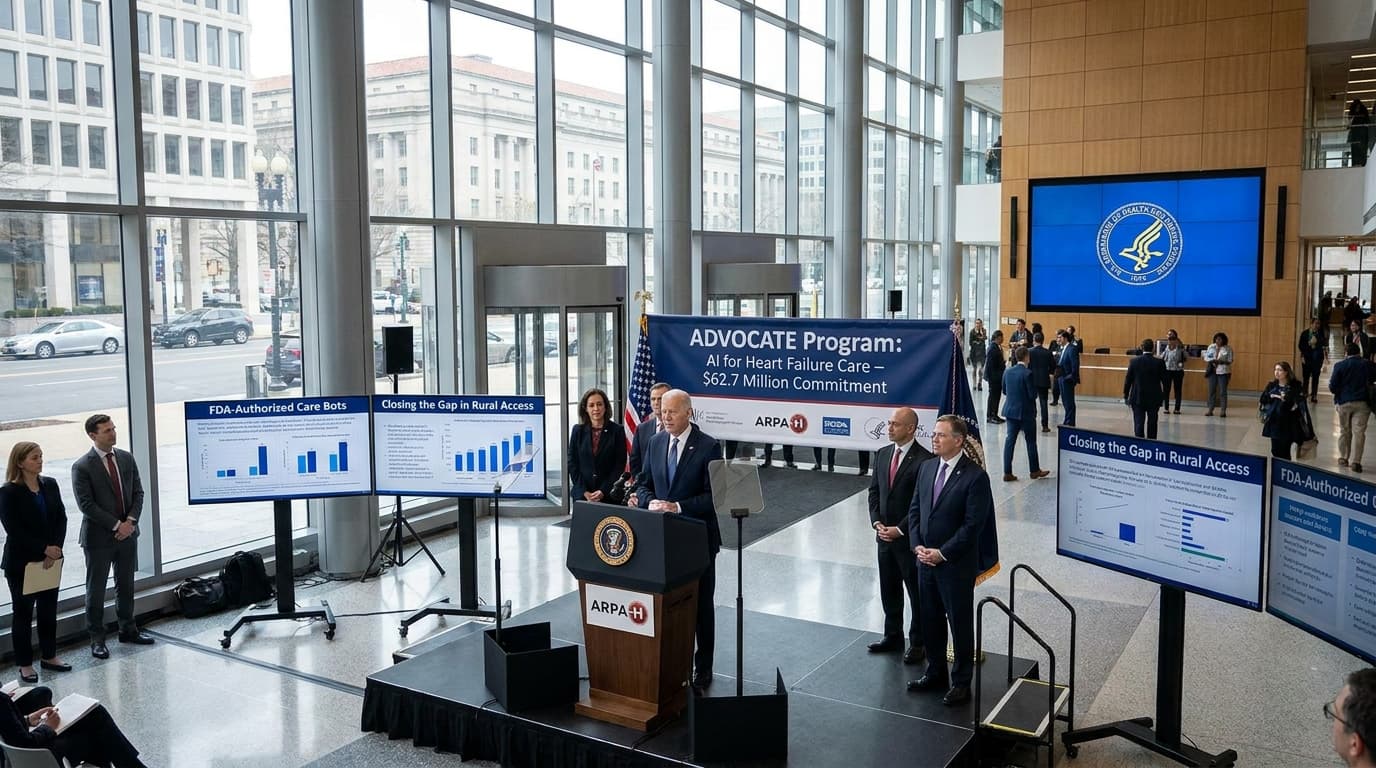
ARPA-H plans to commit $62.7 million to develop artificial intelligence bots that direct treatment of heart failure through a program called ADVOCATE. The agency said the goal is to produce partially autonomous AI devices authorized by the Food and Drug Administration to help treat patients.
The use cases ARPA-H named go beyond documentation or triage. The devices are meant to help assess symptom severity, prescribe drugs and order lab tests, putting the program in a category of clinical AI that depends on both technical performance and a workable regulatory path.
Why this matters
ARPA-H said many of the 6.7 million Americans with heart failure do not get optimal treatment because of difficulty accessing specialists. Its stated bet is that AI agents can help close that gap, especially in rural and other underserved settings.
That makes ADVOCATE notable for its specificity. Rather than funding general-purpose health AI, ARPA-H is backing tools tied to a defined disease area, named clinical actions and an authorization target at the Food and Drug Administration. If that model works, it could provide a template for future programs that try to move AI from administrative support into regulated treatment assistance.
The first awards
ARPA-H on Wednesday announced a first batch of awards to Atman Health, UpDoc, Tempus AI, and teams from Stanford University, Duke University, and the Kaiser Permanente health system. ARPA-H may still fund additional teams.
The amount committed for the first year is $33.7 million, while the remainder may be renegotiated up or down. That structure suggests the total headline figure is a ceiling rather than a fixed payout, leaving room for the agency to adjust the program as the technical and regulatory work develops.