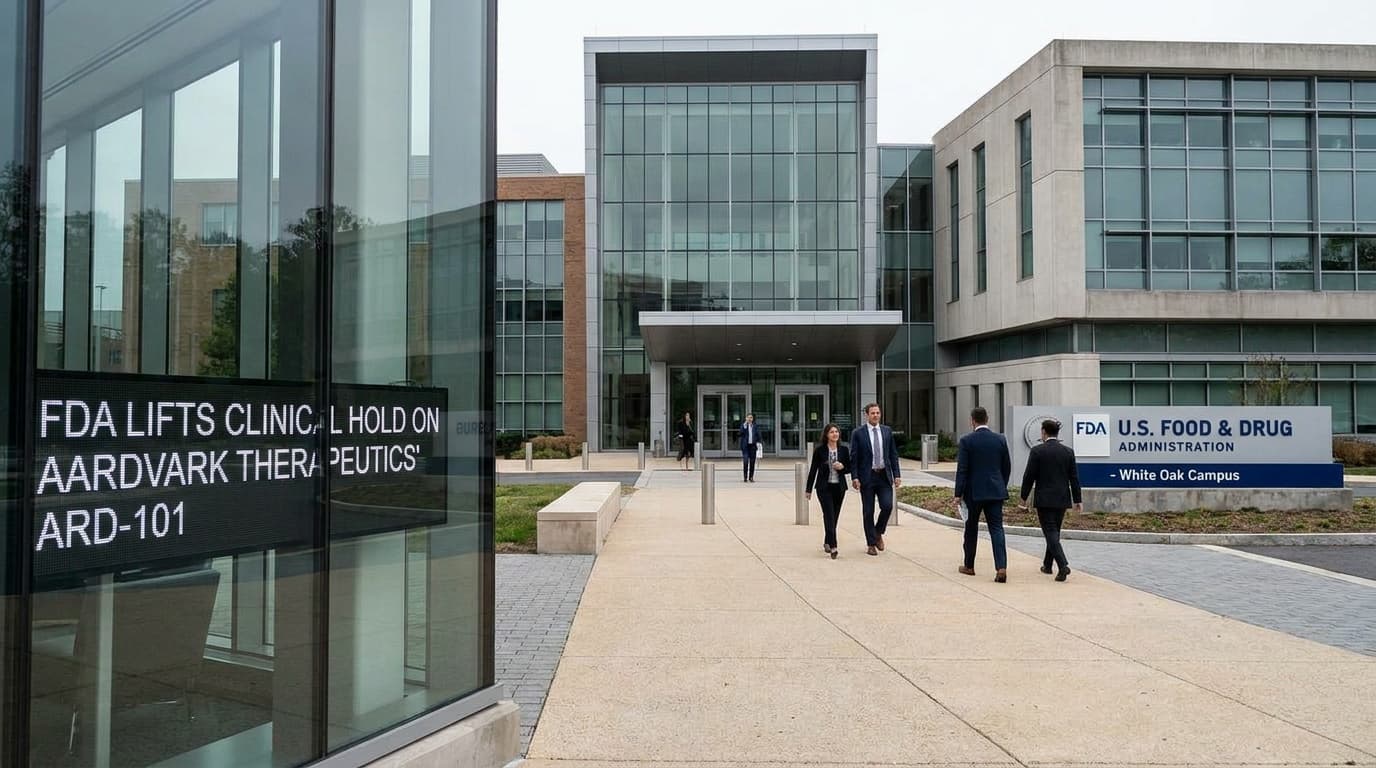
Aardvark Therapeutics has cleared a regulatory obstacle for ARD-101, with the FDA lifting its clinical hold on the small-molecule candidate in Prader-Willi syndrome after additional cardiac work found no events in healthy volunteers at lower doses. The company had paused the Phase 3 HERO study and its open-label extension in February, then saw the FDA place both under a full clinical hold in May.
The immediate significance is not just that ARD-101 can move forward again, but that Aardvark now has to rebuild its late-stage strategy rather than simply restart where it left off. The company said in August that it had unblinded HERO and the extension study and no longer plans to resume those trials as previously designed.
The data behind the hold lift
The original concern came from a healthy-volunteer study conducted as part of a routine additional cardiac safety assessment to support a planned regulatory filing. In its full-year 2025 report in March, Aardvark disclosed that patients treated with a 1,600-mg dose of ARD-101 twice-daily, with no prior dose escalation, showed echocardiographic abnormalities that could be indicative of compromised heart efficiency. The company said that dose was two times the strength used in HERO.
Aardvark’s new package included what it described as a thorough ECG study in additional healthy volunteers. According to the company’s Thursday announcement, that study found no cardiac events when ARD-101 was dosed at 200 mg and 400 mg twice-a-day. The biotech also conducted an in vitro cardiac sodium channel, or NaV1.5, study.
That combination was enough for the FDA to remove the hold. For Aardvark, the signal is that the agency was persuaded by follow-up work separating the earlier findings from the dosing intended for the Prader-Willi program, but the company still has to align with regulators on what a revised Phase 3 path should look like.
The road back for Aardvark
A company spokesperson told BioSpace that Aardvark plans to request a meeting with the FDA to align on Phase 3 plans for ARD-101 and expects to resume Prader-Willi syndrome clinical activities in 2027. The spokesperson did not provide specific details about the late-stage program.
The hold has had broader consequences across the company. In March, shortly after the voluntary suspension of ARD-101, Aardvark also paused the Phase 2 POWER and STRENGTH studies of ARD-201, a combination of ARD-101 and a DPP-4 inhibitor being tested for obesity. POWER was designed to test whether ARD-201 could help patients keep weight off after GLP-1 treatment, while STRENGTH was assessing the additive benefit of ARD-201 alongside GLP-1s. Both studies continue to be listed on Aardvark’s website, but the spokesperson declined to comment on ARD-201’s current status.
The operational fallout also included layoffs. Aardvark reported in August that its workforce had fallen from 40 employees and 35 consultants at the end of April to 28 employees and 27 consultants by July 31. As of June 30, the company had $73.9 million in cash, cash equivalents and short-term investments, which the spokesperson said should be sufficient to fund operations through the meeting with the FDA on Phase 3 plans.
Prader-Willi syndrome is a rare genetic disorder marked by hyperphagia, the inability to feel full or satisfied. ARD-101 is designed to activate certain taste receptors in the intestine, especially those that mediate bitterness, with the goal of triggering gut hormones including GLP-1 to help suppress hunger. The reopening of ARD-101 matters because the Prader-Willi market is no longer empty: the FDA approved Neurocrine Biosciences’ Vykat XR for hyperphagia in PWS in March 2025, after Neurocrine acquired Soleno Therapeutics for $2.9 billion in April. That means Aardvark is no longer pursuing only regulatory clearance, but trying to reenter a market where a competitor is already commercial and facing its own post-marketing scrutiny.