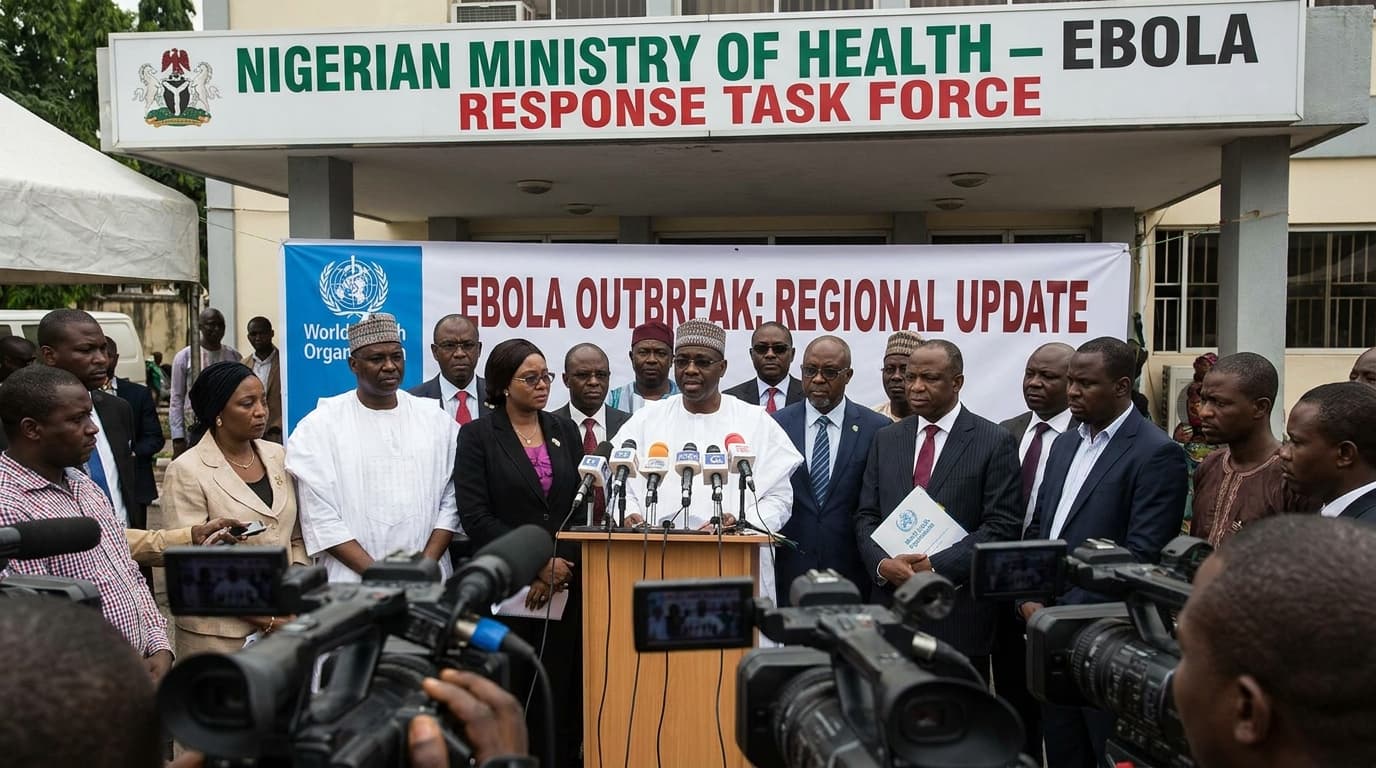
Nigeria has confirmed an imported Ebola case tied to the ongoing outbreak centered in the Democratic Republic of the Congo, adding the country to a growing list of nations detecting related infections beyond the outbreak’s center.
According to health officials, the patient is a woman who had recently traveled to Uganda. She became sick on Oct. 7, four days after arriving in Nigeria, sought care at a private clinic in Abuja on Oct. 11, and her infection was confirmed yesterday. She remains in isolation.
The public health response
Officials are reconstructing the woman’s contact networks and travel history. So far, 44 contacts are being monitored.
The case matters less for the size of Nigeria’s current contact list than for what it says about the outbreak’s regional reach. Nigeria is the fifth country to identify an infection tied to the Democratic Republic of the Congo outbreak, indicating that the event is no longer only a domestic containment challenge for one country.
Regional context
In recent weeks, Kenya documented nine cases tied to an imported infection as the outbreak continued to grow. Health officials described the Democratic Republic of the Congo event as the second largest Ebola outbreak on record.
The outbreak is caused by the Bundibugyo species of Ebola. That detail is operationally important because cross-border preparedness depends on whether neighboring countries are responding to a known transmission pattern or a newly shifting one; in this case, officials are dealing with an outbreak that is already established and still generating travel-linked cases.
What policy makers are signaling
The World Health Organization said it is urging all countries in the region to sustain a high level of readiness as the outbreak in the Democratic Republic of the Congo continues to evolve.
For regional health systems, the signal is that preparedness now has to extend beyond border screening into rapid diagnosis, isolation capacity, and contact monitoring after symptomatic travelers enter care settings. Nigeria’s sequence of arrival, symptom onset, clinic visit, and later confirmation shows how imported cases can move through routine healthcare channels before they are identified.