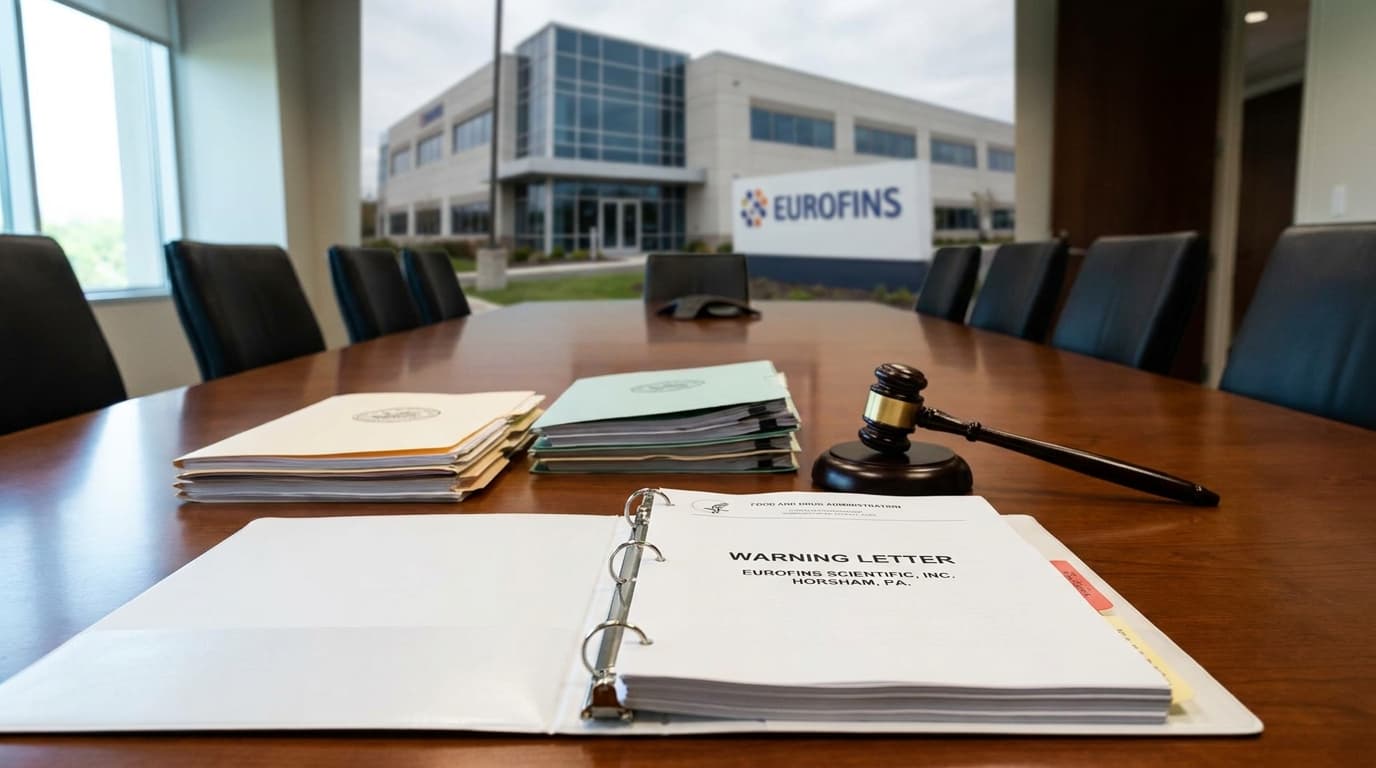
The FDA has issued a warning letter to Eurofins after the contract testing laboratory admitted to “selectively recording test results,” escalating a June inspection at its Horsham, Pennsylvania, laboratory into a data-integrity finding with broader implications for outsourced microbiology testing.
Eurofins performs microbiological analyses of components and drug products for customers. In the warning letter, the FDA said the company failed to ensure laboratory records included complete data from tests needed to ensure regulatory compliance. The agency’s concerns centered on pour plates used for counting microorganisms.
The company told the FDA that analyst interviews and a retrospective review of laboratory data showed inconsistent reporting practices dating back to February 2025. Eurofins acknowledged that some analysts were selectively recording test results and only documenting pour plate results in certain circumstances.
What The FDA Found
According to the warning letter, one FDA inspector directly observed a Eurofins microbiologist fail to record results. The agency also described cracked and desiccated pour plate samples that could no longer reliably support uniform microbial growth.
The FDA stated that a result recorded from a compromised plate cannot be considered valid, even if it falls within specification, because the condition of the media may have suppressed or obscured actual microbial recovery. The agency also faulted Eurofins’ data review procedure, saying one failing illustrated “the unreliability of your data” and showed that the lack of secondary verification was unacceptable.
Another part of the warning letter addressed the company’s investigation into cracked or desiccated plates used for testing raw material and drug product samples. Eurofins said it reviewed the scope of affected samples and the adequacy of the resulting data, then concluded the results were valid based on analyst interviews and a limited records review.
Why The Response Fell Short
The FDA said that response was inadequate because there was no photographic evidence of the plate conditions and therefore no basis to retroactively confirm any results. The agency added that Eurofins’ conclusions depended on analyst interviews and data records that the company had already acknowledged were unreliable.
That distinction matters beyond this single laboratory. When a contract testing organization serves multiple customers, incomplete raw documentation can weaken not just an individual assay result but the evidentiary basis for later impact assessments. The FDA framed the problem in those terms, writing that data integrity depends on complete and accurate documentation of test results and conditions, and that deficient media similarly compromises the validity of microbiological test results while raising questions about method suitability and robustness.
Eurofins employs more than 65,000 people across more than 950 laboratories in 57 countries. The scale of that network means the warning letter is likely to resonate with drugmakers that depend on outside testing partners, particularly where retrospective assurance is expected after an inspection finding.
The letter was one of several manufacturing-related compliance notices in the FDA’s latest batch. The agency also issued warning letters to Hanlim Pharm and SCA Pharmaceuticals.