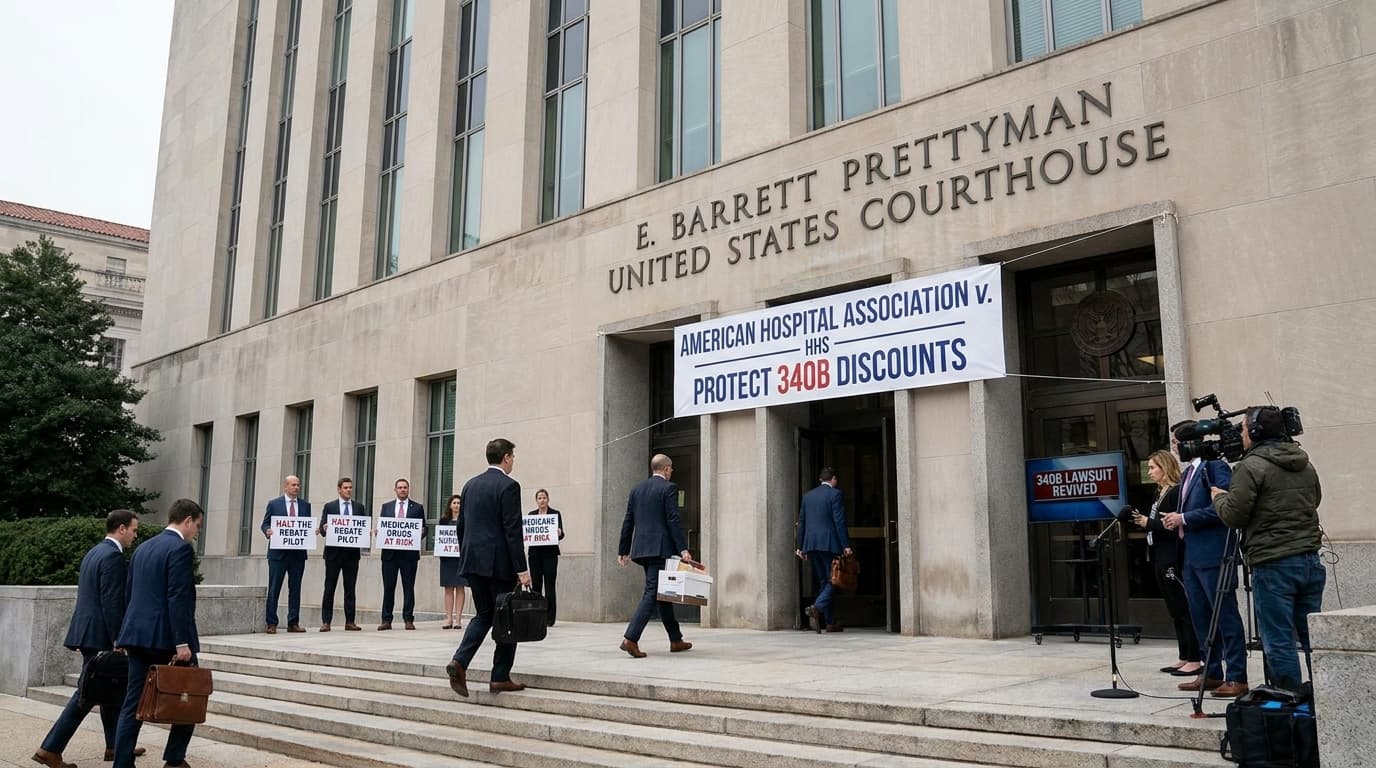
The American Hospital Association is again suing the Trump administration over its plan to test a different structure for the federal 340B drug discount program. The proposal would replace upfront discounts with after-the-fact rebates for certain drugs, extending a policy fight that already produced one court intervention in 2025.
This time, the dispute centers on an expanded version of the rebate model that the agency announced in February and set to take effect Jan. 1, 2027. The new plan would target 25 of the costliest, most widely used drugs covered under Medicare, compared with 10 drugs in the original version.
The policy fight
The AHA’s core argument is largely the same as in the first case: the government failed to accurately account for the costs hospitals would incur if they had to pay market prices for drugs and then apply for rebates afterward. That framing matters because the legal fight is not only about whether a rebate model is permissible, but about whether the administration adequately evaluated the operational and financial burden it would create for providers participating in 340B.
According to the lawsuit, the Health Resources and Services Administration, the division that administers 340B, received more than 2,400 comments on the second version of the rebate model. The suit says those submissions included hospitals describing in “granular detail the catastrophic impact” the change would have.
The road here
The case revives a dispute that already tested the administration’s approach once before. In 2025, a judge agreed to temporarily halt a more limited version of the rebate pilot before it took effect. After losing on appeal, the Health and Human Services Department voluntarily withdrew that earlier plan.
The administration then returned with a broader model in February rather than abandoning the concept. That sequence is the main signal from this dispute: even after a legal setback, the government continued pressing for a structural change to how 340B discounts are delivered. Hospitals, in turn, appear ready to challenge each iteration on implementation costs as much as on statutory authority.