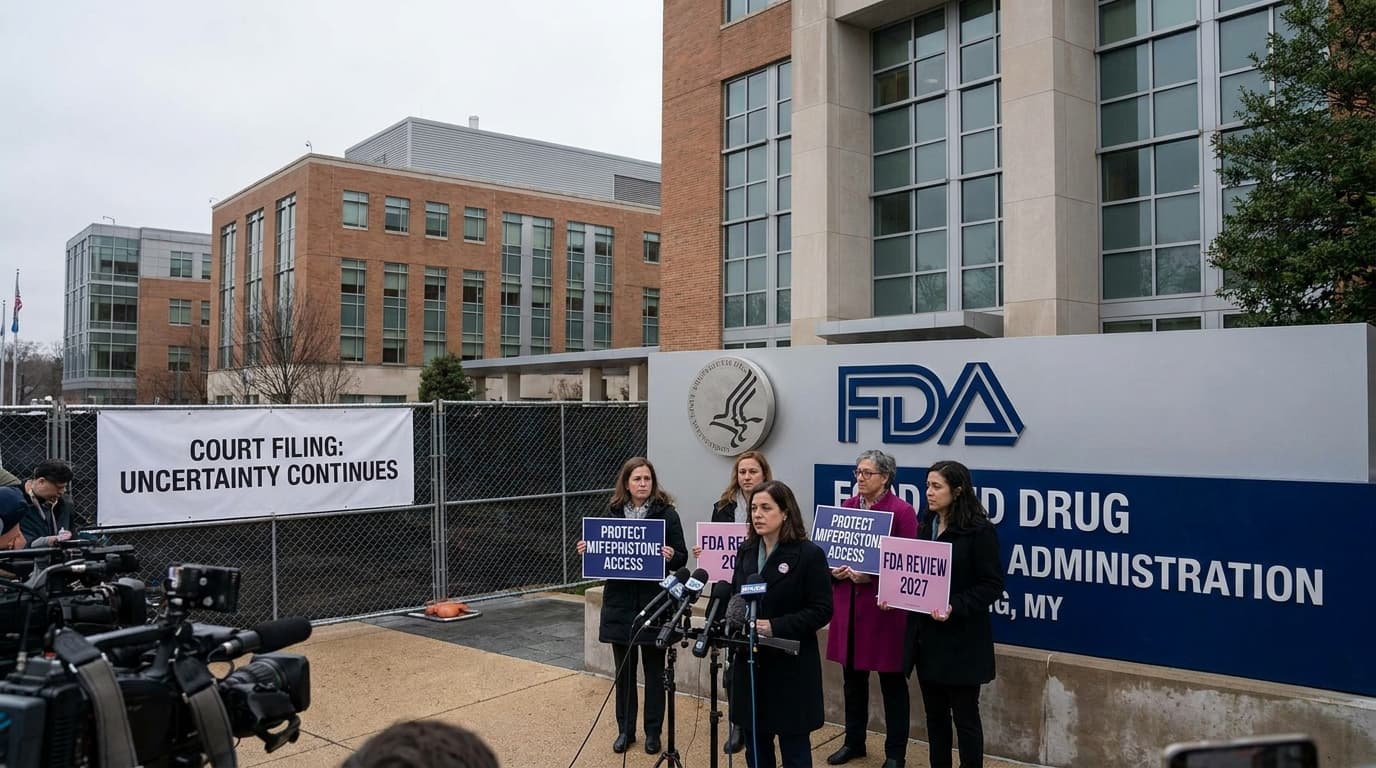
The Food and Drug Administration said in a court filing that its ongoing safety review of mifepristone will continue into next year, extending a politically charged reassessment of the nation’s main abortion pill. The agency told the court it expects to complete a safety study by mid-December this year and produce a report on the findings no later than March 2027, after which it will decide whether to impose new restrictions or other changes on the drug’s use.
The update is notable less for an immediate policy shift than for the delay itself. Mifepristone was first approved by the FDA in 2000, and the agency has repeatedly reaffirmed its safety and effectiveness while also easing restrictions over time, including ending a requirement that it be dispensed in person. This latest review keeps current rules in place for now, but it leaves manufacturers, prescribers and abortion-rights advocates facing an extended period of regulatory uncertainty.
What The Filing Says
The FDA said it is using a “statistical data mining method” to identify “unknown safety concerns” that may exist with the drug. The analysis draws on an electronic database that collects reports of medical injuries and drug side effects from major health networks and insurers.
In addition to the safety study, the agency said it is considering a number of petitions proposing changes to how mifepristone is prescribed and distributed. Abortion opponents have concentrated much of their effort on a 2021 decision allowing doctors to prescribe the drug online and send it through the mail during COVID-19. That policy was made permanent under President Joe Biden in 2023.
The court-ordered filing is the first substantive public update on the reevaluation ordered by Health Secretary Robert F. Kennedy Jr. Since President Donald Trump returned to the White House, anti-abortion groups and allies in Congress have pushed the administration to revisit the pill in hopes of restricting its use.
Legal And Market Implications
The FDA provided the update in a case brought by the state of Louisiana, which alleges that mail delivery of mifepristone undermines the state’s abortion ban. Last month, a three-judge panel for the 5th U.S. Circuit Court of Appeals questioned the merits of Louisiana’s case, including whether the state has legal standing to challenge FDA oversight of the drug.
Any ruling from the 5th Circuit would not immediately change access because the Supreme Court has blocked changes to the drug until it sees the case again. That leaves the regulatory review, rather than the current court posture, as the main near-term source of uncertainty.
The broader policy signal is that the administration has not moved to curtail access quickly despite pressure from abortion opponents. Instead, it has chosen a slower administrative route that preserves room for future changes while deferring a final decision into next year. For providers and companies involved in reproductive health, that means strategy will be shaped by a review process that remains active but unresolved.