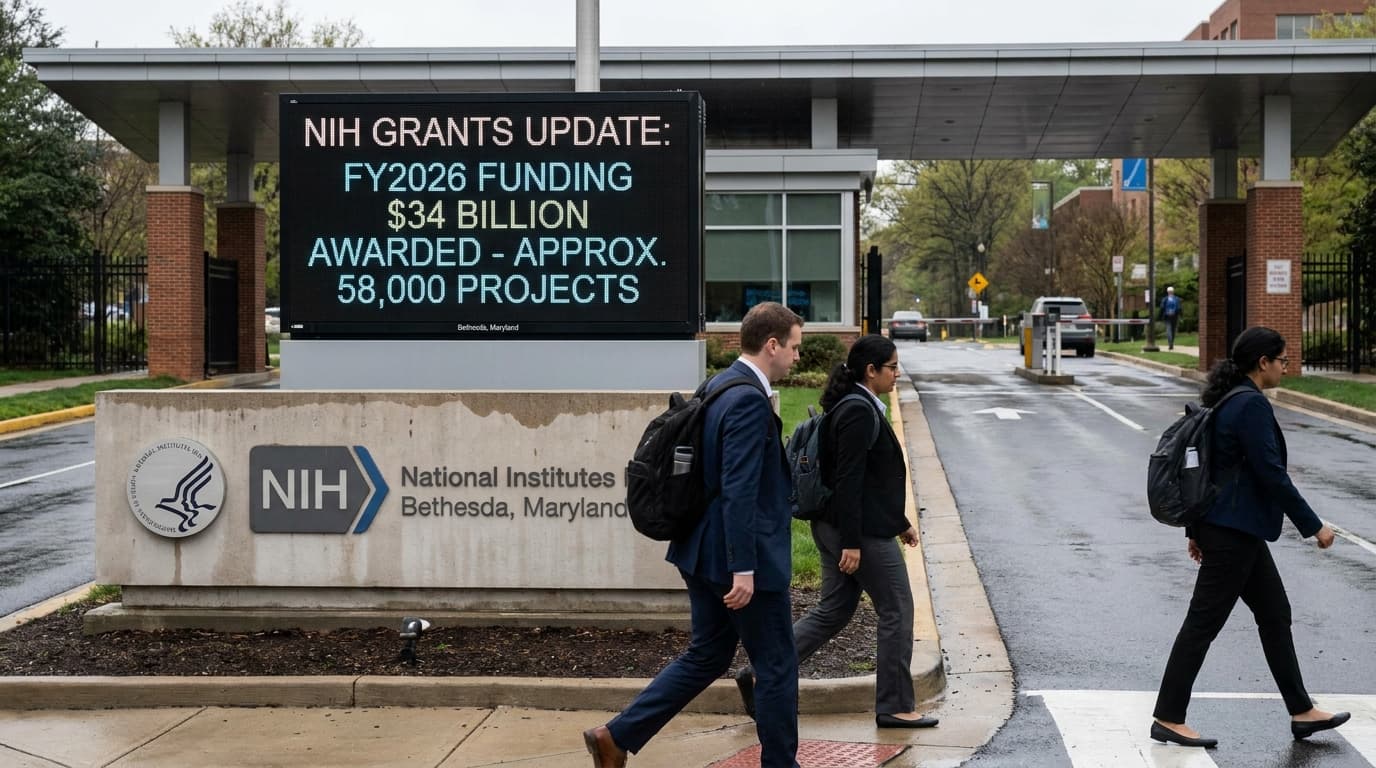
The National Institutes of Health spent its entire external grants budget of roughly $34 billion in fiscal year 2026, matching last year in getting all of that money out the door despite a slow start. But a STAT analysis says the way the agency did so has deepened uncertainty for researchers who depend on those awards.
The analysis found that the NIH funded around 58,000 projects in the fiscal year that ended Wednesday, down slightly from the 61,000 awarded during the 2025 fiscal year and well below the roughly 63,700 grants awarded annually in the years before the second Trump administration. That total may increase somewhat in the coming weeks because of reporting lags in the NIH grants database.
What changed in the grant mix
STAT reported that the agency continued reducing grant awards involving health disparities, race, and ethnicity. At the same time, it made little progress toward other Trump administration priorities, including disbursing funds more evenly across the country and expanding support for early-career scientists.
One possible reason for the lower project count is the White House’s push to fully fund more multiyear grants in advance. According to the analysis, that approach meant there was less funding on hand to issue new awards.
Why the process matters
In a survey and interviews, researchers told STAT that delays in the grant review process are slowing the pace of their work. They also said the uncertainty makes it harder to propose and conduct the kind of innovative, impactful science the NIH is meant to support.
The policy signal is that full budget deployment did not translate into a stable operating environment for the research base. For universities and investigators, the immediate issue is not only how much money the NIH spent, but how delays, opacity, and a smaller pool of funded projects can change planning, staffing, and the willingness to pursue riskier ideas.