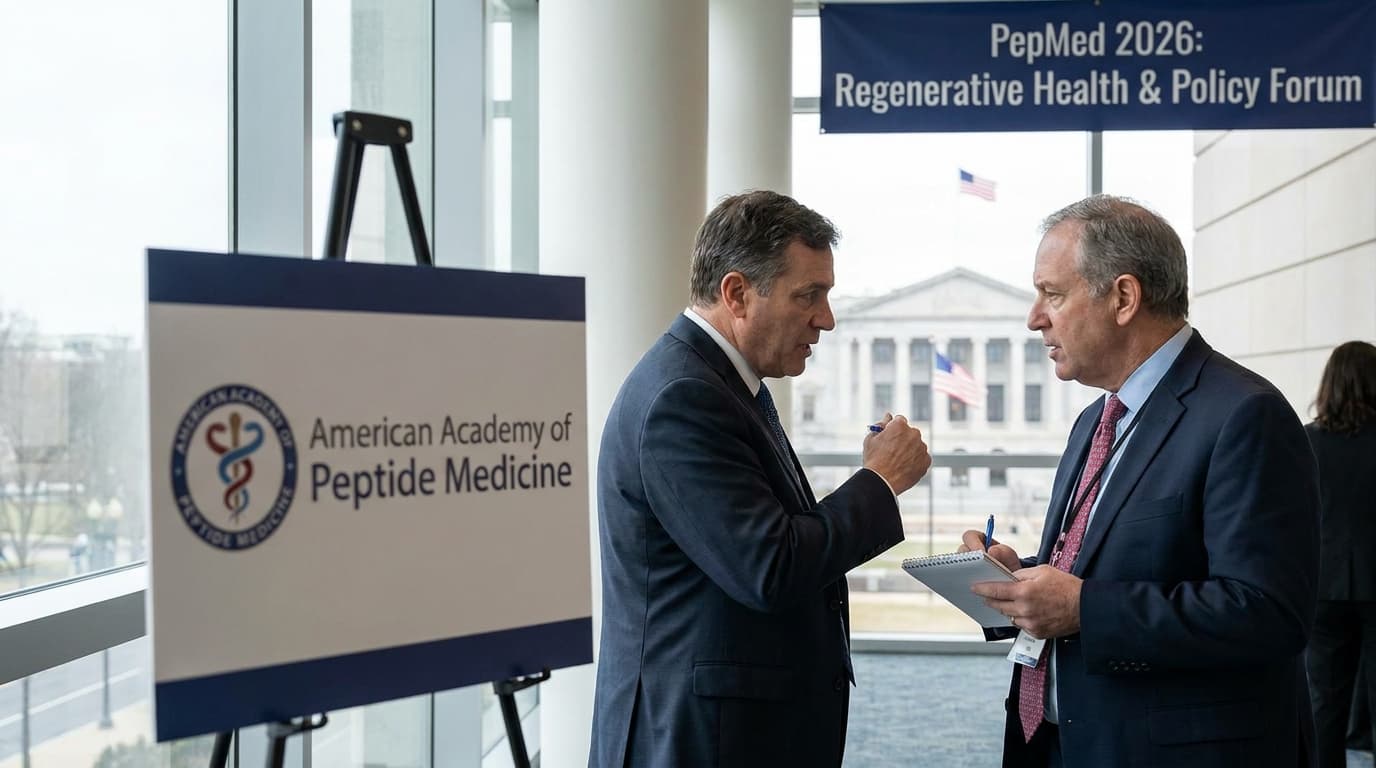
Stem cell industry advocates are trying to turn the FDA's recent posture on peptides into a broader opening for regenerative medicine. At PepMed 2026, a conference for regenerative health businesses held by the American Academy of Peptide Medicine, entrepreneur Chuck Meeker told STAT he expects "before the end of the year" to see "a series of FDA roundtables happening," though the FDA declined to say whether such events were imminent.
That connection between peptides and stem cells was central to the case being made at the conference. According to STAT's reporting, proponents framed both as part of regenerative medicine, which focuses on therapies that claim to trigger the body's natural healing mechanisms.
The policy signal
The immediate issue is not new stem cell data. STAT reported that while compounded peptides are having "a bit of a moment" with the FDA, commercially available, unapproved stem cell therapies have remained a black sheep for the agency.
Meeker and others at PepMed said they believe that could change. Their thesis is that the FDA's tentative embrace of peptides may offer the stem cell industry a chance to get a foot in the door and move stem cells from the grey market to millions of Americans.
That makes this a regulatory strategy story more than a scientific one. The industry's opportunity, as described in the source, depends on whether officials become more open to engagement formats such as roundtables and whether peptide-related flexibility becomes a precedent advocates can cite for stem cells.
The signal for companies and investors is that policy mood can become a commercial variable in categories where evidence and enforcement have historically constrained growth. But the source also leaves the core uncertainty intact: the FDA has not confirmed that the roundtables Meeker predicts are actually coming.