National Medicaid data suggest that access to medications for opioid use disorder improved modestly for young people after the American Academy of Pediatrics urged doctors in 2016 to offer those treatments to adolescent and young adult patients who needed them. But a new study led by Scott Hadland found that continuity of care remained weak, and the number of young people who stayed on medication for six months may have actually decreased.
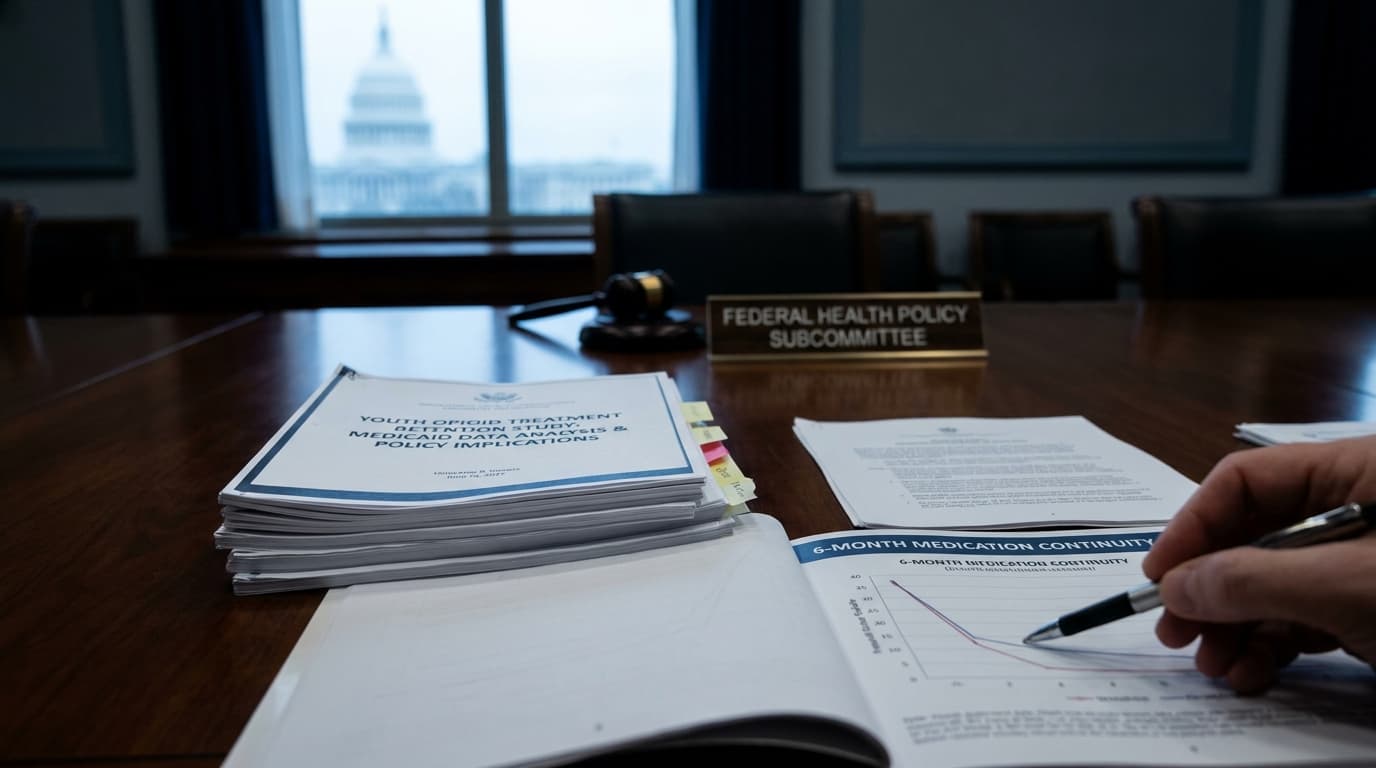
The paper, published in JAMA Network Open, analyzed Medicaid enrollment and insurance claims for people ages 13 to 25 diagnosed with opioid use disorder between 2016 and 2023. Out of nearly 230,000 young people in that period, about half initiated treatment by seeing a clinician, about a third had at least two appointments in the first month, and among those engaged in care, about 1 in 6 received some medication. Just 1 in 32 continued with medication for six months.
That gap is the central policy signal in the study: expanding the number of young people who start treatment is not producing durable medication use at anything close to the level suggested by the severity of the overdose crisis.
The Care Drop-Off
Hadland described the findings as a mix of progress and failure. He said there have been “some real positive changes,” alongside “some really catastrophic changes.” The stakes are high. As with the general population, overdose deaths rose sharply among young people beginning around 2019 and into the early 2020s. For those age 19 and under, poisonings including overdose rose to the third-leading cause of death.
Hadland said he had patients die as recently as this past month in Massachusetts from overdose. His conclusion was that the field still is not maintaining young people in the treatments most associated with better outcomes.
Existing research and clinical experience, according to the clinicians quoted in the report, indicate that longer time on medication is associated with better outcomes. But youth treatment is shaped by factors that make continuity harder than simply writing a prescription. Sarah Bagley of Boston Medical Center said the clinical environment has to be appealing, safe, compassionate, and nonjudgmental, because engagement determines whether treatment can work in practice.
Why Youth Access Still Breaks Down
The barriers described in the report are both regulatory and structural. Federal law requires minors to have two documented failed attempts at recovery without medication before they can start methadone. Even then, many specialized clinics that provide methadone will not accept minors. In Hadland’s study, fewer than 10 minors received methadone over the full study period, a figure low enough that the researchers suppressed the exact number for privacy reasons and categorized it as “not defined.”
Buprenorphine is easier for doctors to prescribe, but recent research cited in the report shows that few residential treatment facilities for adolescents offer it. Sivabalaji Kaliamurthy said that once someone turns 18, a much larger group of clinicians becomes available to help, highlighting how age thresholds create abrupt differences in access.
Families and patients also face uncertainty that is specific to this age group. The story notes that few studies focus specifically on young people, leaving doctors without a definitive answer on how long a child might need to stay on medication or what long-term effects might be. Kaliamurthy said children often do not want to hear that treatment may be open-ended, and families can be apprehensive about that commitment.
The study also found worse attrition across stages of care for Black young people and other racially minoritized groups than for white peers, indicating that the access problem is not evenly distributed.
What The Results Mean
The report points to a pediatric addiction system that is becoming more willing to start treatment but still is not built to hold patients in care. Bagley said interest from generalist physicians in understanding and treating opioid use disorder appears to have increased over time, and Hadland said he now sees active demand for that knowledge from pediatric colleagues and professional organizations.
That cultural shift may widen the prescriber base, but the data suggest the next bottleneck is retention. Without changes to youth-specific care settings, age-based treatment restrictions, and the conditions that make ongoing engagement possible, better recognition of opioid use disorder among young people may continue to produce only small gains in medication use over time.