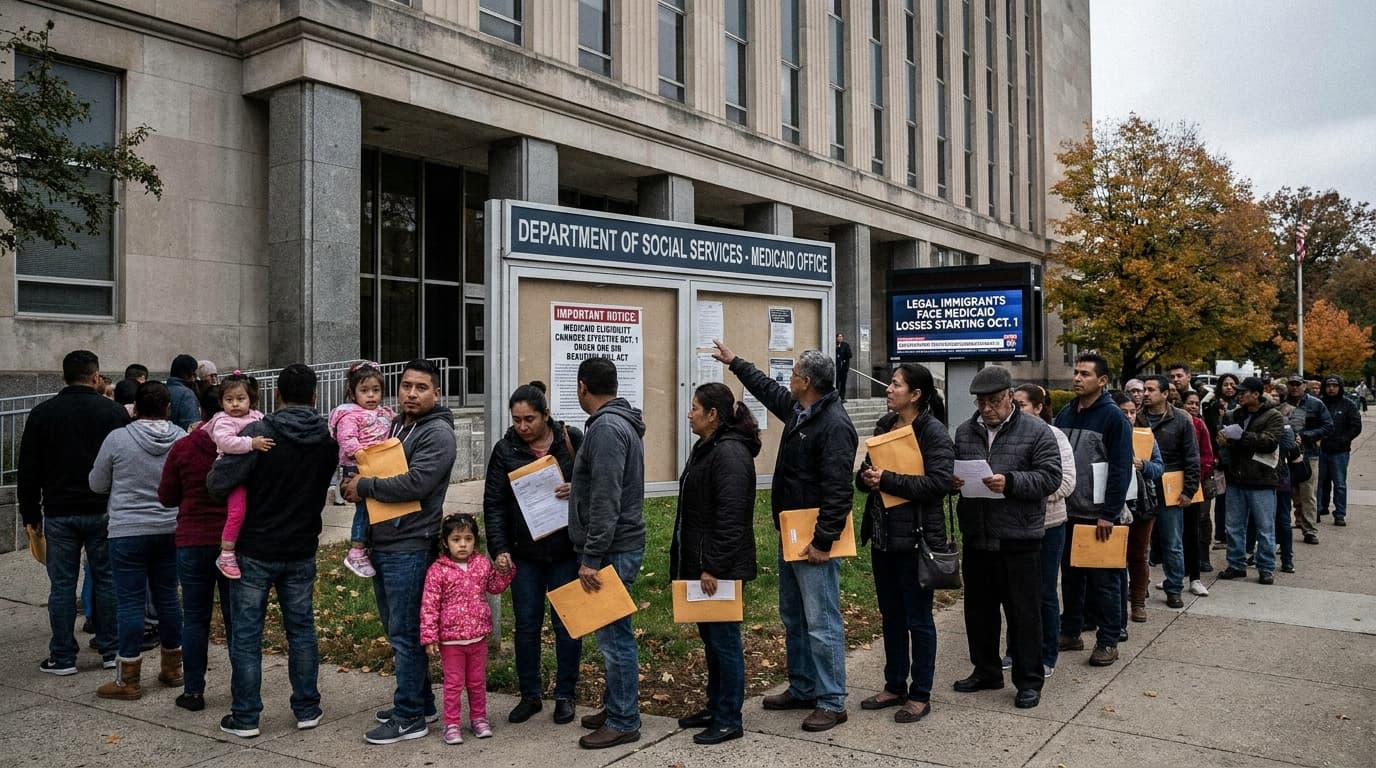
Many lawfully present immigrants are set to lose Medicaid starting Oct. 1 under changes in President Donald Trump’s signature legislation from 2025, with early state counts suggesting the impact may reach further and faster than initially expected. According to figures collected from several states, more than 281,000 immigrants in nine states and the District of Columbia are expected to lose Medicaid in October alone.
The law, the One Big Beautiful Bill Act, is expected to cut spending by more than $900 billion through 2034 for the state-federal program for people with low incomes or disabilities. Much of the attention around the statute’s Medicaid provisions has focused on work requirements that begin in January, but the first visible effect is falling on immigrant eligibility. The policy signal is that coverage reductions are arriving through multiple channels, not just the more publicized work rules.
The Immediate Coverage Losses
Those at risk include groups that were previously eligible despite not being citizens: refugees of war, asylees who fled persecution, victims of sex trafficking, and interpreters who assisted U.S. service members in Afghanistan. The law does not affect some immigrants, including people who hold green cards.
State-level numbers show how quickly the provision is taking effect. Florida identified nearly 177,000 immigrants who would no longer qualify for Medicaid starting in October, according to Anna Holaday, a spokesperson for the Florida Department of Children and Families. Arizona predicts nearly 28,000 could lose eligibility. New Jersey expects 15,000 to 25,000 noncitizen residents to lose coverage. North Carolina put the figure at about 29,000, and Washington state at 11,000.
Florida said it verified enrollees’ immigration status through government databases and sent notices giving people an opportunity to provide more information if they remain eligible. Even so, immigrant rights advocates told KFF Health News that some states did not begin sending letters until September, leaving little time for beneficiaries to respond or correct mistakes before coverage ends.
What The Estimates Missed
The Congressional Budget Office estimated that eliminating Medicaid eligibility for many noncitizen adults with legal status would lead to about 100,000 more immigrants being uninsured by 2034. Yet the office did not publish estimates on the bill’s effect on noncitizens in Medicaid until a month after Congress passed it and Trump signed it into law.
That timing matters. Lawmakers rely on the CBO to gauge budgetary and economic effects, but the state counts now emerging suggest the practical disruption is arriving before the full federal picture was widely understood. Some people who lose Medicaid may find other coverage, so coverage termination does not automatically equal long-term uninsurance. Still, the state data indicate that hundreds of thousands nationally are at imminent risk of losing insurance.
The law’s reach extends beyond Medicaid. Starting in January, the CBO estimates about 1 million immigrants will lose eligibility for government subsidies to buy coverage on Affordable Care Act marketplaces by 2034. The same package also removes Medicare access for some immigrants, a change the CBO expects to affect about 100,000.
Market And Care Implications
Without Medicaid, affected immigrants are likely to lose access to doctors, prescription drugs, and most other medical services, though they still may qualify for emergency care through Emergency Medicaid. For providers and state programs, that points to a familiar shift: less routine care and more pressure on emergency-only coverage.
The administration has argued that taxpayer-funded programs should be reserved for American citizens. During the May 2025 debate, the White House said the bill would remove Medicaid coverage for people in the country without authorization, though under long-standing law those individuals do not qualify for the general Medicaid program funded by state and federal dollars.
For health policy operators, the immediate lesson is that eligibility restrictions can reshape coverage rolls before the better-known provisions of a law take effect. The January work requirements may still dominate the political debate, but October’s immigrant disenrollments show where implementation is already changing the insured population.