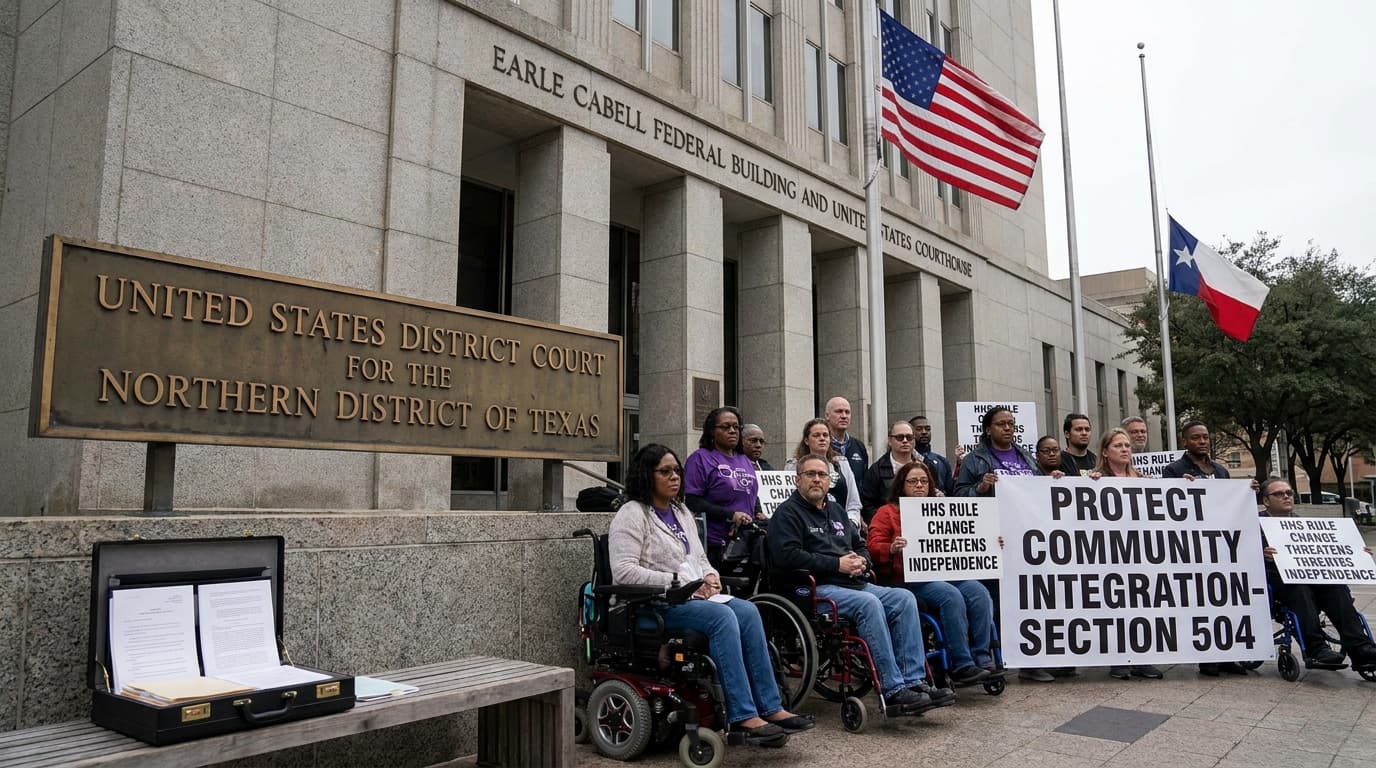
A federal judge in Texas ruled Wednesday that the Department of Health and Human Services must remove every mention of community integration from a disability rule, reversing a principle the federal government has treated as a priority for decades. The decision stems from Texas vs. Kennedy, a lawsuit filed in 2024 after 17 states sued the Biden administration over its update to section 504 of the 1973 Rehabilitation Act.
The timing matters. Just a few weeks earlier, the Justice Department joined the lawsuit, and in June it said it would no longer enforce laws that prioritized people with disabilities living and receiving services in their communities rather than in nursing homes or facilities. The court’s order shows that position is now moving from enforcement guidance into the structure of federal rules.
What The Ruling Changes
The source describes the decision as a significant reversal for a federal government that has prioritized community integration rights for decades. Section 504 bars disability-based discrimination by recipients of federal funds, and the contested update had carried community integration language that aligned with that longstanding policy direction.
By ordering HHS to remove every mention of community integration from the rule, the judge did more than narrow a single provision. The ruling strips a concept that has shaped how disability protections are applied across service settings. That matters because rights on paper often depend on whether the implementing rule treats institutional care and community-based care as interchangeable or as settings with different legal implications for access and discrimination.
Why This Matters For Health Policy
The immediate policy signal is that the Trump administration is not simply declining to press certain disability claims; it is supporting a narrower interpretation of what federal disability protections require. When the Justice Department said in June that it would no longer enforce laws prioritizing community living, it pointed toward a change in federal posture. The Texas ruling now gives that posture judicial backing in at least this context.
For states, this may ease legal pressure tied to maintaining services in community settings rather than institutional ones. For disability advocates and organizations that rely on federal civil-rights enforcement to support community-based services, it represents a weaker federal lever. The practical consequence is that disputes over service setting, placement and access may become harder to frame through federal anti-discrimination rules if community integration language is no longer embedded in the governing regulation.
The broader strategic effect is that administration choices about enforcement can reshape markets and care models even before Congress changes a statute. Providers, managed care organizations and state agencies plan around what federal rules reward, require or expose to challenge. If community integration is no longer a core organizing principle in section 504 implementation, that could alter incentives around housing, home- and community-based services and facility-centered care.
The Road Here
This case did not begin with the current administration. The lawsuit was filed in 2024 by 17 states challenging the Biden administration’s update to section 504. But the Justice Department’s decision to join the lawsuit a few weeks before the ruling changed the federal government’s role from defending the rule to helping dismantle part of it.
That sequence is the central policy signal. A decades-long federal priority can be weakened quickly when an administration changes both its enforcement position and its litigation stance. The result is a narrower interpretation of disability protections without any change to the underlying 1973 law itself.