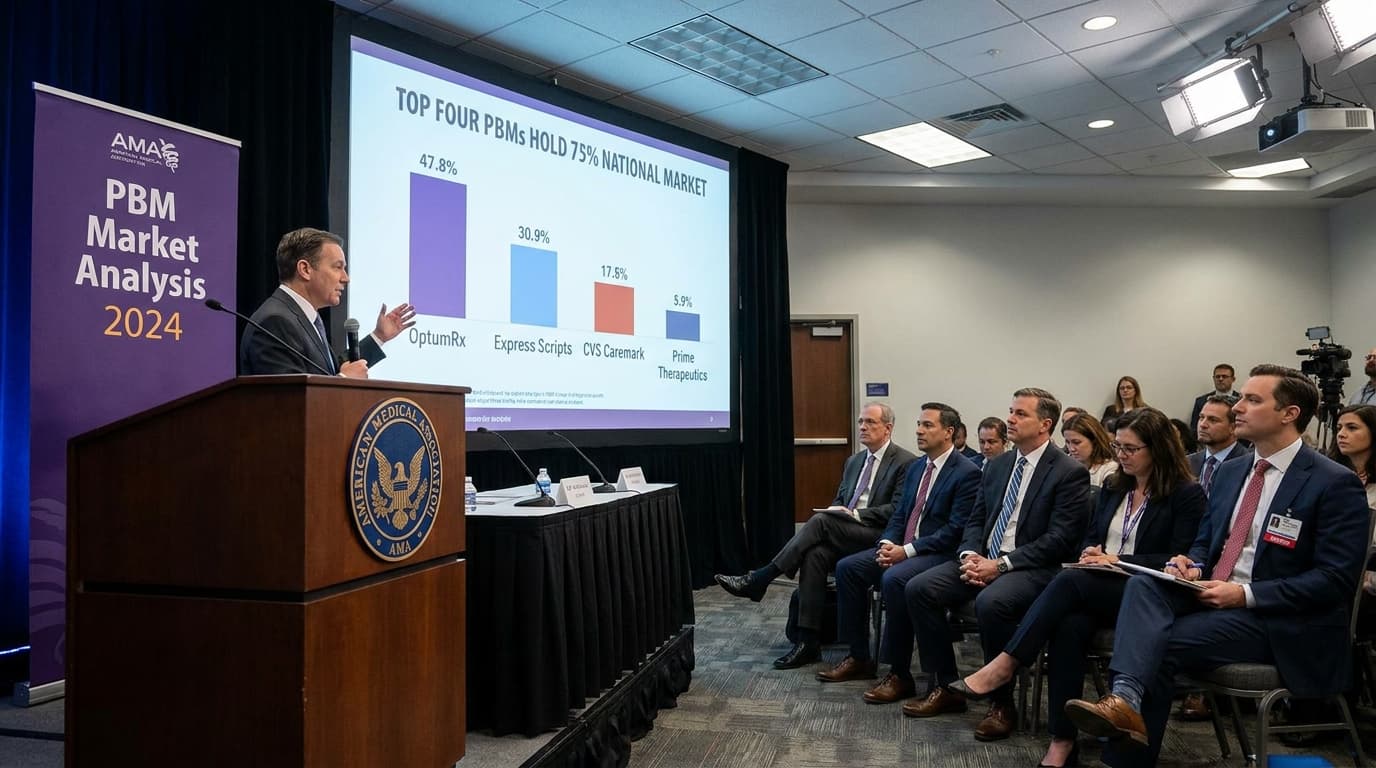
The American Medical Association says PBM market power became more concentrated between 2022 and 2024, with the top four pharmacy benefit managers controlling 75% of the national market in 2024, up from 70% two years earlier. The analysis used prescription drug plan and enrollment data from 2022 and 2024 and examined the 10 largest PBMs.
In the AMA’s ranking, the four largest PBMs by national market share in 2024 were OptumRx at 23%, Express Scripts at 23%, CVS Caremark at 18% and Prime Therapeutics at 11%. In 2022, the order was CVS at 21%, OptumRx at 21%, Express Scripts at 17% and Prime Therapeutics at 10%. Express Scripts posted the largest increase across the two periods.
The Market Structure
The report suggests that concentration is not just a national phenomenon. According to the AMA, 32 PBM markets, or 94%, were highly concentrated in 2024, compared with 28 markets, or 82%, in 2022.
The analysis also said each of the 10 PBMs it listed has a shared ownership with health insurers. In 2024, 69% of people with commercial or Medicare Part D drug coverage were enrolled with an insurer that was vertically integrated with a PBM. That level of integration varied widely across local markets, with some showing little vertical integration and others described as almost entirely vertically integrated.
That combination of rising concentration and insurer ownership matters because it means the debate over PBMs is not only about standalone intermediaries. The AMA’s data frame prescription benefit management as part of broader corporate structures that combine insurance coverage and pharmacy benefit administration.
The Policy Picture
The report arrives as PBMs face growing policy pressure. MedCity News noted that Congress passed reforms in February including delinking PBM compensation from the price of a drug in Medicare Part D. A proposed Department of Labor rule also seeks to improve transparency in fees and compensation received by PBMs.
The AMA used the new analysis to argue for further scrutiny. AMA President Dr. Willie Underwood III said competitive PBM and prescription drug plan markets help patients get medications at a fair price, but that the organization’s findings show a small number of PBMs account for a growing share of the market while most local PBM markets remain highly concentrated and most prescription drug benefits are managed by vertically integrated insurers and PBMs.
The insurer side of the market is concentrated too, though the report described it separately from PBM share. The AMA found that UnitedHealth Group had the largest market share in commercial and Medicare Advantage prescription drug plan coverage, while Centene led the stand-alone Medicare Part D market. Kaiser ranked second in the commercial market, Humana ranked second in Medicare Advantage prescription drug plans, and CVS Health, through Aetna, ranked second in the stand-alone market.
The immediate signal is that policymakers trying to change PBM behavior are dealing with markets that have become more consolidated, not less. That does not in itself establish how PBMs affect prices in every case, but it does raise the stakes for transparency and accountability efforts because a relatively small group of companies now manages most prescription drug benefits.