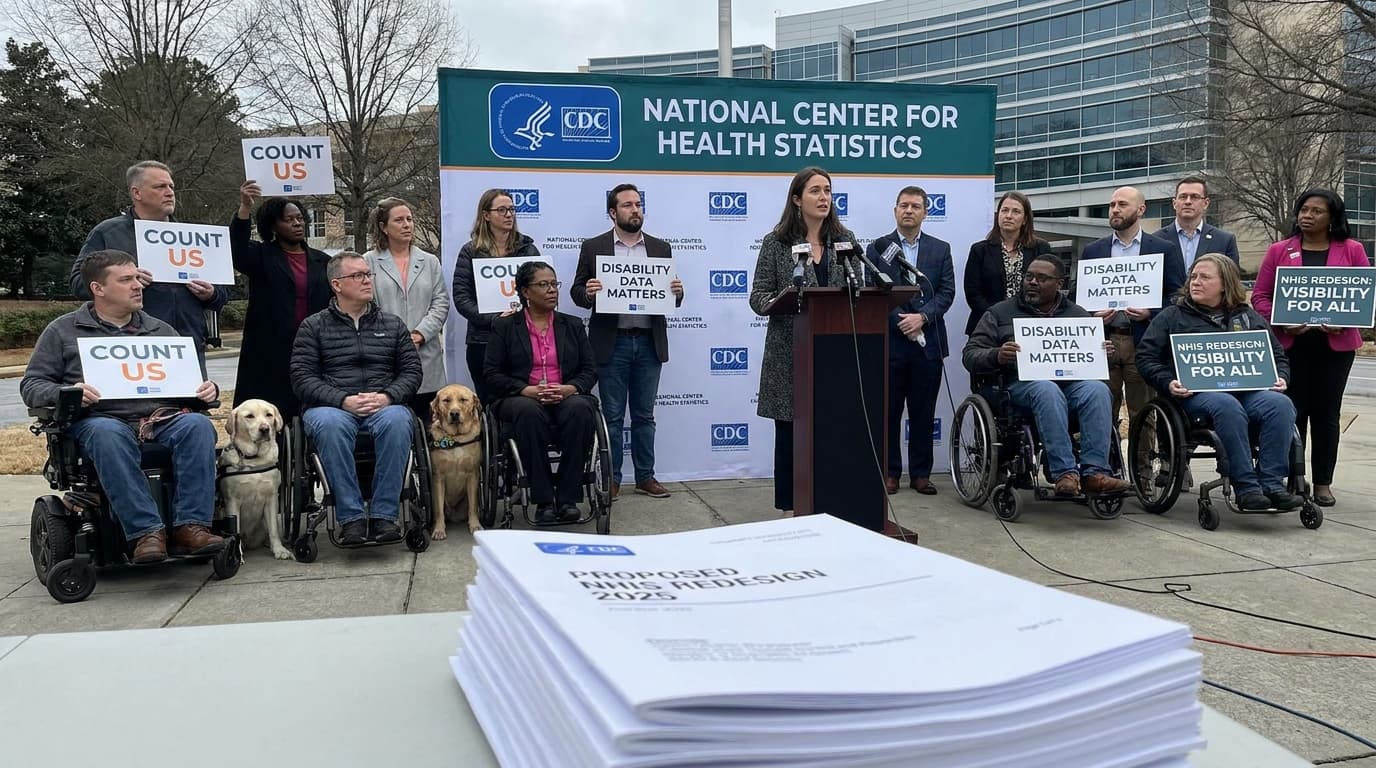
A proposed redesign of the federal government’s annual National Health Interview Survey is drawing criticism from disability advocates and researchers who say it would significantly worsen undercounting of Americans with intellectual and developmental disabilities.
The survey, run through the Centers for Disease Control and Prevention’s National Center for Health Statistics, has collected broad health data since 1957. In August, the agency proposed an overhaul that would remove several disability-related questions even though, according to the source, more than a quarter of Americans have disabilities.
What Would Change
Under the redesign, roughly 25,000 households would receive a mailed questionnaire, a slight drop from past surveys, with separate questionnaires for children and adults. The biggest changes are in the adult form, which would be reduced from 482 questions to 150.
The proposed cuts include questions about hearing aids, fatigue, cognition, and mobility supports such as wheelchairs and scooters. The survey’s disability questions have primarily been used to capture functional disabilities, including how well a person sees, hears, or walks.
That matters because researchers already believe the survey has missed portions of the disability population. STAT reported that some researchers suggest past versions already undercounted people who are deaf or blind or who use wheelchairs. The gap appears especially severe for people with intellectual and developmental disabilities: a recent paper co-authored by CDC statisticians found the survey could potentially miss 75% of that population.
Why Advocates Object
Critics argue the redesign moves in the wrong direction for both health equity and basic policymaking. Katy Neas, CEO of The Arc, called the changes a “head-scratcher” and said reliable government data is necessary if health outcomes are going to improve. Scott Landes, a sociology professor at Syracuse University, said the redesign forces a choice “between bad and worse.”
The policy tension is straightforward. Adults with intellectual and developmental disabilities face significantly higher rates of chronic conditions such as heart disease, diabetes, and obesity, so weaker measurement could make it harder to target programs to a population with elevated need. Landes pointed to a 2024 study using National Health Interview Survey data that found people with a “self-care disability” had the highest mortality rates.
A spokesperson for the Department of Health and Human Services did not answer questions about why certain disability questions were removed, but indicated the redesign was driven by a push to lower the cost of data collection. That makes this more than a questionnaire dispute: it is a choice about whether federal health surveillance treats disability detail as essential or expendable.
Internal And Political Signals
STAT reported that CDC staff appear aware of the tradeoff. In a 2025 memo outlining the redesign, Stephen Blumberg, the director of the CDC division that oversees the survey, wrote in a footnote that the new approach “does not provide the desired depth of information” on topics including “functioning and disability” that are specifically named in authorizing legislation and have been a feature of the questionnaire since 2019.
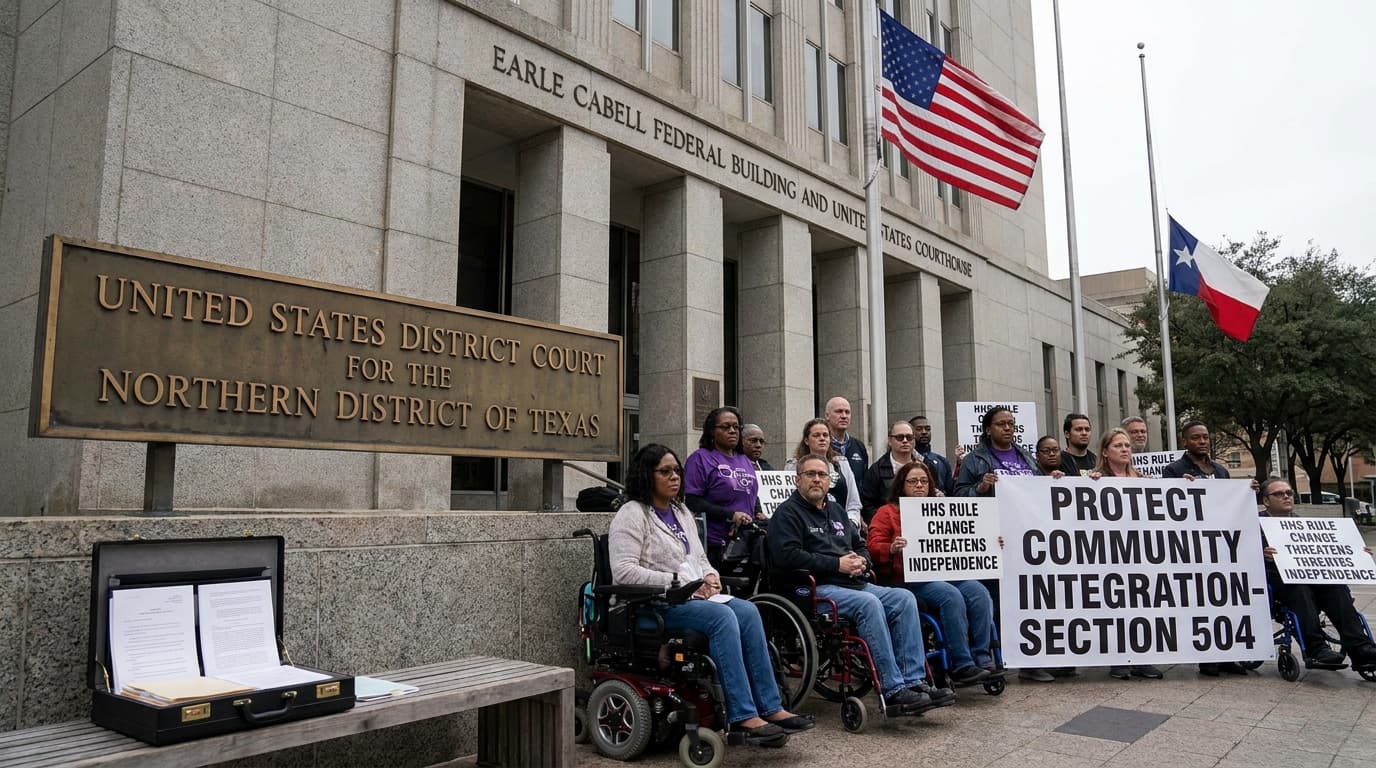
Some advocates place the redesign in a broader Trump administration pattern affecting disabled people, citing layoffs of federal employees with disabilities and rollback efforts involving community living protections. Whether or not the redesign moves forward unchanged, the immediate signal is that lower-cost federal data systems can carry a policy cost of their own: less visibility into who needs support, and less evidence to shape it.