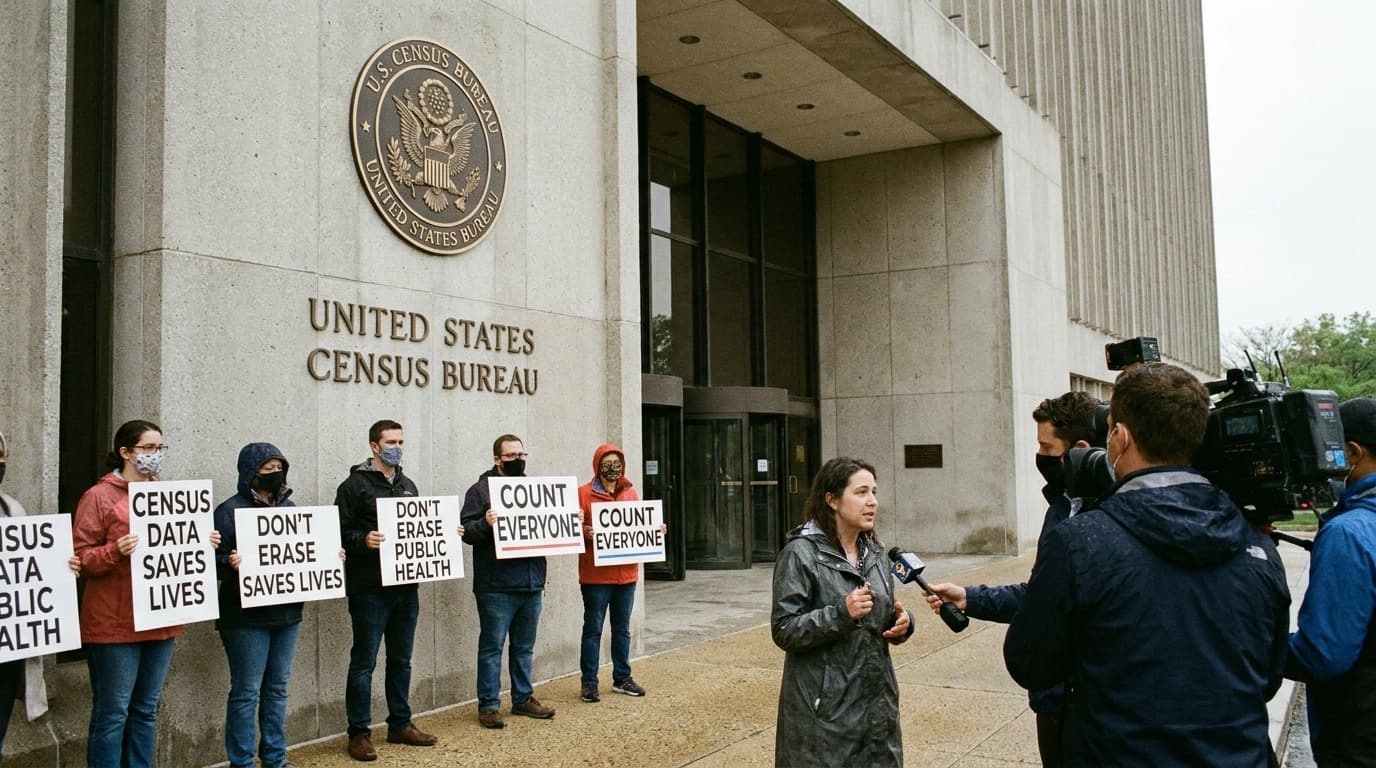
Proposed changes to the U.S. Census could create direct problems for public health research and for how federal assistance is distributed, according to a new First Opinion by social epidemiologist Nancy Krieger summarized by STAT.
STAT reported that the Trump administration wants to make three major changes: eliminate questions about race, ethnicity, and sexual orientation; exclude anyone who is not a citizen or “lawful permanent resident”; and change how it determines where people such as college students or retiree “snowbirds” reside. In Krieger’s view, those changes would not just alter a survey instrument. They would weaken a baseline system that public health researchers and federally funded programs use to understand who is getting sick, who is dying, and where resources should go.
Why the data matter
The most immediate issue in STAT’s account is the removal of race and ethnicity data. Krieger argues these data are essential for tracking trends in U.S. morbidity and mortality. Without them, a large share of disparity analysis becomes harder to do consistently, because researchers lose one of the standard reference sets used to measure changes across populations over time.
The implications extend beyond research. STAT said Krieger also pointed to the operational role of census-derived information in federally funded programs, which use those data to determine eligibility and allocate resources. In practical terms, changes to who gets counted and how they are classified can affect not only what public health officials know, but also what support communities can access.
That is the strategic point for health policy: population data are not merely descriptive. They are embedded in funding formulas, service planning, and measures of need. A change that narrows or distorts the count can therefore move money and attention, even before any formal healthcare policy is rewritten.
What is being changed
STAT’s summary groups the proposal into three parts, each carrying a different kind of distortion risk.
First, eliminating questions about race, ethnicity, and sexual orientation would remove variables that help characterize health disparities and vulnerable populations. Krieger’s argument, as described by STAT, is that these are not peripheral data fields but part of how public health tracks outcomes and inequities.
Second, excluding anyone who is not a citizen or lawful permanent resident would narrow the population base used for analysis and program planning. STAT did not describe Krieger as framing this only as an immigration issue; the public health consequence is that a census that omits segments of the population becomes less useful for measuring actual conditions on the ground.
Third, changing residence rules for groups such as college students or retiree snowbirds could shift where people are counted. That matters because geography is central to how many assistance programs and health analyses are structured. If residence attribution changes, resource targeting can change with it.
The policy signal
STAT noted that this is not the first flaw to be highlighted in the census system, but said Krieger characterized the current proposal as what tennis fans might call an unforced error. The significance of that comparison is that the warning is not about an unavoidable limitation in data collection. It is about the possibility of voluntarily degrading a system that already plays a foundational role in public health surveillance and federal program administration.
For healthcare stakeholders, the signal is straightforward: census policy can function as health policy even when it is not presented that way. If the underlying count changes, measures of disease burden, disparity tracking, eligibility determinations, and geographic resource allocation can all change with it.