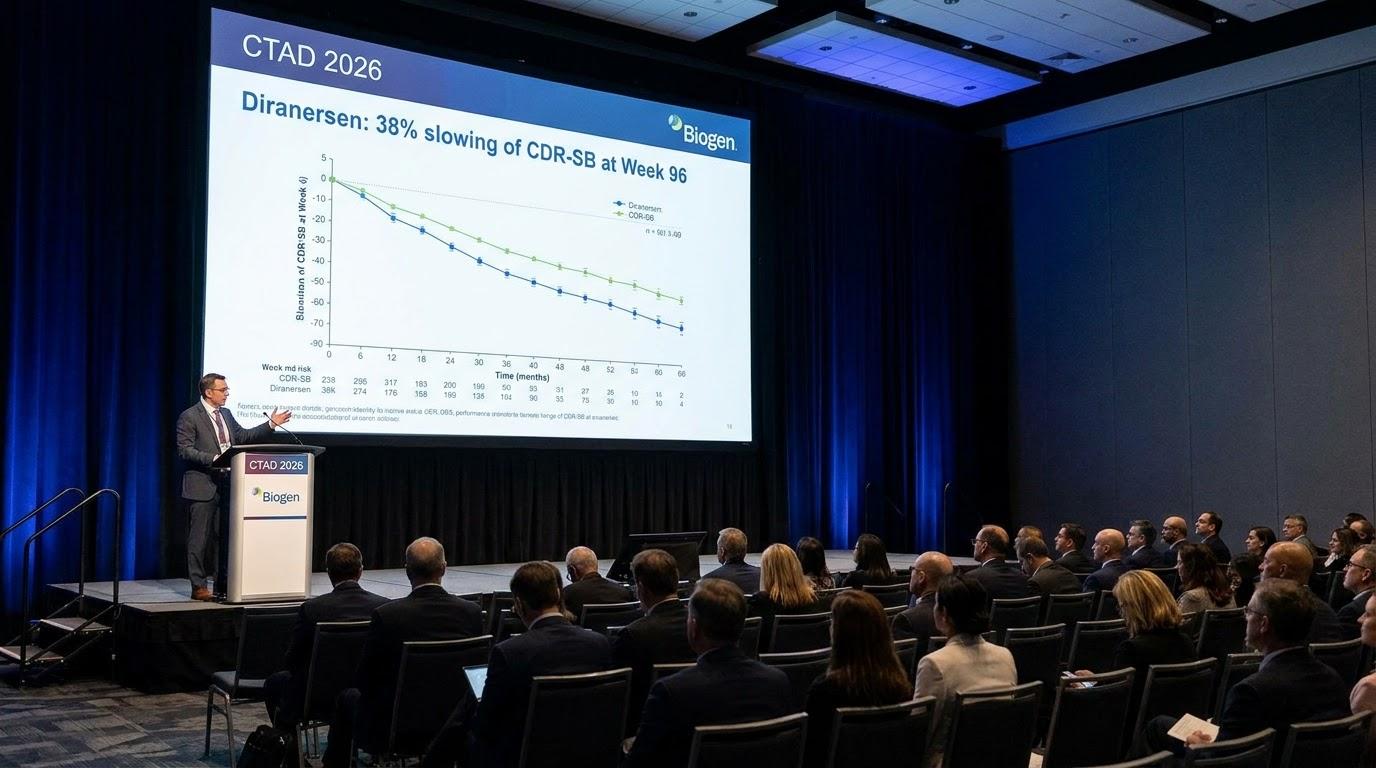
Biogen used CTAD 2026 to add a longer follow-up point to the diranersen story, reporting that its tau-targeting antisense oligonucleotide was associated with a 38% slowing of clinical decline at Week 96 on the Clinical Dementia Rating–Sum of Boxes. For a program that delivered a mixed Phase 2 result in May, the update strengthens the argument that the asset may warrant late-phase development.
The new figure extends a trend Biogen had already disclosed. At Week 76, the company had reported a 26% slowing of clinical decline on CDR-SB for the 60-mg, twice-yearly regimen. At Week 96, Biogen said the treatment difference reached 1.09 points, a level the company said is generally considered highly meaningful by clinicians.
The Data
The Phase 2 Celia trial missed its primary dose-response endpoint in May, but that setback was offset by reductions in tau pathology and cognitive benefits. The latest update comes from the study’s ongoing open-label extension stage.
BMO Capital Markets said diranersen’s CDR-SB effect appears clinically meaningful, but the firm also flagged two limitations. First, Biogen’s comparison between the original diranersen cohort and patients initially assigned to placebo is “imperfect,” because by Week 96 some patients in the control arm had received a dose of diranersen. Second, the therapy still has not achieved a statistically significant functional improvement.
Even with those caveats, BMO concluded the dataset supports the potential of the 60-mg, twice-yearly regimen to deliver “sufficient tau lowering for clinical benefit in a properly powered study.” The analysts also said the concordance of cognitive and functional endpoints is encouraging.
Safety And Competitive Readthrough
Safety and tolerability continue to center on confusional states. Biogen reported that 14.8% of patients in the 60-mg, twice-yearly cohort experienced confusional states, up from 13.1% in the data cut the company shared in July. Higher rates appeared in the medium- and high-dose cohorts, which Biogen also said showed weaker efficacy than the 60-mg, twice-yearly arm.
BMO pointed to two features that could matter if diranersen moves forward: the lack of amyloid-related imaging abnormalities and less frequent dosing versus existing beta-amyloid therapies. That does not remove the need to resolve the functional question, but it does define a clearer differentiation strategy than simply matching amyloid drugs on efficacy.
The source report also places Biogen’s numbers beside recent Alzheimer’s benchmarks. Eli Lilly reported a 0.7-point treatment difference at Week 76 in a Phase 3 Kisunla trial, while Biogen and Eisai’s Leqembi achieved a 0.45-point difference at Month 18 in a study described in the source as pivotal. Cross-trial comparisons remain limited, but the framing shows why the diranersen update matters beyond one program: it keeps anti-tau development in contention as more than a mechanistic side bet.
That readthrough extends to the rest of the field, including Arrowhead Pharmaceuticals’ ARO-MAPT, Novartis’ NIO752 and Voyager Therapeutics’ VY7523, which were also discussed at CTAD.