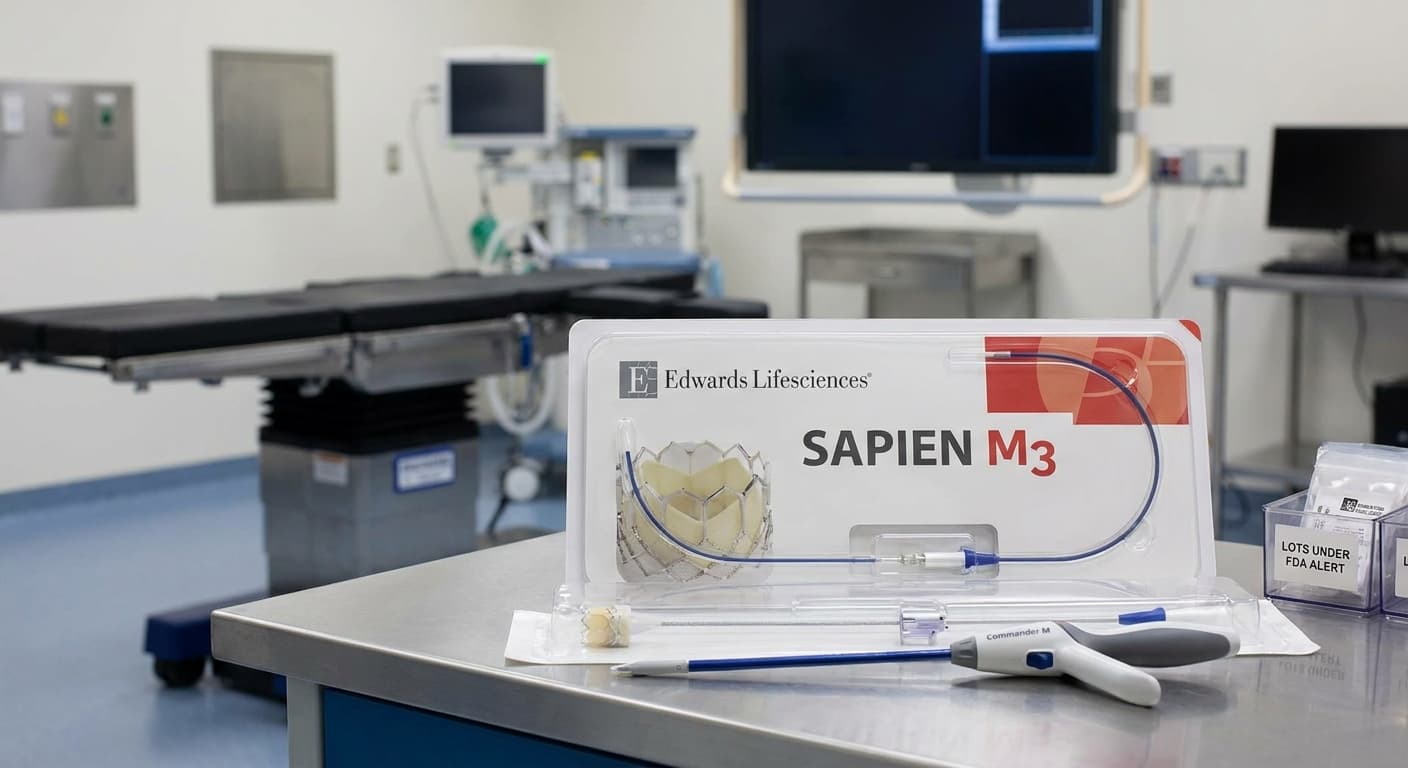
The FDA has issued an early alert for certain delivery systems used with Edwards Lifesciences’ SAPIEN M3 transcatheter mitral valve replacement system after serious safety reports tied to balloon bursts during inflation. Edwards sent customers a notice on Oct. 5 recommending that four specific lots of its Commander M delivery systems be removed from locations where they are used or sold.
The SAPIEN M3 system received FDA approval last December. It is used to deliver a replacement mitral heart valve through a patient’s blood vessels without open-chest surgery for certain patients with mitral valve disease who are not suitable candidates for other treatments.
The Safety Issue
Edwards said it had received three reports of balloons bursting during inflation. According to the FDA notice, as of Oct. 5 the company had reported one death and one serious injury associated with the problem.
The FDA said potential injuries linked to balloon burst include embolism and inability to retrieve the device through the guide sheath, which may require additional intervention, including surgery. For a transcatheter system positioned as an option for patients who are not candidates for other treatments, that complication profile matters beyond the affected lots because delivery reliability is part of the product’s value proposition.
The Commercial Context
This is a narrow lot-specific action, but it arrives early in the U.S. life of a newly approved structural heart product. That can slow adoption if providers become more cautious around inventory management or procedural risk, even when the underlying notice is limited to four lots rather than the full platform.
The alert also extends a difficult period for Edwards. In January, the company abandoned its proposed $945 million acquisition of JenaValve after a federal judge granted the Federal Trade Commission’s request for an injunction blocking the deal.