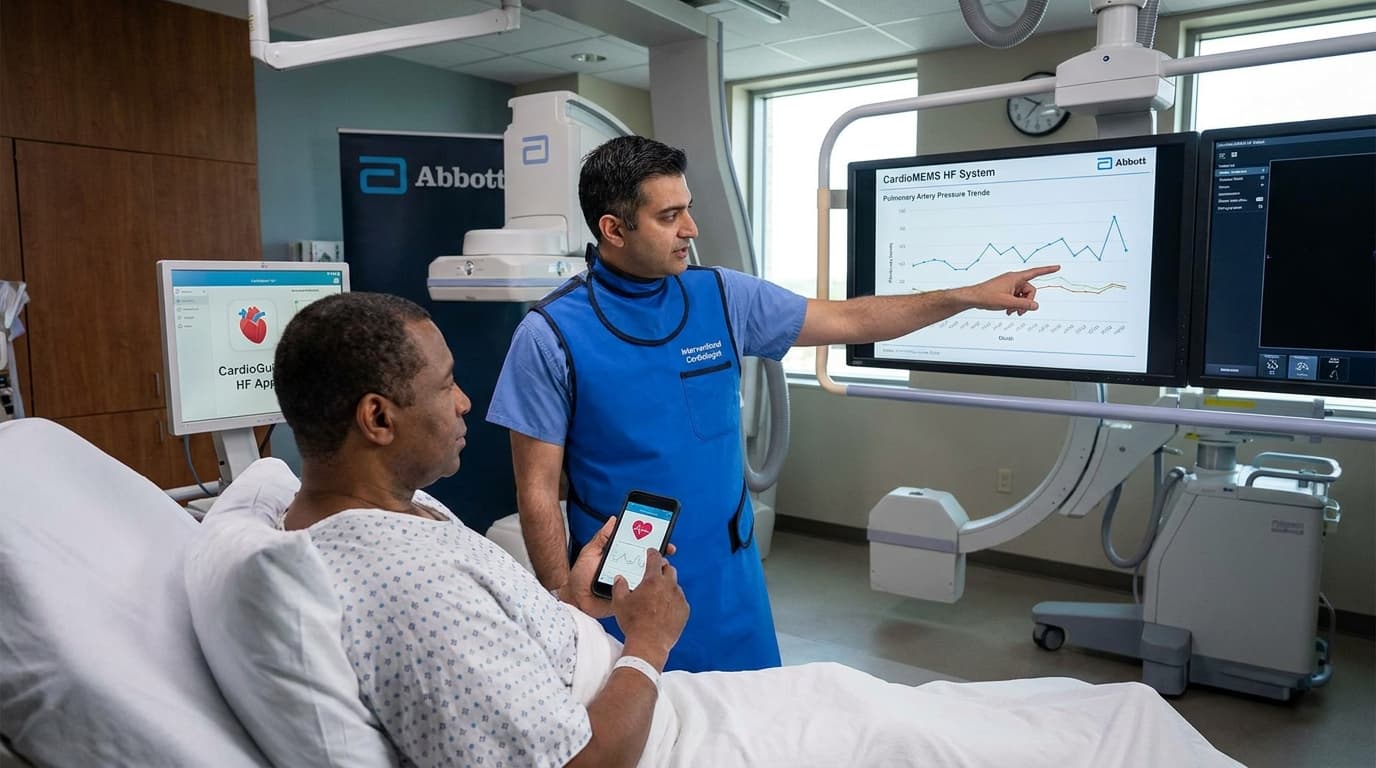
Abbott has received U.S. clearance for updates to its CardioMEMS HF System that add patient-facing functions through the CardioGuide HF App. The changes let U.S. CardioMEMS patients see their pulmonary artery pressure readings on smartphones, a step Abbott says is meant to help them take a more active role in heart-failure management.
The timing matters because heart failure can worsen before symptoms become noticeable. According to the source report, pressure in blood flowing from the heart to the lungs can rise weeks before patients experience symptoms, making pulmonary artery pressure a potentially earlier warning signal than shortness of breath, swelling or weight gain.
What changed
The CardioMEMS HF System measures pulmonary artery pressure using a sensor implanted in the pulmonary artery through a minimally invasive catheter-based procedure. Clinicians have used those readings for more than a decade to identify signs of worsening heart failure and guide treatment.
The newly cleared update extends that workflow to patients. In addition to displaying pressure trends in the CardioGuide HF App, the system now includes Dynamic Treatment Plan, a software feature that lets clinicians set personalized medication-adjustment plans based on changes in a patient’s pulmonary artery pressure. Once configured, the feature can send medication adjustment instructions directly to patients through the app.
Andrew J. Sauer, M.D., of Saint Luke's Mid America Heart Institute and the University of Missouri-Kansas City said in a statement that pulmonary artery pressure readings can help care teams identify changes earlier and adjust treatment before symptoms develop.
Why it matters commercially
The strategic significance is not that Abbott introduced a new implant, but that it added a software and smartphone layer to an installed monitoring system. That fits a broader medtech push toward personalized care tools and remote monitoring delivered through consumer devices.
The report compares Abbott’s approach with Boston Scientific’s HeartLogic, which remotely measures heart sounds, thoracic impedance, respiratory rate, heart rate and activity to help identify impending heart-failure decompensation. But HeartLogic requires ICD/CRT-D device surgical implantation, while CardioMEMS only monitors pulmonary artery pressure and uses a catheter-based implantation procedure.
That difference points to Abbott’s commercial bet: a narrower physiological readout paired with simpler patient visibility and clinician-directed action. Abbott said the CardioGuide HF App and Dynamic Treatment Plan will be available later this year.