Synchron has paused clinical trials of its second-generation brain-computer interface, interrupting one of the more prominent programs in a sector focused on helping people with disabilities such as ALS and paralysis interact with digital devices through brain activity.
The company said the pause is not safety related. But for a field that often presents progress in terms of bold technical milestones, the development is a reminder that commercial and regulatory timelines can still hinge on less visible hardware dependencies.
The device and the delay
Synchron’s second-generation system was a wireless version of its first-generation device. The company’s approach uses a catheter threaded through veins to place a stent near the brain’s motor cortex, with the aim of connecting users to digital devices using brain activity.
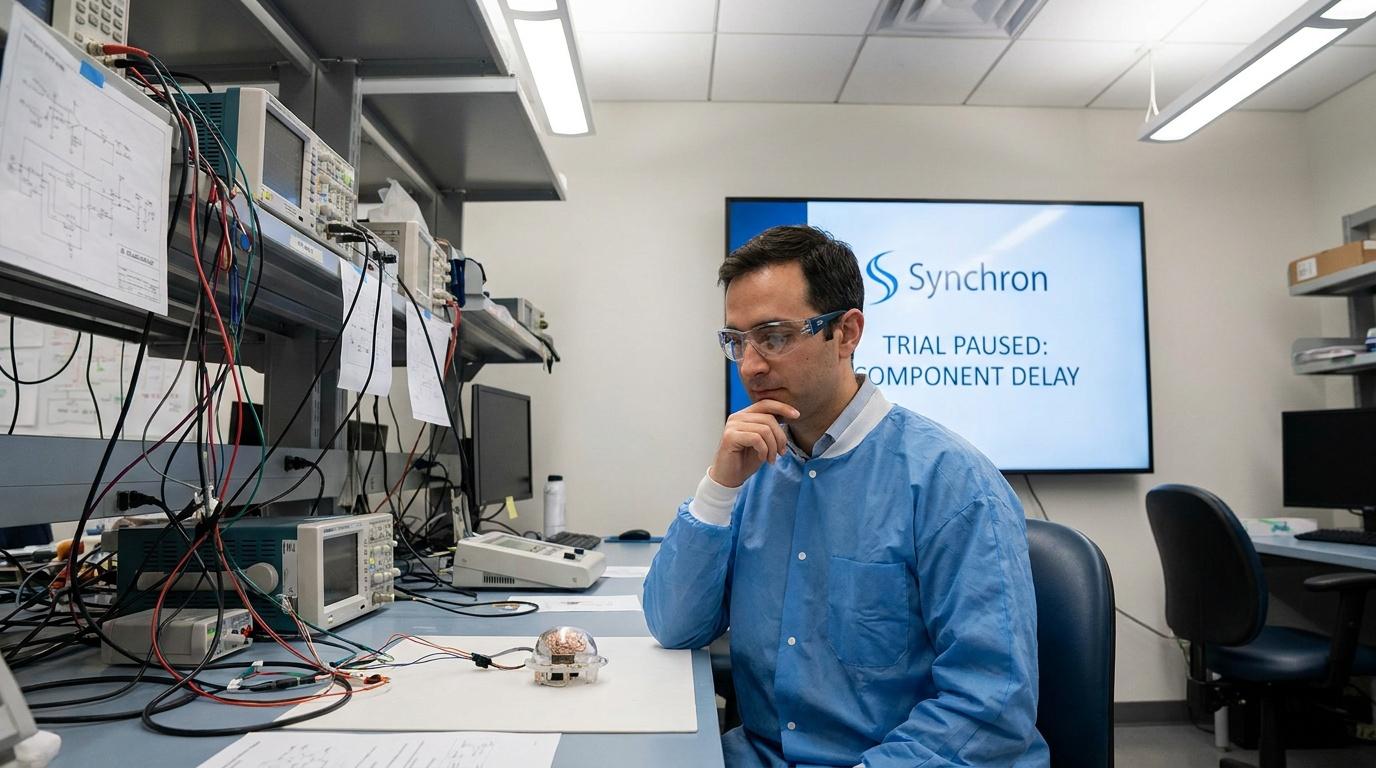
The immediate issue appears to be a component delay rather than a clinical safety problem. At a conference panel in New York City last week, CEO Tom Oxley said, “There are hundreds of components in our system, and it just takes a delayed one to slow down your submission to the FDA.” He added, “We had one particular component that we were caught up on.”
That explanation matters because it shifts the signal from biological risk to product-development execution. In implantable neurotechnology, the constraint is not only whether a device can work in patients, but whether every element of the system is mature enough to support a regulatory filing.
Why it matters
Synchron has been viewed as one of the leading companies in the fast-growing brain implant industry. A pause in its second-generation trial is therefore more than a company-specific update: it shows how difficult it is to turn an early technical lead into a dependable development path.
The company is also eliminating jobs in New York City and is working to develop a new device, according to WIRED as cited by STAT. That combination suggests Synchron is juggling near-term operational pressure with a broader product transition.
For the sector, the commercial lesson is straightforward. Brain-computer interface programs are not judged only by novel implantation methods or user ambition. They also have to demonstrate manufacturable, integrated systems that can move cleanly toward the FDA without being stalled by a single missing part.