The American Cancer Society has tightened its prostate cancer screening guidance, recommending that men at average risk between ages 50 and 69 undergo prostate-specific antigen blood testing every two years rather than leaving screening largely to case-by-case discretion.
For men in higher-risk groups, including Black men and men with a strong family history of prostate cancer, the society now recommends PSA-based screening every year starting at 45. The update is a meaningful shift from the group’s 2010 approach and reflects newer evidence that PSA screening reduced disease-specific mortality for certain men.
The New Screening Framework
Under the revised guidance, screening decisions become individualized starting at 70 because the balance of benefit and harm is less clear after that age. Screening should be interrupted after 80, or in men who are not expected to live another 10 years.
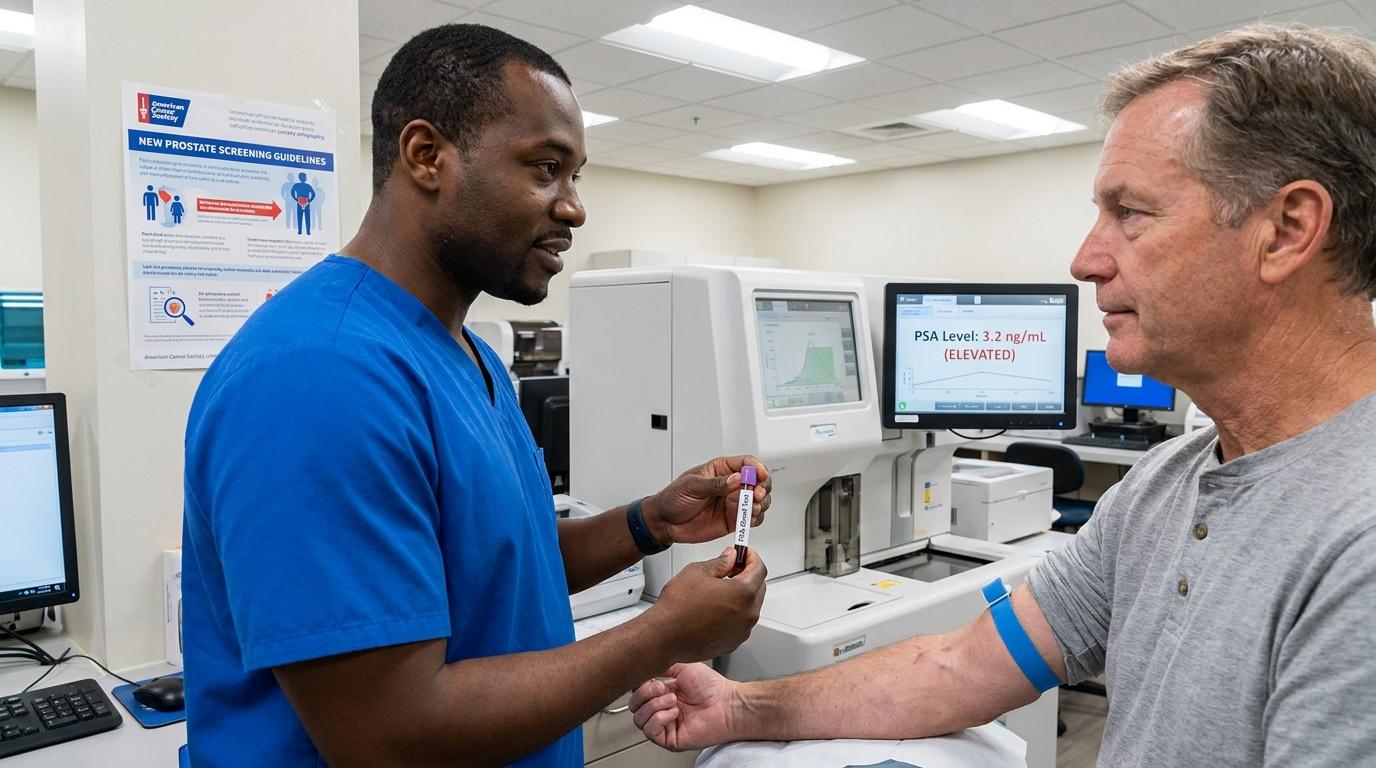
The guideline also sets a clearer threshold for an elevated PSA result: 3.0 nanograms/milliliter or higher for men aged 45 to 69. James Eastham, chief of urology at Memorial Sloan Kettering Cancer Center, told STAT that this is an important clarification because many PSA blood tests in the United States still report anything under 4.0 ng/ml as normal. He said the lower threshold could help primary care physicians refer patients earlier.
The update does not simply expand testing. It also tries to reduce the historical downside of PSA-based screening, which fell out of favor because of limited specificity and the number of men sent to follow-up procedures for cancers they did not have or for very slow-growing tumors.
To limit overdiagnosis and overtreatment, the guidelines now recommend two elevated PSA readings, followed by an MRI scan and/or testing for other prostate cancer biomarkers, before moving to biopsy. William Dahut, chief scientific officer at the ACS and a contributing author of the guidelines, told STAT that both MRI and biomarkers were included to provide flexibility for people who cannot easily obtain an MRI, though he said MRI would still be recommended before biopsy if a biomarker test comes back abnormal. The guidelines do not prefer one biomarker over another.
Why The ACS Changed Course
The central driver is new evidence from 2025 supporting a mortality benefit from PSA screening in some men. That evidence has helped return PSA to favor among specialists after years in which concerns about false positives and unnecessary intervention dominated the conversation.
The ACS is also making a targeted equity argument. The guideline authors said they hope more frequent surveillance in Black men will reduce the number of patients in that group who present with advanced disease. STAT reported that Black men are disproportionately represented in prostate cancer mortality.
That gives the update a broader significance than a simple interval change. The ACS is effectively arguing that modern prostate screening should be judged not as a one-step test-to-biopsy pathway, but as a structured detection program that uses repeat testing, imaging and biomarkers to improve selection.
The Policy Gap
The U.S. Preventive Service Task Force has not yet changed its own guidelines to reflect the new evidence and still recommends against routine, population-wide PSA screening, favoring individualized decision-making instead. Because the panel’s recommendations determine which preventive services insurers must cover, that gap matters commercially and operationally as much as it does clinically.
The panel has announced an upcoming update, so the ACS move may shape the next round of debate over what standard screening should look like in practice. If the task force moves in a similar direction, PSA testing volumes, MRI use and biomarker adoption could all rise together rather than as separate trends.
The ACS also emphasized active surveillance for slow-growing cancers. Dahut told STAT that finding more early-stage disease does not mean men need to rush into therapy, or need therapy at all. That position is part of the guideline’s balancing act: restoring routine screening without reviving the older pattern of automatic intervention.
For Eddie Baynes, a 56-year-old prostate cancer survivor and advocate, that routine testing message is the right one. As a Black man, he knew he was at higher risk, but did not begin regular PSA testing until age 52, after a fraternity screening event led him to add the test to his bloodwork. That screening led to a diagnosis and a prostatectomy. Under the revised guidance, men like Baynes would be pushed into regular surveillance earlier.