Roche has raised the stakes in Germany’s policy fight with research-based drugmakers, describing a newly proposed site-exemption clause as the final opportunity for the country to reestablish itself as a reliable place for pharmaceutical investment. The company’s message is less about one legislative tweak than about whether Germany can reverse a credibility problem created by recent healthcare reforms.
Roche put investment decisions in Germany on hold this summer, and a company spokesperson told BioSpace that the pause was driven by recent German healthcare reforms. According to the spokesperson, the legislation places a substantial burden on Germany’s research-based pharmaceutical industry and sends a negative signal to companies seeking to invest in the country.
Why Roche says the policy matters now
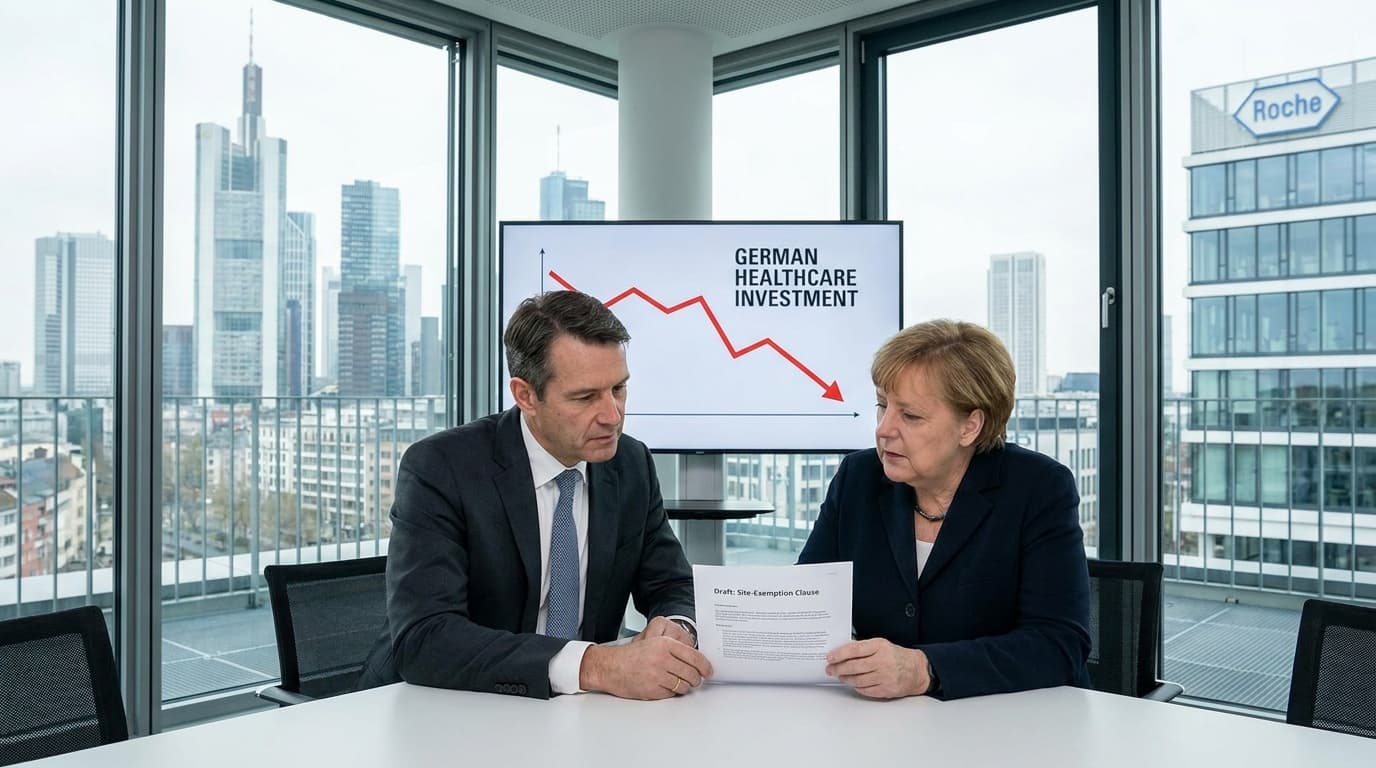
The immediate trigger is a reform that will, starting Jan. 1, 2027, raise a mandatory manufacturer discount on branded medicines from 7% to 15.5%. A German government committee responded late last month with a proposed clause that would allow companies meeting criteria tied to investing in Germany to receive reductions in that mandatory rebate.
Roche said a practical and effective version of that site-exemption clause is the last chance to restore confidence in Germany as a competitive and reliable investment location. The spokesperson added that the proposals need to become a workable law at the start of next year to achieve that goal.
The company also cautioned that the clause on its own may not solve the problem. Roche said such a provision will be credible only if it sits within a broader economic policy agenda that rewards innovation, provides predictable framework conditions for investment and restores Germany’s international competitiveness. That is the central investment signal: companies are reacting not only to rebate levels, but to whether policy conditions are stable enough to support multiyear capital commitments.
The scale of the investment pressure
Germany is already seeing visible consequences. In June, Boehringer Ingelheim and Eli Lilly scrapped plans to invest about €2 billion, or $2.2 billion, in Germany in response to proposals to cut healthcare spending.
Roche itself has a large footprint in the country, having created more than 1,800 jobs there and invested about €3.8 billion, or $4.3 billion, since 2020, according to the spokesperson. That gives its warning added weight: this is not a company arguing from a marginal presence, but one with existing assets and a stated willingness to pause further decisions.
Other signs of strain are emerging elsewhere in the sector. Germany is also contending with BioNTech’s plans to close three manufacturing sites in the country. Moderna had been interested in buying the sites, but only if it could agree on a partnership with the government. After failing to find a buyer, BioNTech pushed ahead with the closures last month.
Taken together, the dispute points to a broader issue for Germany’s life sciences strategy. A rebate-linked exemption could still preserve some investment appeal, but only if companies believe the rule is workable and durable. Roche’s framing suggests the industry is no longer debating whether policy changes affect investment decisions; it is judging whether Germany can still restore enough trust to keep future R&D and manufacturing spending from moving elsewhere.