Tortugas Neuroscience has its first clinical validation as a standalone company after Hansoh Pharma reported a phase 2b win for obuprazine in acute schizophrenia. For Tortugas, which launched in the spring with $106 million and a pipeline centered on licensed neurology programs, the result is less a discovery moment than a test of whether its build strategy can turn externally sourced assets into U.S.-ready development programs.
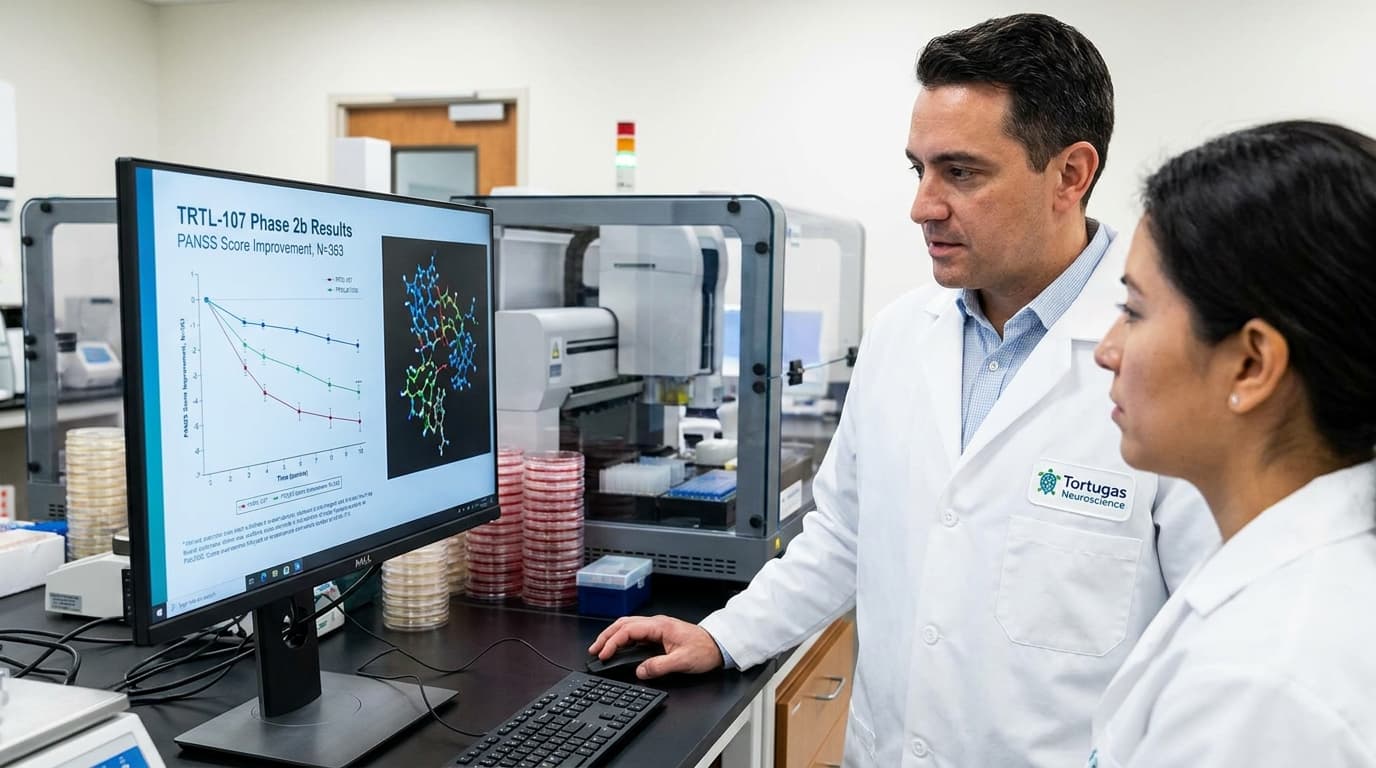
The drug, also known as TRTL-107, was licensed from Hansoh and is described by Tortugas as a D2/D3 partial agonist and 5-HT2A antagonist. Hansoh evaluated obuprazine in 363 Chinese adults with acute schizophrenia who had required hospitalization within two months prior to screening, comparing five dose ranges of obuprazine with placebo and the approved antipsychotic aripiprazole.
The data
Each obuprazine dose cohort demonstrated statistically significant and clinically meaningful improvements in Positive and Negative Syndrome Scale total score versus placebo at Day 42, meeting the trial's primary endpoint. Tortugas said the largest benefit came in the 1.5-3 mg dose cohort, which showed a placebo-adjusted reduction in PANSS score of 16.7.
For the 4.5-6 mg and 6-9 mg dose groups, the placebo-adjusted reductions were 13.2 and 14.7 points, respectively. Tortugas also pointed to a “notable increase” in responder rates for the 1.5-3 mg and 4.5-6 mg dose groups compared with both placebo and aripiprazole at Day 14, which it said suggested a rapid onset of clinical response.
On safety, obuprazine was generally well tolerated, according to the company. The discontinuation rate was 2.1%, slightly below the 2.5% reported for placebo.
Tortugas Head of R&D Al Robichaud said the company believes obuprazine's pharmacology includes functional modulation of dopamine D2, D3 and 5-HT1A receptors, together with potent antagonism of serotonin 5-HT2A receptors, which “may support broad control across multiple symptom domains while potentially addressing tolerability limitations.” The source attributes that interpretation to the company, not to independent comparative data.
Why it matters for Tortugas
Tortugas said its next step is to secure FDA go-ahead to run a U.S. trial of obuprazine. That objective aligns with the positioning the company laid out at launch in April, when it said it would focus on medicines with clear regulatory paths to approval, using small molecules with derisked mechanisms of action that can be developed as once-daily oral treatments for large, well-defined indications.
This readout therefore does two jobs at once. It advances a schizophrenia asset in a competitive field that was reshaped in 2024 by Bristol Myers Squibb's Cobenfy approval, and it supports Tortugas' thesis that licensed midstage neuroscience compounds can provide a faster path to value creation than earlier, less clinically grounded platforms.
The rest of the pipeline follows the same pattern. Tortugas also has a phase 2 GABA receptor-positive allosteric modulator from Hansoh for tinnitus, plus a GAT-1 inhibitor for focal epilepsy and a PDE9 inhibitor for reversible encephalopathies, both licensed from Eisai. If obuprazine can translate these China data into a U.S. development path, the company will have early evidence that its portfolio construction strategy is working rather than simply conserving capital.