Chinese radioligand therapy developers may be approaching the same kind of Western partnering cycle that already reshaped other modalities, but Sleuth argues the timing depends less on asset quality than on whether buyers have already built the operational backbone to handle radioactive drugs.
In its third quarter radiopharma report, the biopharma intelligence platform forecast that 2027 will bring a significant rise in deals between Chinese radioligand therapy developers and companies capable of supplying the drugs in the West. The premise is that China already has enough pipeline depth to support more cross-border licensing, while the pool of Western companies with usable radiopharma infrastructure is only now becoming capable of absorbing it.
Why Sleuth Expects The Inflection In 2027
Sleuth said China accounts for 45% of active nuclear medicine programs, including diagnostics, and has a particularly high share of preclinical and Phase 1 activity. In other therapeutic areas, especially antibody-drug conjugates, that kind of R&D output has already translated into frequent transactions with Western drugmakers. Sleuth’s view is that radioligand therapies have lagged mainly because the buyer universe has been constrained by supply requirements.
“The value of China’s pipeline accrues to whoever in the West owns the RLT infrastructure,” Sleuth said. The firm added that a company serious about radioligand therapy should build or buy isotope and manufacturing capacity now, because in-licensed assets can be added more easily once that chain is running.
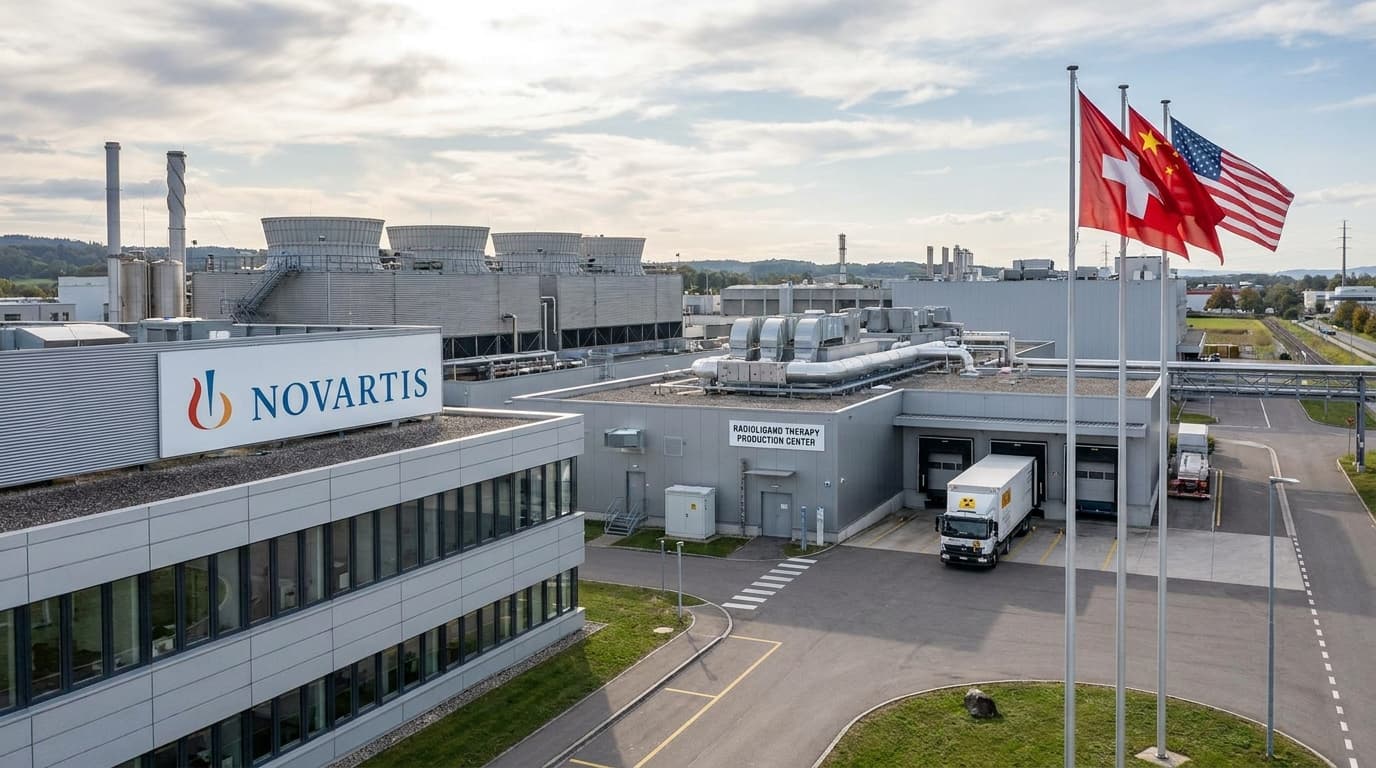
That emphasis reflects the mechanics of RLT supply. Radioisotopes are generated using nuclear reactors and other specialized equipment. The molecules also have specific handling and regulatory requirements and must reach patients before the isotope decays. Sleuth said those constraints make RLT infrastructure specific to nuclear medicine and limit a company’s ability to reuse supply chains built for other modalities.
The Strategic Bottleneck
Sleuth also argued that Western companies cannot depend on Chinese originators to supply the finished radioactive product into Western markets. Companies can in-license or acquire Chinese assets, but the radioactive supply chain must remain local, in Sleuth’s framing. That turns isotope access, manufacturing and distribution into the real scarcity point in the next phase of RLT dealmaking.
The report points to Novartis as one of the few clear examples of a Western company with the infrastructure to produce and distribute RLTs in the West. Novartis is also a rare example of a Western company that has already licensed a Chinese RLT, paying Zonsen PepLib Biotech $50 million upfront for an RLT in January.
Sleuth’s broader signal is that radiopharma may split into two strategic camps by 2028. Companies with differentiated assets plus locked isotope supply and manufacturing may remain independent. Asset-only developers, by contrast, can still succeed, but Sleuth said they are more likely to do so as partners or acquisition targets for companies that already control the supply chain.