Democrats’ win in the midterms gives the party control of the 120th Congress, but that does not automatically reopen the federal health equity programs and research pathways cut back during the second Trump administration. President Trump still has veto power, and the White House signaled no retreat Thursday, posting on X: “FYI: DEI is still dead.”
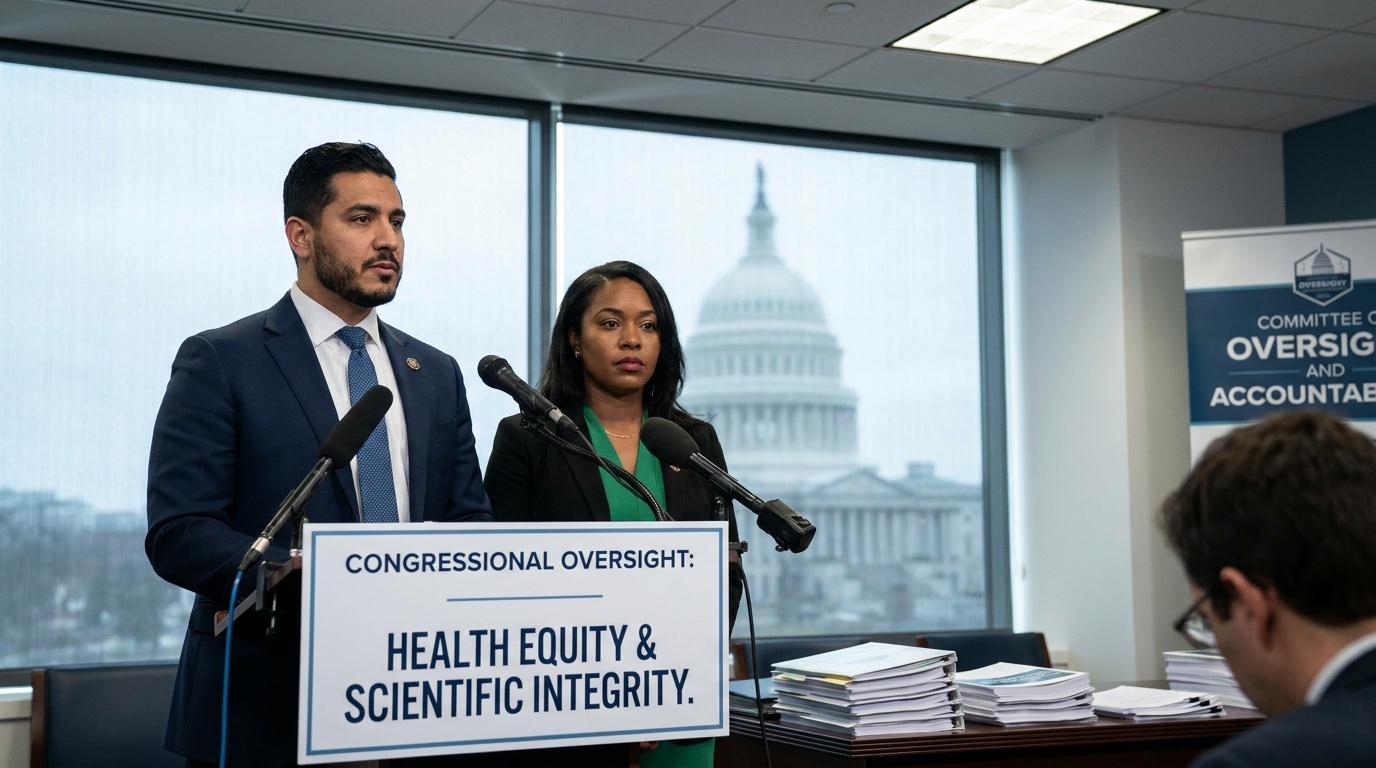
What changes is the composition of the opposition. Two newly elected lawmakers with science credentials told STAT they want to challenge the administration’s approach: Michigan Senator-elect Abdul El-Sayed, an epidemiologist and former health disparities researcher, and incoming Rep. Jasmine Clark of Georgia, a microbiologist who will be the first Black woman with a STEM Ph.D. in Congress. That matters because the fight now appears likely to run through oversight and evidence-gathering as much as through legislation.
What They Say They Want To Defend
STAT describes little congressional pushback over the past two years as the Trump administration terminated hundreds of grants meant to chronicle and remedy medical inequities, shuttered programs intended to diversify the science workforce, and opened investigations into universities and medical schools it accused of discriminating against white and Asian applicants.
Clark said she has seen what diversity, equity, and inclusion initiatives can do for students trying to find paths into science. As a former professor, she told STAT those programs opened opportunities for her students. El-Sayed framed the issue more broadly, saying the “war on diversity, equity, and inclusion” reflects a vision of America that excludes some people, and arguing that documenting how systems create differences in who can live long, healthy lives should guide public policy.
That emphasis on documenting disparities is not rhetorical detail. It goes to the core policy effect of the administration’s cuts: if the federal government reduces support for measuring inequity, it also limits the evidence base that lawmakers and agencies use to justify interventions.
Oversight Looks Like The Main Tool
The source makes clear that passing health equity bills remains an uphill battle despite Democratic control of both chambers. The more immediate lever is congressional scrutiny. A number of physicians and scientists who won their races have said accountability for health secretary Robert F. Kennedy Jr. is a priority, and Clark said she would seek a seat on the House oversight committee.
Clark pointed to one issue she wants explained: why the administration has repeatedly pushed for a controversial hepatitis B vaccine study in Guinea-Bissau. She compared that trial to the Tuskegee syphilis experiment, the unethical study conducted by the U.S. Public Health Service and the Centers for Disease Control and Prevention that withheld treatment for syphilis from nearly 400 African American men from 1932 to 1972.
She also described a practical research consequence closer to home. Her former lab, which studies HIV transmission, had to pause some longitudinal studies in Africa because of restrictions on international collaborations. Even if replacement funding can be found, she said, restarting means beginning again or accepting a major gap in the data.
Jennifer Jones of the Union of Concerned Scientists told STAT that part of accountability should be figuring out which communities and researchers were most harmed by the policies of the past two years. That is a policy signal in itself: before Congress can reverse or rebuild programs, it may first try to create an official record of who lost funding, who lost access, and which scientific fields were constrained.
The Broader Political Signal
The article notes that some of the administration’s biggest science policy moves have already drawn congressional resistance, including proposals to cut the National Institutes of Health’s budget, cap overhead funding for universities, and exert more political control over federal funding. With Democrats now controlling both chambers, that pushback could become more coordinated.
At the same time, supporters of health equity work are trying to argue that the issue is less polarizing than its branding suggests. Philip Alberti of the Association of American Medical Colleges Center for Health Justice told STAT that polling found three-quarters of U.S. adults support the goal of all communities having a fair and just opportunity to be healthy, and that 65% of adults who have heard the term “health equity” support it as well, including across ideological subgroups.
For biotech, academic medicine, and public health research, the significance is that personnel changes in Congress may not quickly restore funding, but they can change the pressure points. If lawmakers with direct experience in disparities research, lab science, and scientific training programs focus hearings on grant terminations, keyword screening of proposals for “DEI,” and restrictions on collaborations, the policy debate could move from culture-war framing back toward research capacity and public-health evidence.
That is a narrower outcome than legislative reversal, but it is also more immediate: in the final years of the second Trump administration, Congress may be able to slow, expose, and document policy damage even where it cannot fully stop it.