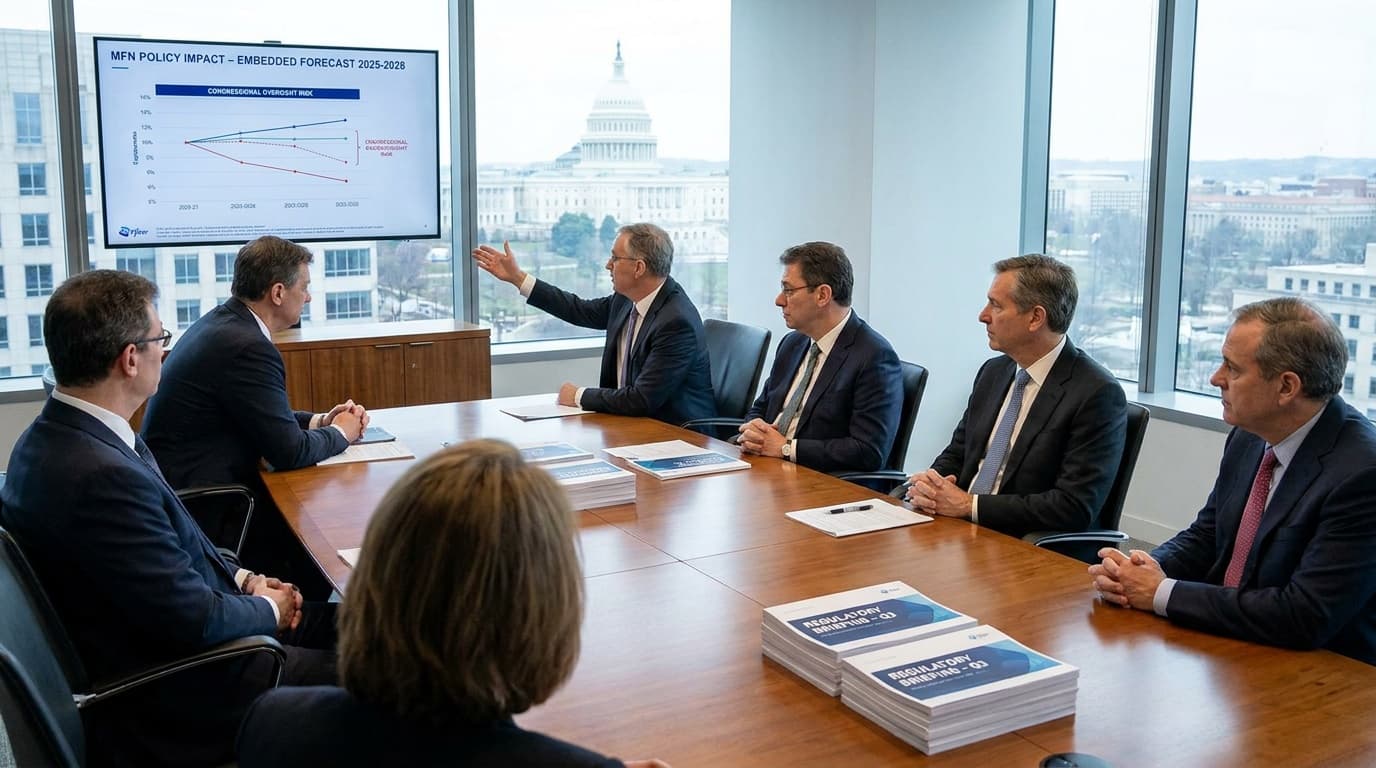
Pharma executives discussing third-quarter results this week largely signaled that Democrats regaining control of Congress does not materially change their near-term assumptions on drug pricing, because President Donald Trump’s Most Favored Nation initiative is already baked into guidance and valuation frameworks. The common message from management teams was not that policy risk has disappeared, but that the most disruptive piece of it has already been negotiated into the sector’s operating base.
Novo’s Mike Maziar Doustdar, speaking from Copenhagen Wednesday morning, said there has always been strong bipartisan support for what the industry does and pledged to work with either party in the U.S. Pfizer CEO Albert Bourla made a similar point on Tuesday, saying he expected a split government and did not think many things could move legislatively. Democrats later retook both houses of Congress.
What Executives Are Assuming
Bourla said he does not expect changes this year to the MFN agreements that Pfizer and other pharmas secured in order to avoid tariffs in 2025. He contrasted that view with his concern last year, when he said he was scared about the implications of either tariffs or MFN. Now, after what he described as successful navigation of those issues with the administration, he said the industry has a period of projected stability that has helped restore investor confidence.
That framing matters because it suggests the market has shifted from pricing in a policy shock to pricing in negotiated constraints. If that holds, election outcomes may matter less for 2027 earnings than for oversight risk and for the next round of bargaining.
Where The Risk Still Sits
Leerink Partners wrote that Democrats could renew a push to lower drug prices, but likely have bigger issues to tackle first. The firm said it does expect investigations related to drug pricing, potentially including the confidential negotiations around MFN that gave companies a chance to avoid tariffs.
Leerink also flagged a longer-dated risk. Trump has suggested he may seek to renegotiate MFN in 2028, and the administration’s voluntary tariff-avoidance deals with drug companies expire in December 2028. The firm said it has been assuming Trump could demand “a better bargain” from drug companies going into the November 2028 elections.
BMO Capital Markets warned that biopharma shares could face headwinds at the open on the U.S. Democrat “blue wave” in the midterms, even as company-specific earnings results remained important.
Bayer’s Unfinished Negotiation
Bayer stood out because it has not yet secured an MFN deal with the Trump administration. CEO Bill Anderson said he expects a resolution that is good for America and good for Bayer. Stefan Oelrich, president of the Pharmaceuticals Division and member of Bayer’s board of management, said Bayer remains potentially exposed to tariff impact, as well as potential GUARD and GLOBE impact, because it has not signed an agreement.
GUARD and GLOBE are trial programs being developed by the Centers for Medicare and Medicaid Services to embed MFN drug pricing into government healthcare programs. That makes Bayer’s exposure more than a negotiating footnote, particularly as the company moves closer to a launch for stroke medicine asundexian, which was accepted for FDA priority review in October.
Bayer has also been working to increase its U.S. footprint, including a $2.2 billion investment in an Ohio manufacturing plant announced in October. Trump had promised leniency to pharmas that onshored manufacturing during his initial MFN push last year. Oelrich said Bayer would provide an update on negotiations when it reports first quarter earnings and offers guidance for the year ahead.