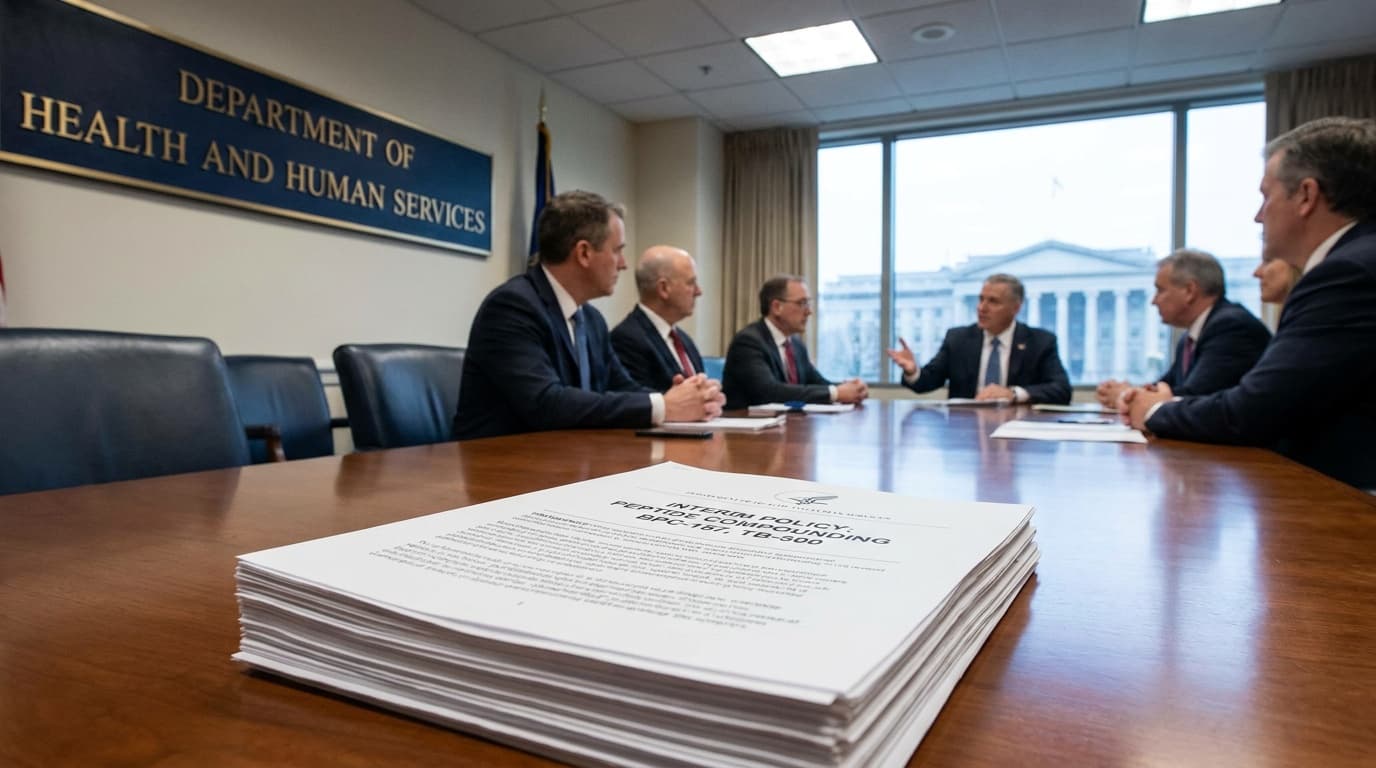
The Department of Health and Human Services said it will support production of six unapproved peptide products by compounding pharmacies through an enforcement discretion policy published Wednesday. The interim measure lifts barriers to compounding substances including BPC-157 and TB-500, which are promoted online together as the “Wolverine stack” for muscle building and soft tissue repair.
The policy is a notable shift in how the Trump administration is handling peptides. HHS presented the move as a safety intervention aimed at discouraging consumer use of research-use-only peptides from foreign manufacturers, arguing that limited compounding under appropriate safeguards would give patients a more controlled alternative while advancing “patient choice and freedom” and appropriately protecting patient safety.
The policy
Under the enforcement discretion policy, state-licensed pharmacies, federal facilities and licensed physicians can compound the six peptides without risking reprisals from the HHS. The products are not on the list of bulk substances that can be compounded, and HHS described the approach as an interim measure to provide access anyway.
The decision follows a July meeting of the FDA’s Pharmacy Compounding Advisory Committee, where experts voted in favor of compounding the six peptides covered by the policy. The same group voted against a seventh peptide, emideltide, also known as delta sleep-inducing peptide, or DSIP, which is advertised to promote slow-wave sleep among other benefits.
The debate
The move reopens a policy argument that has been building since the FDA raised concerns in 2023 about peptide safety, including the risk of immunogenicity. HHS is now effectively weighing that concern against a different risk: consumers obtaining products from less controlled channels.
Industry and advocacy responses split along the same lines seen in comments to the advisory committee. The Alliance for Pharmacy Compounding called the action an important step for patients, and the American Academy of Peptide Medicine said it was a vital step toward eliminating unsafe gray and black markets.
Opponents focused on the precedent. Partnership for Safe Medicines Executive Director Shabbir Imber Safdar said the policy leaves Americans in a gray area about whether peptides are safe. PhRMA General Counsel and Corporate Secretary Jim Stansel said it is deeply concerning that HHS is telling the FDA to ignore the law and allow illegal compounding of unapproved peptides, adding that access to peptides not demonstrated to be safe or effective in clinical trials jeopardizes patient safety.
That clash is the real signal from the announcement. HHS is not approving these peptides; it is changing enforcement risk around who can make them. For compounders, that creates room to operate. For branded drugmakers and safety advocates, it raises the possibility that enforcement discretion becomes a more active market-shaping tool for categories that remain outside formal approval pathways.