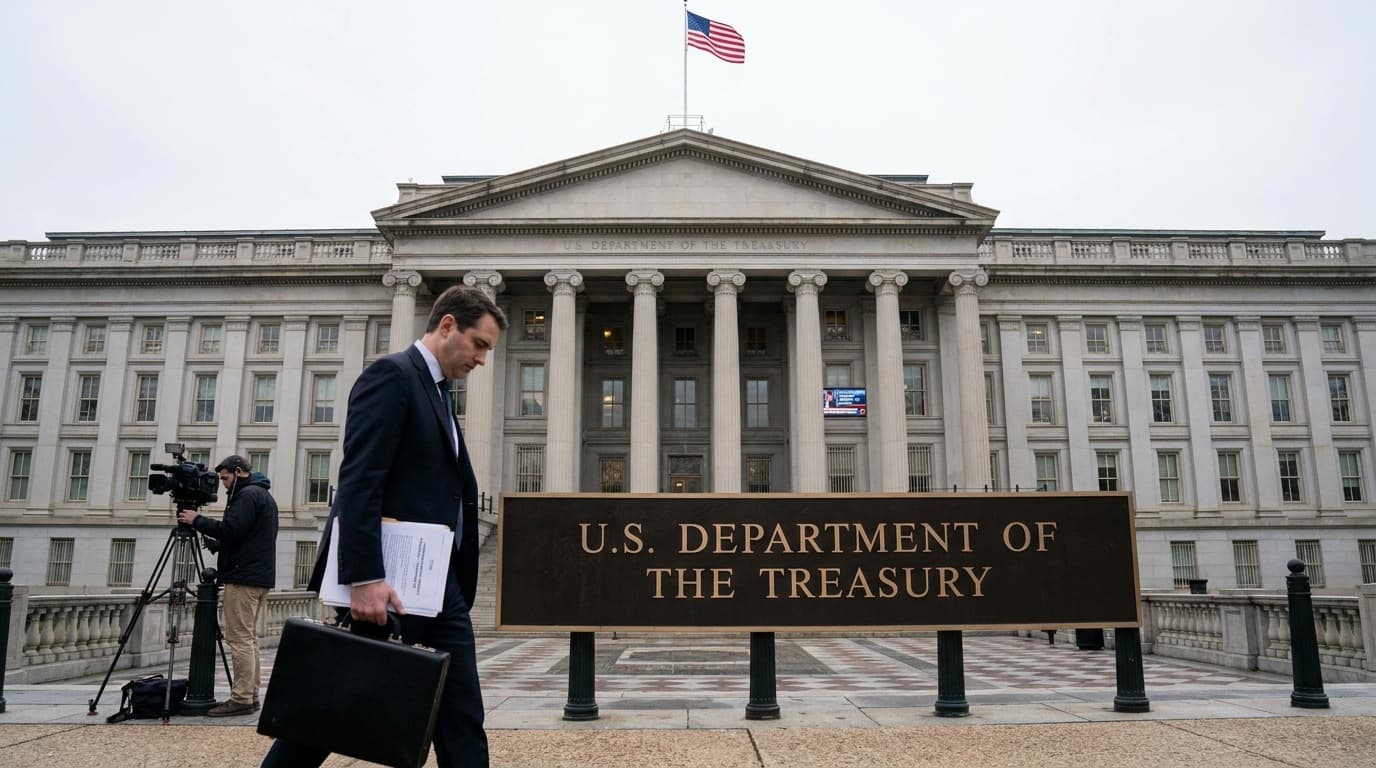
The U.S. Department of the Treasury has moved to restrict some outbound biotechnology investments on national security grounds, but the proposal stops short of cutting off licensing deals with China. That exemption is the central feature for biopharma companies, because it leaves intact the transaction structure many drugmakers have increasingly used in China over the past few years.
According to a fact sheet accompanying the proposal, U.S. persons could face restrictions on investing in certain bio-derived compounds, biomanufacturing equipment and facilities, and biotechnology or equipment involved in biological design and scientific discovery or experimentation. At the same time, licensing deals would not be off limits.
The Policy Design
The proposal follows direction from President Donald Trump and comes from the Comprehensive Outbound Investment Security Act, which Congress passed in the Fiscal Year 2026 National Defense Authorization Act. Trump signed the COINS Act into law in December 2025.
The Treasury Department's rulemaking was described as focusing heavily on brain-computer interface technology, but the biotechnology discussion was broader. The proposal suggested naming the following as prohibited technologies from countries of concern: small molecules, polymers, vaccines, blood and blood components, allergenics, cell and gene therapies, and monoclonal antibodies or other recombinant therapeutic proteins.
Treasury stated in the rule that restrictions are necessary to protect U.S. national security. It also acknowledged a competing risk: restrictions could have countervailing effects on national security if they create significant public health risks or harm U.S. businesses in the sector. The department is therefore seeking comment on both the risks of restrictions and their impact on national security.
Christopher Pilkerton, assistant secretary of the Treasury for Investment Security, said the proposed regulations are designed to address risks that can arise when foreign adversaries try to benefit from U.S. investment in key technology sectors.
Why The Licensing Exemption Matters
The licensing carveout is significant because it preserves a practical route for cross-border biopharma collaboration even as Washington pushes a tougher posture on capital flows and control. For drug developers, that means the proposal appears aimed more at limiting ownership, infrastructure, and strategic capability transfer than at shutting down every form of asset access.
That approach also mirrors a move from China. A week earlier, China rolled out a policy to restrict transfer of ownership for certain biotechnologies, including cell and gene therapy, while also exempting licensing deals. The result is a more constrained policy environment on both sides, but not a complete break in partnering.
The signal for the market is that policymakers appear to be drawing a line between investing into strategic biotech capacity and licensing individual programs. That distinction matters because licensing has been one of the main ways Western drugmakers have sourced assets from China without taking on direct ownership exposure.
Industry Response
Industry reaction was cautious rather than confrontational. John Crowley, CEO of the Biotechnology Innovation Organization, said the U.S. needs policies that maintain and advance global leadership in biotech as it competes with China, but warned that the details of the proposed Treasury Department rules matter. His formulation was direct: "We cannot restrict our way to success."
Crowley has been outspoken about the rise of China's biotech sector and the national security implications of that growth, yet his response to the proposal focused on making sure the rules do not unintentionally weaken U.S. biotechs. That is a notable boundary in the policy debate. Even critics of China's growing influence have not broadly called for a ban on licensing deals.
Sidley Partner Lila Hope said on a BioSpace webinar earlier this month that the back-and-forth between U.S. and Chinese policy proposals is injecting uncertainty into dealmaking. In her view, that uncertainty could push Chinese biotechs to look more toward Europe, Japan, or other markets for deals.
That is the main commercial risk embedded in the proposal. If the rules preserve licensing but make the process less predictable, the U.S. may protect against some strategic exposure while still encouraging counterparties to redirect opportunities elsewhere.