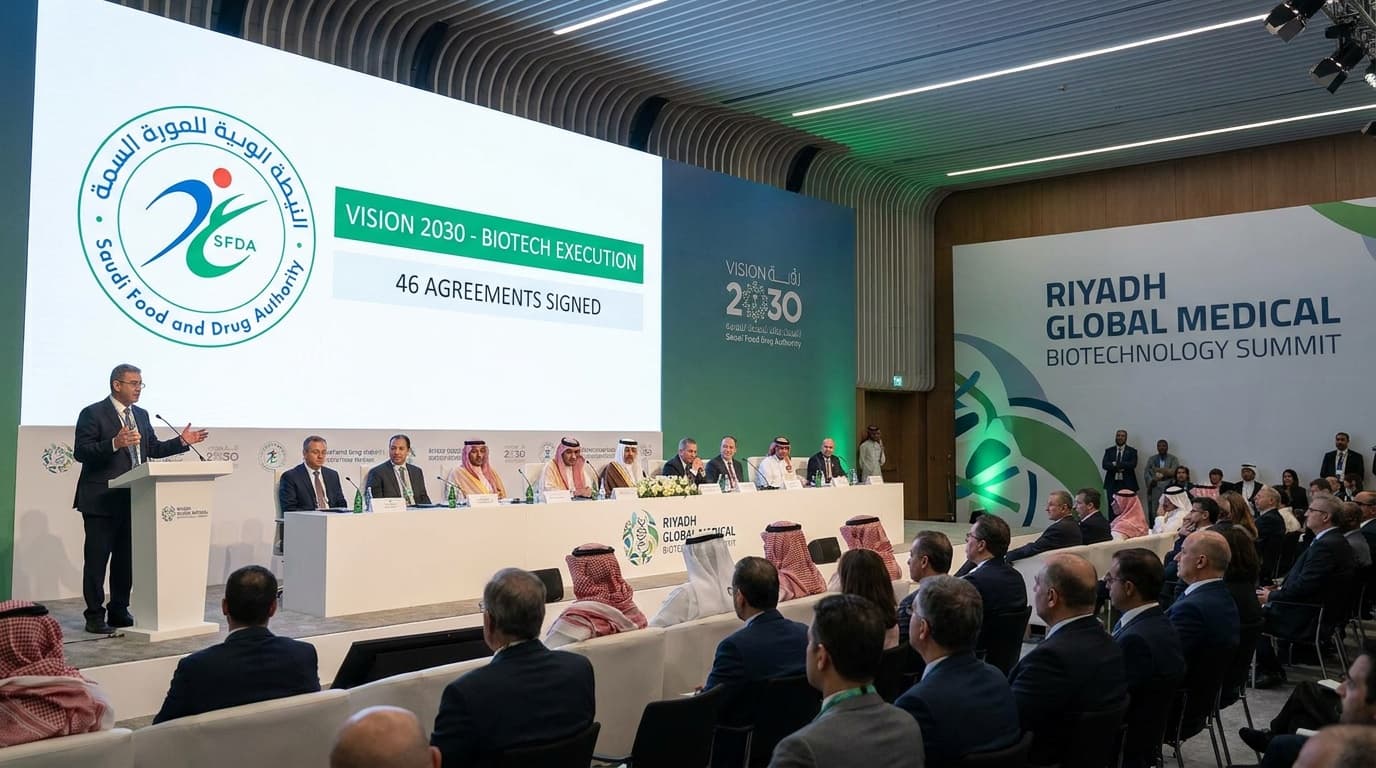
Saudi Arabia is adding more visible structure to its biotech push, combining regulatory changes, manufacturing tie-ups and clinical-trial initiatives as it tries to turn Vision 2030 from an industrial policy statement into an operating life sciences ecosystem.
The core question has shifted from whether the country can fund the effort to whether it can execute consistently enough to build internationally competitive biotechnology capabilities. Experts interviewed by BioSpace described real progress, but they also pointed to the next set of bottlenecks: clinical trial and hospital engagement, intellectual property generation and the training of experienced biotech leaders.
Regulatory buildout
George Syrmalis, CEO at Bioscience Equity Partners, pointed to one of the most significant recent changes: the Saudi Food and Drug Authority’s effort over the past year to connect accelerated pathways across the drug development lifecycle. At the Drug Information Association Singapore Annual Meeting in September, SFDA CEO Hisham Aljadhey discussed integration of the Breakthrough Medicine Program, the New Accelerator Program for Drugs in Rare Diseases and the Research and Investigational Drugs pathway.
A notable operational detail is the 20-working-day process for rare-disease drug classification under the New Accelerator Program for Drugs in Rare Diseases. Syrmalis said that kind of clarity can make development planning more responsive for companies considering Saudi programs.
On October 7, the SFDA and the Saudi National Institute of Health announced five initiatives to advance clinical trials. Syrmalis said those measures address practical issues that often determine whether a development program can run efficiently, including contracting, site identification, research capability and regulatory navigation.
International regulatory ties are also broadening. Singapore’s Health Sciences Authority signed an MOU with the SFDA on September 14 covering regulatory cooperation, exchange of information and expertise, and exploration of pathways for conventional and novel products including biotechnology. Syrmalis said that could make development and registration more efficient for companies working across markets.
From capital to operating capability
Ravi Kiron, managing director at Biopharma Strategy Advisors, said Saudi Arabia has the financial resources to build a pharmaceutical manufacturing industry. In his view, the more important challenge now is proving that those resources can support an internationally competitive biotech innovation system rather than only a production base.
He cited Saudi CDMO Lifera’s MOUs with Pfizer, Sanofi, MSD and others as evidence that sovereign capital is beginning to attract international pharmaceutical expertise. He also noted expanding clinical research activity, while adding that the real test is whether those partnerships become commercially sustainable operations.
Several experts framed manufacturing as necessary but insufficient. Abdulrahman Alshaya, chairman of collaboration and partnerships at the King Abdullah International Medical Research Center, said manufacturing is an entry point rather than the destination, with Saudi leadership focused on technology transfer. Stefan Wagener, CEO at Biorisk Management International, made a similar point, saying manufacturing gives local scientists responsibility for process improvement and IP development, which is how localization can create durable innovation capability.
That interpretation aligns with the National Biotechnology Strategy, where biomanufacturing is one of four pillars. The policy implication is that factory buildout matters less as an endpoint than as a mechanism for skills, quality systems, supply chains and regulated-industry experience.
What execution still needs
Wagener pointed to institutions such as the King Abdullah International Medical Research Center deepening ties with international groups, especially in infectious disease research, as an encouraging sign. He also cited the Ministry of Health’s BioLabs accelerator as a practical effort to help Saudi founders develop research strategies and commercial plans.
Still, the unresolved issue is conversion. Wagener said it remains to be seen how planned collaborations turn into active research programs, training opportunities and centers of excellence, including in biorisk management. Alshaya offered another marker of momentum, saying the Riyadh Global Medical Biotechnology Summit in September proceeded despite escalated regional tension and resulted in 46 agreements.
Geopolitics has not halted the effort, but it remains a drag on speed and planning. Syrmalis said Saudi Arabia’s ambitions can withstand turbulence if execution remains consistent and companies plan realistically for the operating environment, though investment decisions may take longer, visits may be postponed and partnerships may need added safeguards. Wagener framed resilience in practical terms, such as whether temperature-sensitive materials can still reach laboratories during transport disruptions, and said Saudi efforts to reroute trade during recent disruptions provide a concrete example.
The strategic signal is that Saudi Arabia now appears to be moving beyond headline investment promises into process design and capability building. Whether that becomes a true biotech hub will depend less on another round of memoranda and more on evidence that Saudi-founded companies can generate IP, run meaningful R&D programs and advance toward major M&A or IPO outcomes within the next five years.