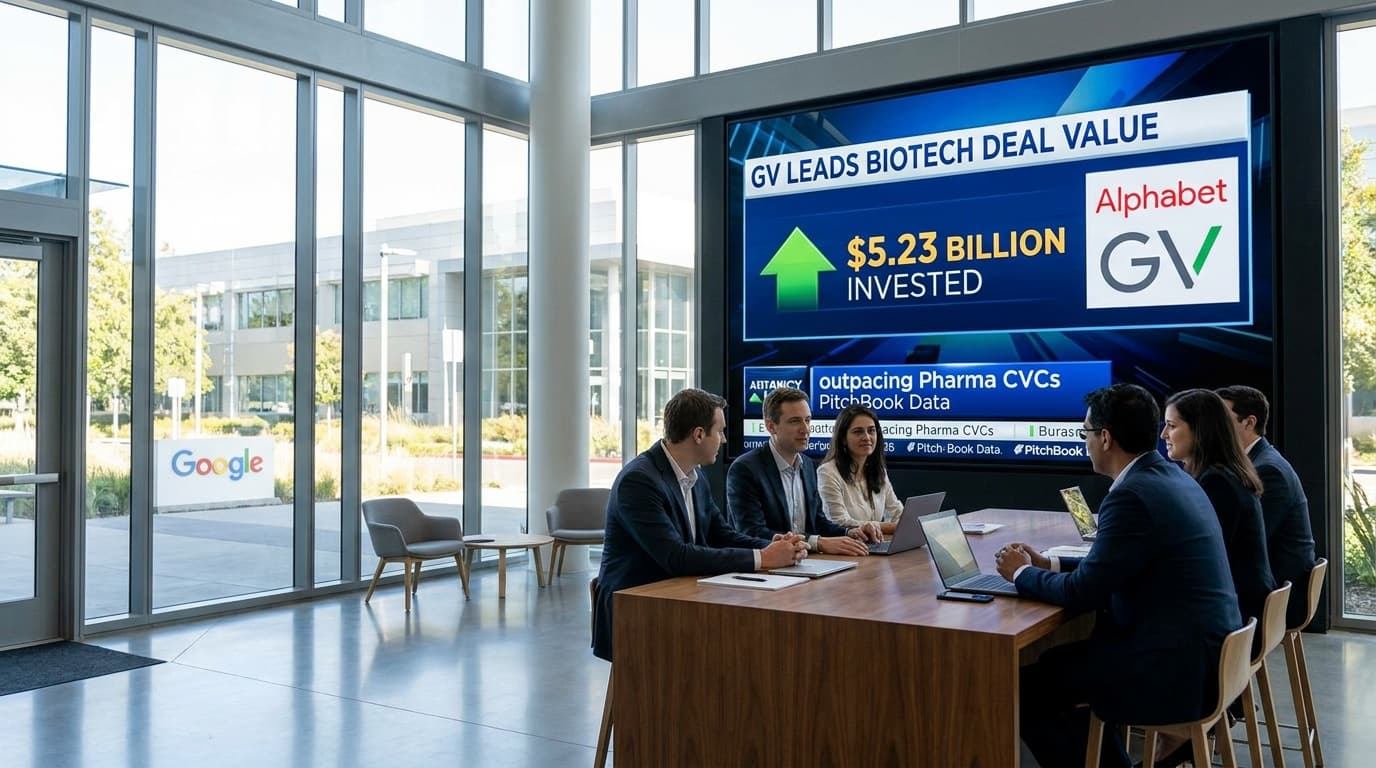
Alphabet’s GV has participated in biotech deals worth a cumulative $5.23 billion since the beginning of 2025, according to PitchBook data cited by BioSpace. Spread across 20 deals, that total makes the Google parent’s venture arm the biggest corporate spender in biotech by aggregate deal value in the period covered.
That ranking stands out because the usual assumption is that the largest corporate backers in biotech come from pharma. By deal count, Lilly USA was more active, participating in 38 life sciences VC deals since January 1, but those transactions totaled a lower cumulative $2.5 billion. Including Lilly Asia Fund, which BioSpace described as separate, Eli Lilly was involved in 63 deals worth $4.2 billion, still more than $1 billion below GV’s total.
Where The Money Is Concentrating
BioSpace said GV tends to participate in larger deals, which helps explain how it leads on value despite a lower deal count. The firm, founded in 2009, currently has $13 billion in assets under management and lists hundreds of biotechs in its portfolio. One example in the report was Revolution Medicines: GV invested in the company’s $100 million series C in 2019 and exited when Revolution went public in February 2020.
Other pharma-linked corporate VC groups remained active but trailed GV on cumulative value. Sanofi Ventures participated in 30 deals totaling $3.7 billion, while Pfizer Ventures took part in 18 deals worth $1.3 billion.
What The Funding Market Looks Like
The broader backdrop is still a strong venture market, but one with clear selectivity. J.P. Morgan reported that U.S. biopharma funding reached $23.9 billion across 385 rounds this year. Although fundraisings slowed in the third quarter, the bank predicted 2026 will reach $33 billion, above last year’s $30.5 billion. If that happens, J.P. Morgan said it would mark the fourth consecutive years of venture capital growth in the industry.
The composition of that market matters for interpreting GV’s position. The third quarter included 68 rounds of $100 million or more, led by Encoded Therapeutics’ $275 million series F and Solstice Oncology’s $225 million series A, but the bulk of fundraisings were $50 million or less. Investors preferred later-stage financings, series B or later, while first-time fundings fell to $1.7 billion in the third quarter, the lowest level since the third quarter of 2025. BioSpace also cited about 170 total series A and seed financings, down from a peak of 400 in 2021.
The investment signal is less that biotech funding is drying up than that capital is concentrating in larger, more mature stories. GV’s lead in aggregate value fits that pattern: influence in this market is increasingly tied to the ability to enter big rounds, not simply to do the highest number of deals.