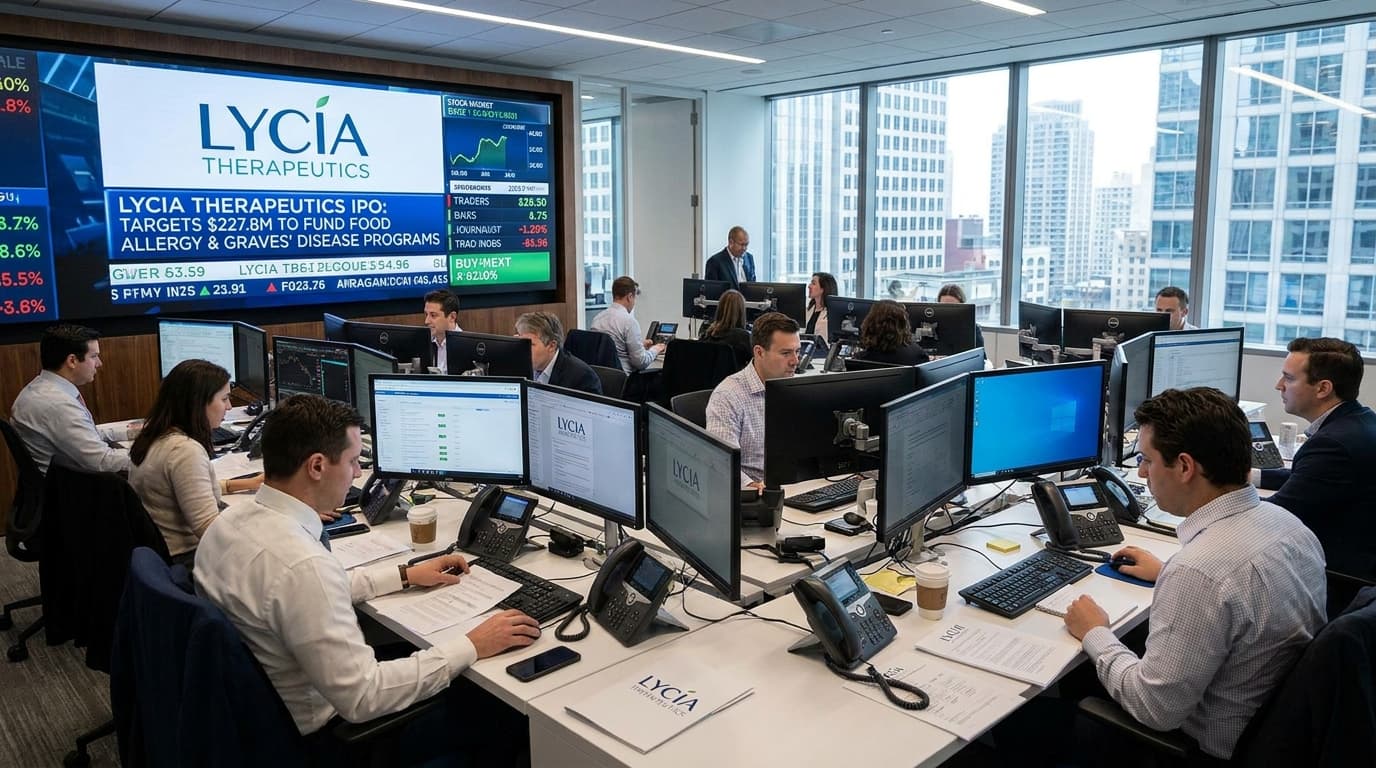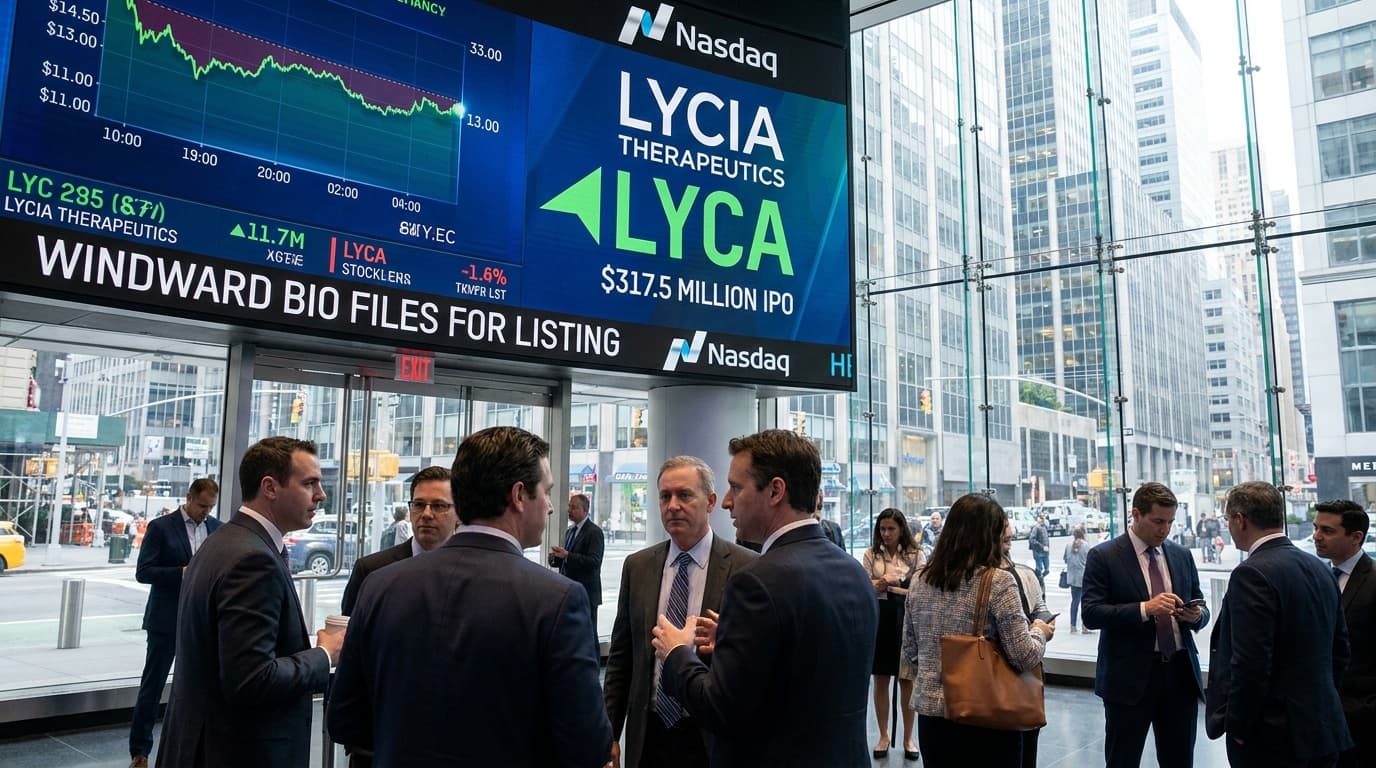
Lycia Therapeutics completed an upsized Nasdaq IPO on Friday, raising $317.5 million in gross proceeds after selling 17.6 million shares at $18 apiece. The South San Francisco biotech had previously expected to offer 14.7 million shares and had initially targeted roughly $250 million, making the final raise a materially larger financing than first outlined.
The stock began trading under the ticker “LYCA” and ended its first day up nearly 67% at $30 per share. If underwriters fully exercise their 30-day option to buy an additional 2.6 million shares at the same price, the haul could increase by another $47.6 million.
Where Lycia plans to spend the money
Lycia said last week that it needs around $80 million to take lead asset LCA-0061 through a phase 2 study. The candidate is a catalytic lysosomal targeting chimera, or cataLYTAC, degrader designed to deplete immunoglobulin E to treat food allergies and other allergic diseases.
A further $70 million is earmarked to move LCA-0062, described as a “fast follower” cataLYTAC degrader, into its own phase 2 study for food allergies. Lycia said the goal for LCA-0062 is to provide “additional flexibility in dosing and duration of response” compared with LCA-0061.
Beyond allergy, the company said it needs $90 million for a midstage study of LCA-0321 in Graves’ disease. That LYTAC degrader is designed to selectively degrade TRAbs, which Lycia describes as the pathogenic drivers of Graves’ disease.
In its filing, Lycia argued that existing IgE blockers such as Novartis and Genentech’s Xolair have benefited patients with food allergies but remain constrained by weight-based and often cumbersome dosing schedules, as well as limitations in patients with high circulating IgE levels. Lycia’s claim for LCA-0061 is mechanistic differentiation: rather than inhibiting IgE, the drug is designed with an aim to eliminate total and free IgE by targeting extracellular IgE for lysosomal degradation. The company said preliminary phase 1 data showed rapid, deep and sustained reduction in total and free IgE, with no safety signals or dose-limiting toxicities observed.
The financing signal
Lycia entered the second half of this year with $148.1 million in cash, cash equivalents and marketable securities after raising $50 million at launch in 2020, a $70 million series B in 2021, a $106.6 million series C in 2024 and another $75 million in June. The IPO therefore adds to an already substantial capital base rather than rescuing a cash-strapped company.
That matters because the use-of-proceeds breakdown points to a public market still willing to fund multiple clinical programs at once when investors can see a defined path into phase 2. Lycia has 31 full-time employees and is led by CEO Aetna Wun Trombley, Ph.D., previously chief operating officer of NGM Biopharmaceuticals, but the financing is sized for portfolio advancement, not just extension of runway.
Windward Bio’s filing reinforces the same pattern from the immunology side. The Basel-based company has not yet said how many shares it expects to offer or at what price, but it identified late-stage development as the top priority. The first call on IPO proceeds is WIN378, an anti-human thymic stromal lymphopoietin monoclonal antibody acquired from Kelun-Biotech and Harbour BioMed in a $970 million biobucks deal last year. Windward has already put the asset into a phase 2 trial in chronic obstructive pulmonary disease and a phase 2/3 trial in asthma, with another phase 3 asthma study expected to begin enrolling patients in the first half of 2027.
The filing also points to spending on a planned phase 2b study of WIN027 in chronic obstructive pulmonary disease and a global midstage atopic dermatitis trial. Windward bought WIN027 from Qyuns Therapeutics last year in a $700 million deal for an IgG1 bispecific monoclonal antibody targeting TSLP and IL-13. At the end of June, Windward still had $207.3 million in cash, cash equivalents and marketable securities after a $200 million series A in 2025 and a $165 million series B earlier this year.
Taken together, the two filings suggest the current IPO window is rewarding companies that arrive with sizable private backing and a clear plan to convert new capital into registrational or near-registrational development work.