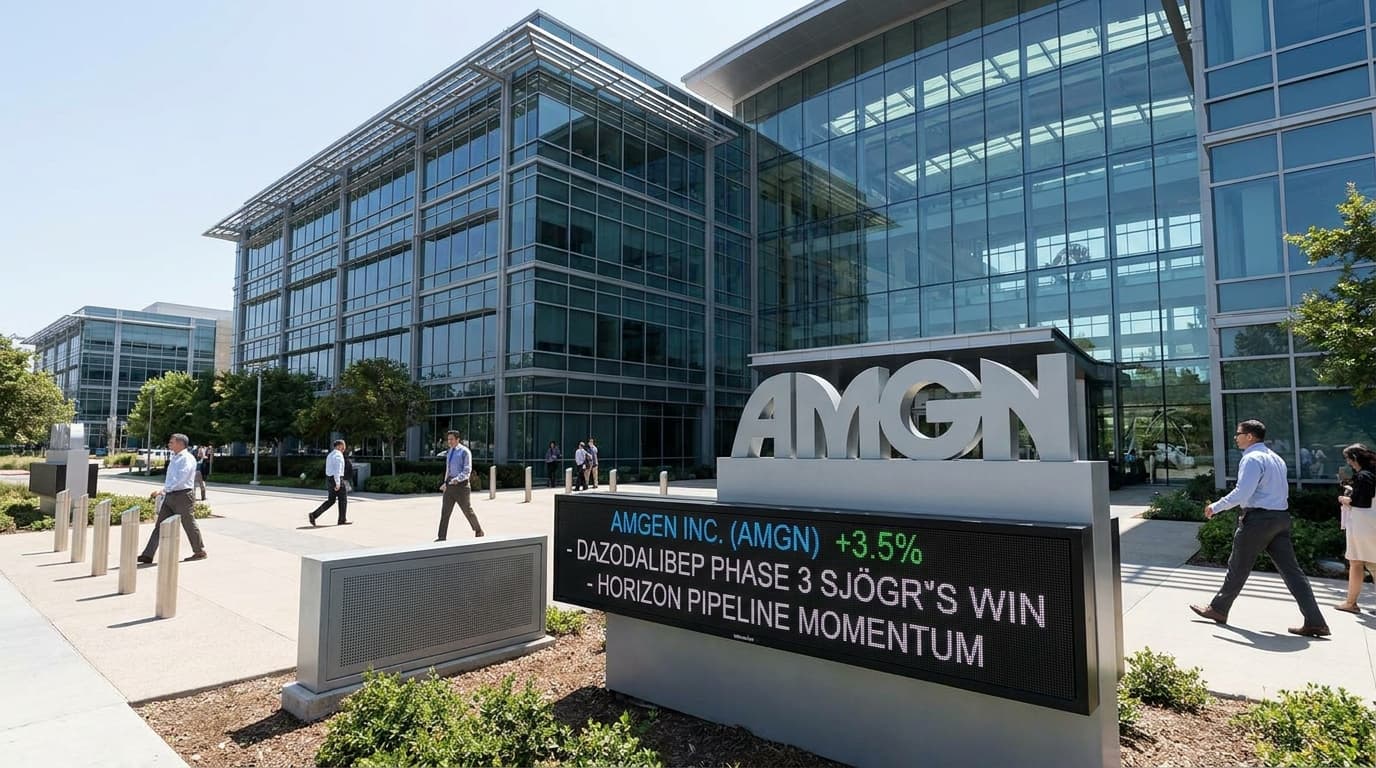
Amgen reported that dazodalibep met the primary endpoint in the Phase 3 OASIZ 301 study in Sjögren's disease, delivering a late-stage win in an autoimmune indication with no medicines specifically approved by the FDA. The result is also a positive marker for a Horizon Therapeutics-acquired pipeline that has otherwise struggled to build momentum inside Amgen.
The study enrolled 651 patients with moderate-to-severe Sjögren's, an autoimmune disease in which the immune system attacks the tear and salivary glands. Dry eyes and mouth are common symptoms, but the disease can also extend beyond those manifestations, which raises the bar for any therapy trying to show broad disease control rather than symptom relief alone.
The data
After 48 weeks of treatment, patients who received dazodalibep had significantly improved scores on the EULAR Sjögren's Syndrome Disease Activity Index compared with placebo, allowing the trial to hit its primary endpoint. Amgen described dazodalibep as a fusion protein targeting the CD40 ligand.
The company said the most common side effects were mild or moderate nasal inflammation, urinary tract infection, hypertension and infusion-related reactions. Detailed results are due at an upcoming medical conference.
The design of the broader program matters because OASIZ 301 enrolled patients with both moderate-to-severe Sjögren's symptoms and systemic disease. A second Phase 3 study, OASIZ 303, is focused on patients with similar symptoms but mild systemic disease activity, and Amgen is also running a long-term extension study open to patients from both OASIZ trials.
William Blair said the first positive Phase 3 readout adds validation for the CD40L mechanism of action in Sjögren's and could have positive read-through to OASIZ 303, while noting that the two studies enrolled distinct patient populations. That distinction limits how far investors can extrapolate one readout to the second trial.
The commercial picture
Sjögren's remains an open commercial category because there are no medicines specifically approved by the FDA to treat the disease, and symptoms are often managed with anti-inflammatory medications. That absence of an approved disease-modifying option raises the value of any asset that can produce consistent late-stage efficacy.
The opportunity exists alongside a difficult development history. Novartis and Sanofi have dropped Sjögren's programs in recent years, although Novartis is still advancing ianalumab after a pair of Phase 3 wins last year. Astellas also cut a STING inhibitor for the disease in April after first terminating a Phase 1 trial.
For Amgen, the readout is as much about portfolio quality as it is about a single indication. The company paid $27.8 billion for Horizon in 2023 primarily for the approved products Uplizna, Krystexxa and Tepezza, and Fierce Biotech reported that few experimental drugs remain from that acquisition.
The road here
Amgen itself dropped another Horizon-acquired Sjögren's candidate, adezkibart, in May after a Phase 2 trial failed an interim futility analysis. That failure sharpened attention on dazodalibep as one of the remaining ways for Amgen to show development upside from inherited Horizon pipeline assets.
Dazodalibep came into Horizon through the $3 billion acquisition of Viela Bio in 2021 rather than from Horizon’s internal research. Jay Bradner said the rapid and sustained improvement in systemic disease activity reinforces Amgen’s confidence in dazodalibep and the broader Phase 3 program.
William Blair added that the FDA will likely require two positive Phase 3 readouts before considering approval. That makes OASIZ 303 the next major gating event for whether this result becomes a registrational turning point or remains a single-study success in a disease area with a long record of setbacks.