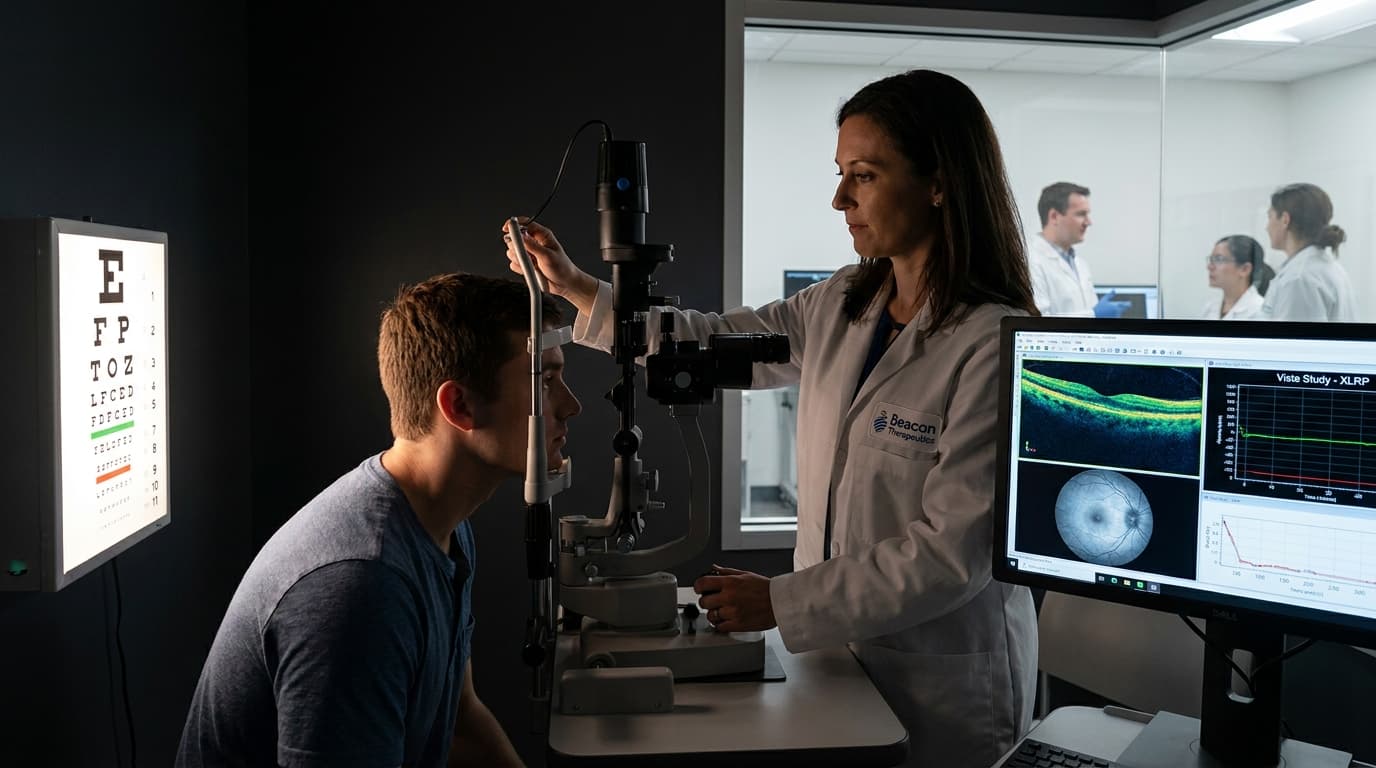
Beacon Therapeutics said its gene therapy laruparetigene zovaparvovec, or laru-zova, improved visual acuity in a phase 2/3 study in X-linked retinitis pigmentosa, giving the company a potential path toward regulatory approval in a disease that has frustrated larger developers.
The result matters beyond a single trial readout. XLRP has seen high-profile setbacks from Biogen and Johnson & Johnson, so Beacon’s success suggests that endpoint selection and construct design may be as important as the broader promise of retinal gene therapy itself. For investors and partners, that shifts the discussion from whether the field can work to which development choices are most likely to hold up with regulators.
The Data
The Vista study tested two dose levels of laru-zova in 85 men and boys, who are primarily affected by XLRP. Twelve months after treatment, none of the patients in the control group showed improvements in visual acuity that met the trial’s definition for a responder. That responder threshold was the ability to read 15 more letters on an eye chart under low light.
By comparison, 24.1% of patients in the low-dose group and 31% of patients in the high-dose group were responders, meeting the trial’s primary endpoint.
Laru-zova delivers a full-length copy of the retinitis pigmentosa GTPase regulator, or RPGR, gene inside a viral capsid and is injected directly into the back of the eye. Beacon CEO Lance Baldo said the native RPGR gene is very unstable, and the company sought to address that by altering codons in the genetic sequence without changing the resulting protein’s structure. Baldo described that codon optimization as the company’s key technical differentiator, intended to preserve a stable full-length gene that can produce functional protein in photoreceptors.
Mutations in RPGR are one of the most common causes of XLRP, although other genes can also be involved. The disease causes gradual loss of rod and cone cells in the retina and erodes vision, with symptoms sometimes starting as early as the teenage years.
The Road Here
Beacon’s management argues that its program benefited from learning from earlier failures. Biogen’s phase 2/3 XLRP gene therapy trial missed its primary endpoint in 2021, using a measure of retina sensitivity. Johnson & Johnson suffered a phase 3 setback last year with a study that assessed patients’ ability to navigate a virtual maze. J&J’s partner MeiraGTx has since bought back that gene therapy and plans to push for approval this year despite the unsuccessful trial.
Baldo pointed to trial design as one reason Vista succeeded where those studies did not. His view is that earlier endpoints were heavily influenced by work in other diseases, reflecting how little was initially known about XLRP. Beacon instead centered visual acuity under low light, which now appears to have produced a cleaner efficacy signal.
The strategic implication is straightforward: in rare inherited retinal disease, the field may be moving from proof-of-concept debates to a more practical question of which outcome measures regulators will accept as clinically meaningful.
What Comes Next
Beacon plans to start and finish a rolling biologics license application to the FDA before the year’s end, according to Baldo. The company also intends to pursue approval in the European Union and the U.K.
That regulatory push may force a corporate decision as much as a scientific one. Baldo said Beacon, which he described as a small biotech with 80-plus people, is keeping its options open on whether to commercialize alone or seek partners with infrastructure and expertise in some markets. For a company coming out of a successful late-stage study in a rare disease, that makes partnering leverage part of the value of the readout, not just a financing footnote.