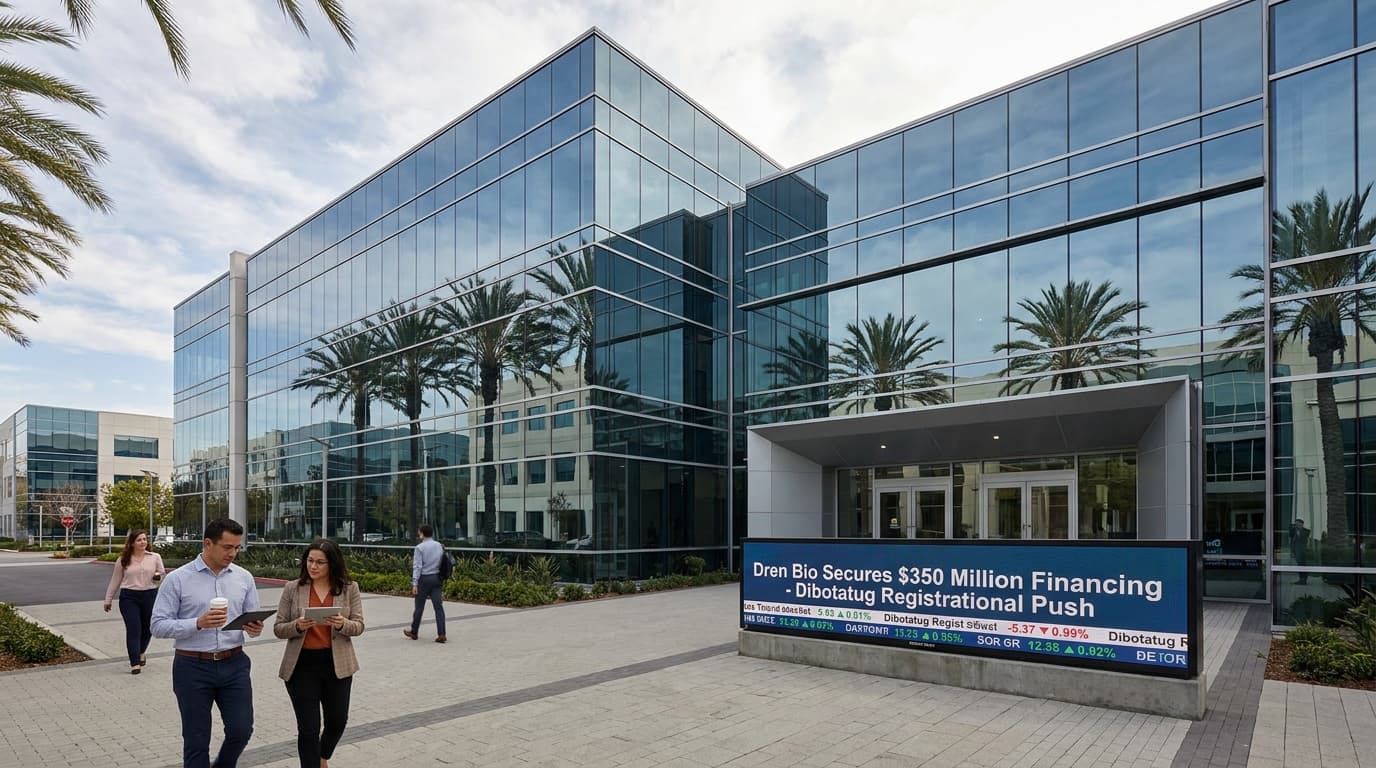
Dren Bio has raised $350 million in an oversubscribed private financing to advance dibotatug, its CD94-targeting monoclonal antibody, toward potential approval in rare blood cancers. The California biotech said the money will fund late-stage development along with planned regulatory and commercial activities for the program.
The raise is a sharp step up from Dren’s earlier financings, following a $65 million series B in 2022 and a $60 million series A in October 2020. It also ranks among biotech’s largest private financings of the year so far, a sign that investors are still willing to write large checks when a company has a registrational asset and a defined path to market.
The Program
Dibotatug, also known as DR-01, is designed to deplete pathogenic cells in rare blood cancers and other serious conditions. Dren is testing the antibody in a Phase 1/2 trial in cytotoxic T cell lymphoma and large granular lymphocytic leukemia, two rare hematologic malignancies the company describes as areas of high unmet need.
According to ClinicalTrials.gov, the trial’s primary readout is slated for this December. Dren already lists the hematologic malignancy program in registrational development on its pipeline, so the financing appears aimed at reducing the gap between an early clinical signal and the manufacturing, regulatory and commercial work needed if the data support a filing path.
The Capital Strategy
The round was co-led by newly launched biotech venture capital firm Juvia Group and Lightspeed Venture Partners. Dren did not specify the financing series.
Beyond venture backing, Dren has also brought in non-dilutive validation through partnering. Last year, Sanofi paid the company $600 million upfront to acquire DR-0201, now called SAR448501, a targeted bispecific myeloid cell engager designed to induce deep B cell depletion. That deal also included up to $1.3 billion in potential development and milestone payments.
Dren said part of the new financing will also support the rest of its pipeline, including programs from its targeted myeloid engager and phagocytosis platform. The immediate signal, though, is more focused: investors are funding Dren as a company with a lead asset nearing a meaningful readout and with enough capital to prepare for what comes after data, not just the data themselves.