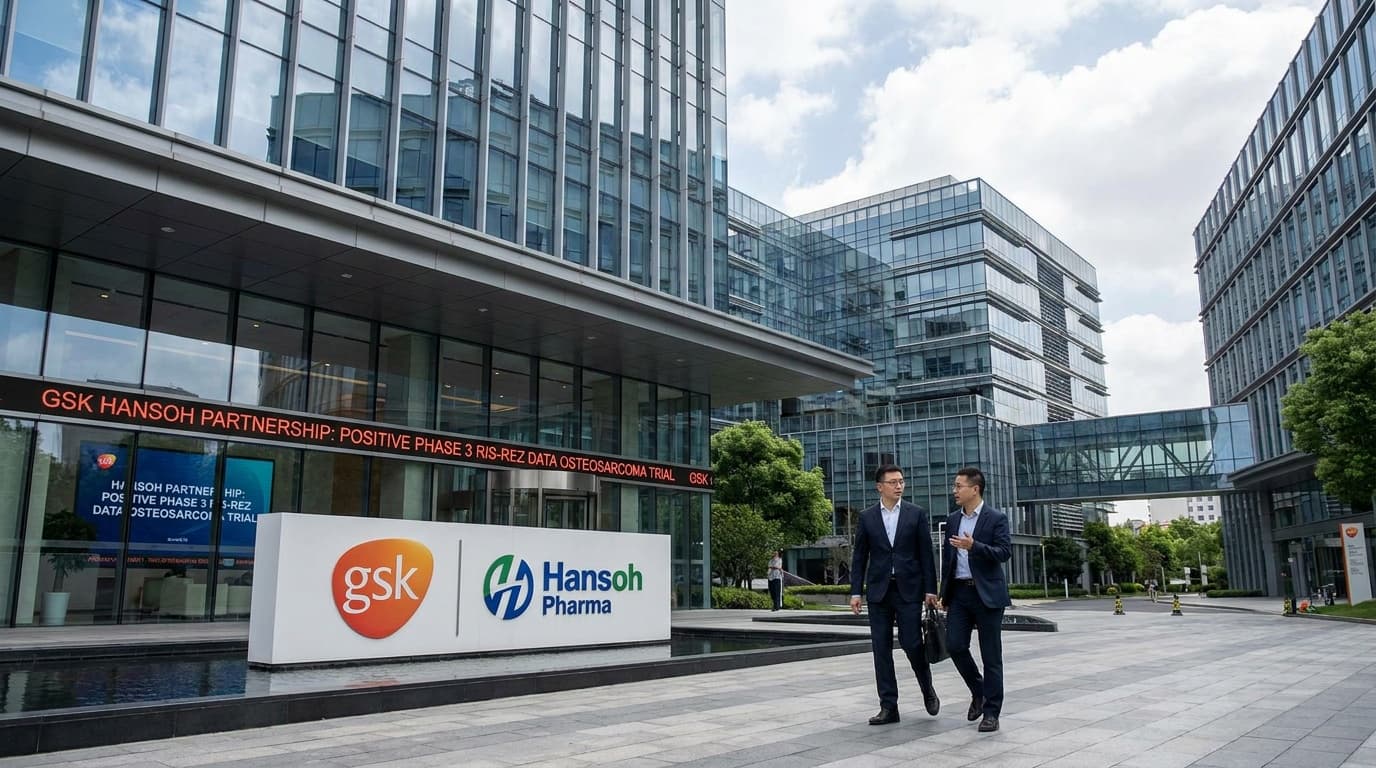
GSK and its Shanghai-based partner Hansoh Pharma have reported phase 3 data that put randomized evidence behind a B7-H3-directed antibody-drug conjugate in relapsed osteosarcoma, a setting the source describes as lacking approved drugs or a standard of care. In the Artemis-011 trial in China, risvutatug rezetecan, or ris-rez, was linked to a 67% reduction in the risk of disease progression or death versus gemcitabine plus docetaxel.
For GSK, the readout does more than add another positive data point to the expanding ADC category. It establishes an early benchmark in osteosarcoma while competitors, including Daiichi Sankyo and Merck & Co., are still earlier in development in the indication.
The data
Hansoh enrolled 122 patients aged 12 years and older who had been failed by second-line treatments, then randomized them to ris-rez or the chemotherapy combination of gemcitabine and docetaxel. Median progression-free survival was 5.5 months on ris-rez, compared with 1.5 months on chemotherapy, after a median follow-up of 7.1 months.
Hansoh had already said in July that Artemis-011 met its primary progression-free survival endpoint, but did not disclose the underlying figures at that time. The newly reported numbers now define the magnitude of benefit.
On safety, GSK reported grade 3 or higher treatment-related adverse events in 93% of patients receiving ris-rez at the 12 mg/kg dose and in 83% of those receiving chemotherapy. Hematologic events were the most common grade 3 or higher treatment-related adverse events in both arms. Treatment-related adverse events led to discontinuation in 4% of patients on ris-rez and 2% of patients receiving chemotherapy.
The company said the results were consistent with earlier trials, which suggests the phase 3 readout reinforced rather than overturned the existing profile.
Competitive context
The result offers encouragement for B7-H3 ADCs more broadly, but it also raises the competitive bar in osteosarcoma. H.C. Wainwright analysts said last month that Artemis-011 would extend randomized evidence on B7-H3 ADCs into the disease. With the data now in hand, ris-rez has moved ahead of other contenders in this setting.
Daiichi Sankyo and Merck’s ifinatamab deruxtecan has led the way for B7-H3 ADCs in small cell lung cancer, although the source notes that regulatory setbacks, including the recent withdrawal of a filing for FDA approval, have narrowed that lead. Osteosarcoma is on Daiichi and Merck’s roadmap, but their asset is behind ris-rez there: the partners started a global phase 1/2 trial in July that will enroll patients with osteosarcoma and several other tumor types in its second part.
GSK began its own global phase 1/2 study of ris-rez in osteosarcoma and soft tissue sarcoma in June. Both programs are being developed across multiple tumor types, alongside broader B7-H3 efforts in indications including esophageal cancer, non-small cell lung cancer and prostate cancer.
The strategic signal is that ADC competition is increasingly indication-specific. Leadership in one tumor type does not secure leadership in another, and in osteosarcoma GSK and Hansoh now have the phase 3 data point others will have to beat, even as toxicity remains part of the commercial and clinical equation for the class.