Tango Therapeutics is pressing ahead with late-stage development of vopimetostat plus daraxonrasib in pancreatic cancer even after updated trial data showed a lower response rate than the company reported in June. In 22 evaluable patients from an ongoing phase 1/2 study, the combination produced an 82% objective response rate, compared with the 92% response rate previously disclosed from 12 patients.
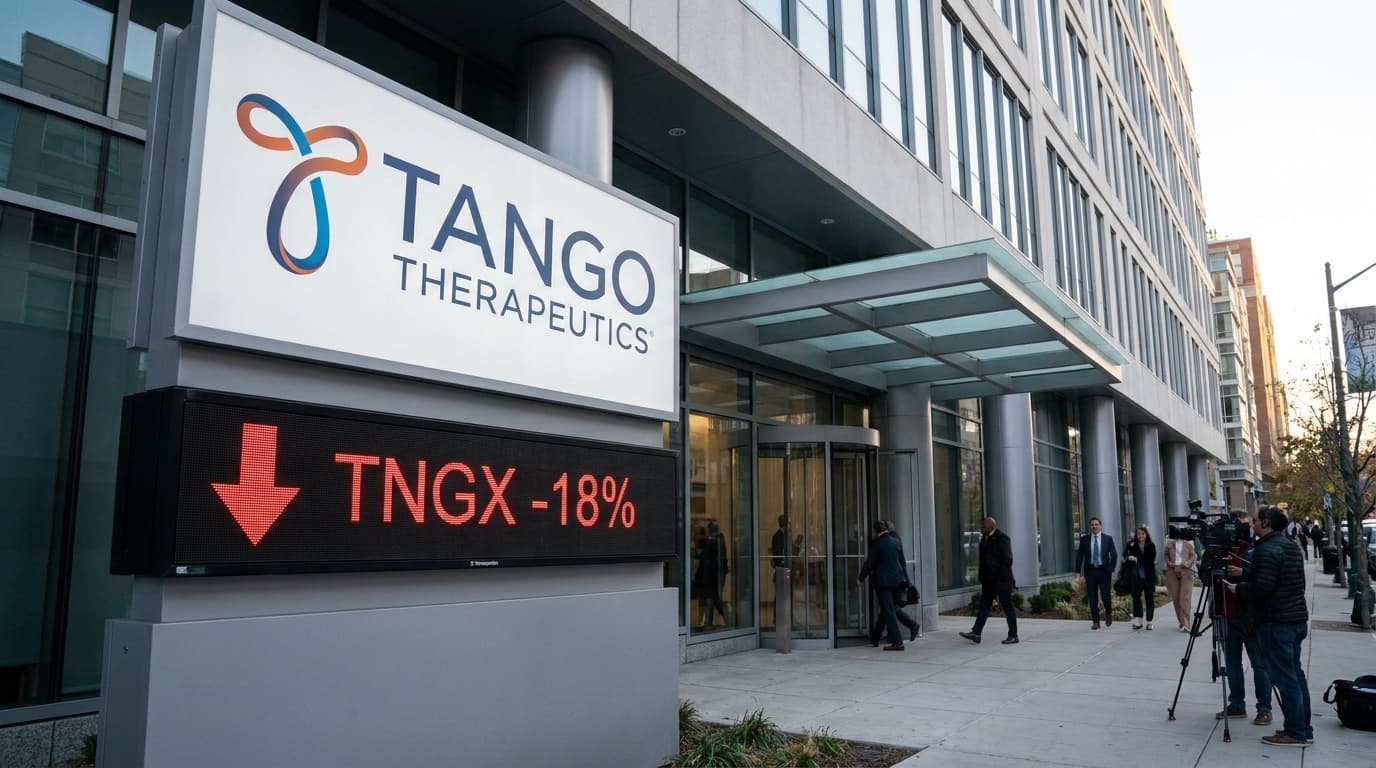
That drop was enough to send Tango shares down nearly 18% on Friday, but the broader read-through from the company and from cited analysts was that the combination still looks active enough to support a larger registration strategy. The signal for the sector is less about a single response-rate revision than about how quickly a promising early pancreatic cancer combination can move toward both an accelerated approval discussion and a front-line phase 3 test.
The Data
The updated results cover Tango's investigational PRMT5 inhibitor vopimetostat combined with daraxonrasib, which BioSpace said was greenlit by the FDA as Rasonque for second-line pancreatic cancer. Median progression-free survival has not yet been reached. Tango said PFS was 88% in patients with second- or third-line pancreatic cancer.
The earlier June disclosure had shown a 92% response rate and PFS of 90% at six months in 12 patients. The new data therefore extend the dataset with longer follow-up and a larger patient group, but also show the expected softening that can occur as small early cohorts mature.
Safety also shaped dose selection. In 25 patients with pancreatic cancer or non-small cell lung cancer who received dose level 1, consisting of 200 mg of vopimetostat and 600 mg of daraxonrasib every day, the combination was generally well-tolerated and there were no dose-limiting toxicities. Dose level 2, 250 mg and 600 mg, respectively, was not well-tolerated, with three of four patients experiencing dose-limiting toxicities.
William Blair described the data as supportive of a highly synergistic effect of the combination. Jefferies said the update met its expectations and said it had been confident the response rate would reach or exceed 70%.
The Development Strategy
Tango plans to seek the FDA's guidance on a possible accelerated approval path for vopimetostat plus daraxonrasib in the second-line pancreatic cancer setting. At the same time, the company plans to launch a phase 3 trial in the first half of 2027 in front-line pancreatic cancer patients with MTAP deletions, comparing dose level 1 against standard-of-care chemotherapy.
Chief Executive Officer Malte Peters said approximately 40% of patients with pancreatic cancer have an MTAP deletion. He also said the company believes the response rate and durability observed with the combination surpass published pancreatic ductal adenocarcinoma datasets, even in front-line settings. BioSpace also noted William Blair's caution that it is too difficult to draw real conclusions on the first-line trend because only two patients were evaluable and one did not respond.
The competitive backdrop matters because daraxonrasib is also being pushed forward separately in previously untreated metastatic PDAC. BioSpace said the ongoing RASolute 303 trial is studying daraxonrasib as a monotherapy and in combination with a standard-of-care chemotherapy regimen versus chemotherapy alone.
Corporate Implications
Tango said executing on the front-line pancreatic cancer study is now its primary goal, and Peters said the biotech wants vopimetostat to become a PRMT5 combination partner of choice for any RAS inhibitor. To support that shift, the company is deprioritizing novel target discovery.
That reprioritization comes with workforce cuts. According to a Friday SEC filing cited by BioSpace, Tango intends to reduce its workforce by 14%, with most reductions coming from research. The company had 97 R&D employees and 137 full-time staffers in total as of Dec. 31, 2025, implying that around 19 people are losing their jobs. The move suggests Tango is trading broader discovery optionality for a more concentrated bet on a pancreatic cancer combination that now has enough human data to justify a capital-intensive phase 3 path.