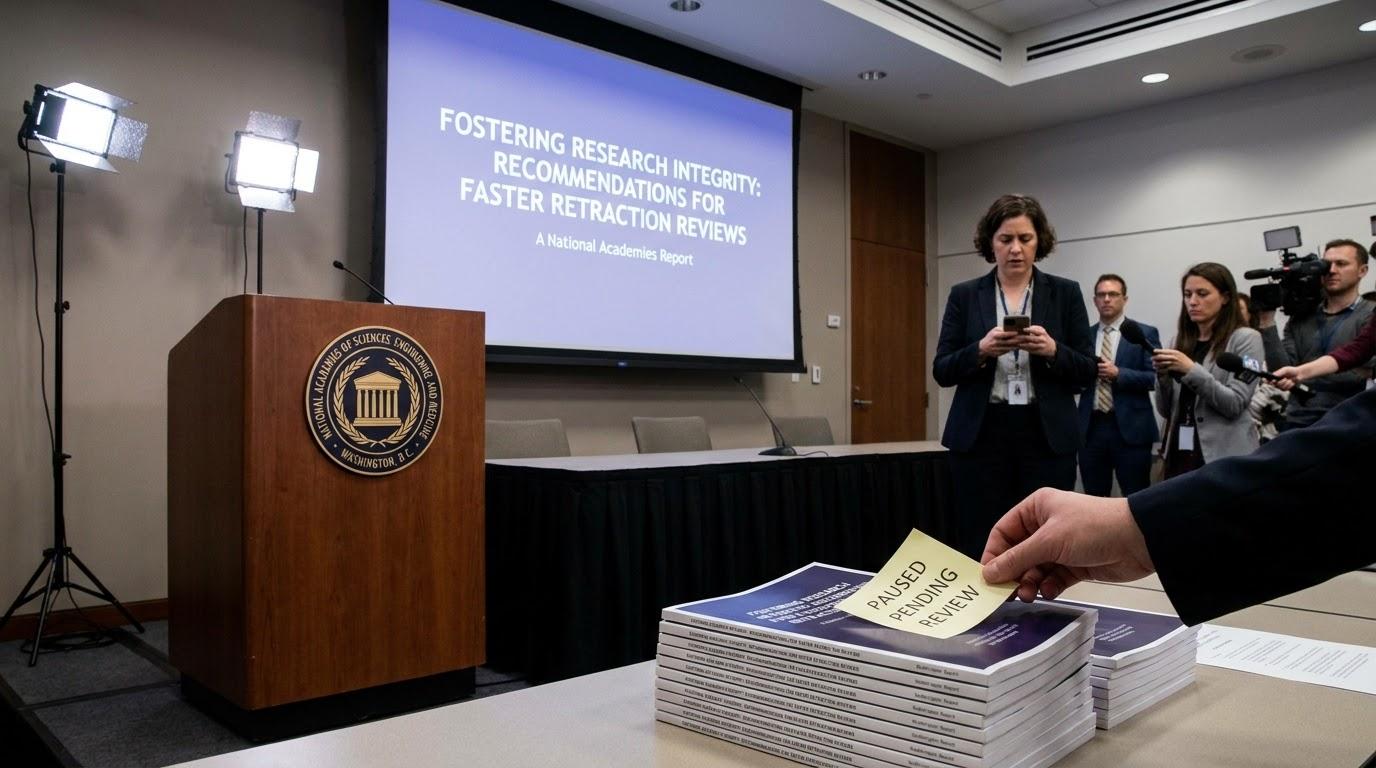
A new National Academies of Sciences, Engineering, and Medicine report called for the scientific community to move faster when published findings appear unreliable, urging journals to complete editorial review of potentially problematic studies within 12 weeks, or within six months in more complex cases. The report also argued that authors should retain original data and that inability to produce those records when authenticity concerns arise could lead to retraction.
The recommendations were meant to strengthen confidence in the scientific record at a time when research-integrity failures are drawing wider public attention. But the report’s own rollout was interrupted: Jennifer Walsh, a National Academies spokesperson, told STAT that publication was being paused pending further review of some citations, and the report had not appeared on the nonprofit’s website as of Thursday evening.
The recommendations
The panel said papers containing findings that can no longer be trusted should be corrected or retracted more quickly. It added that it is no longer prudent for researchers to resist retraction by arguing that flaws in one part of a study do not affect the paper’s overall conclusions, because problems in any section can cast doubt on the rest.
The report also pushed universities and other research institutions to respond more quickly and more completely to research-integrity inquiries, including by making findings from internal inquiries available to journals, funding organizations and the broader public. Funding organizations, in turn, should consider tying grant awards to researchers and institutions agreeing to strict standards for research conduct and for addressing errors.
Randy Schekman, chair of the committee that produced the report, wrote that the recommendations may appear aspirational, but that funding agencies, public officials, researchers and the public must be assured that the scientific record is intact and reliable.
Why the panel says speed matters
The report arrives as the volume of scientific publishing keeps rising. It notes that annual article output increased from 1.3 million in 1995 to 6.7 million in 2025, expanding the pool of studies that may eventually require corrective action. More than 5,000 studies were retracted worldwide in 2025, according to the report, yet it says fewer than 0.22% of studies from any given year are retracted.
Retractions also happen slowly. Data from Retraction Watch indicate that, on average, retractions occur nearly 2.4 years after publication. The panel argued that the cost of delay is not only reputational. Faulty data can shape policymaking and public health decisions, while other researchers may waste time and taxpayer dollars trying to build on flawed findings.
That framing shifts research integrity from a narrow publishing issue to an operational one for institutions and funders. Faster case handling, clearer data-retention expectations and more direct information-sharing could raise compliance demands, but the panel presents those burdens as part of maintaining science as a trusted system.
The publication pause
The report itself became part of the integrity discussion after Walsh said it was being paused for further review of some citations. STAT reported that Science alleged 10 references in the report contain apparently fabricated first names for co-authors, suggesting that a large language model may have written the references. The National Academies delayed publication after Science flagged the apparent issues.
That sequence does not erase the underlying recommendations, but it does complicate their reception. A report arguing for stricter standards, faster scrutiny and stronger recordkeeping now faces questions about its own preparation process. For institutions deciding how aggressively to adopt the proposed timeline and disclosure standards, credibility of implementation may matter as much as credibility of principle.